




நற்றிணை 397
பாடல் · The poem
Tap a word to see where else it occurs.
பொருள் · Meaning in TamilAI
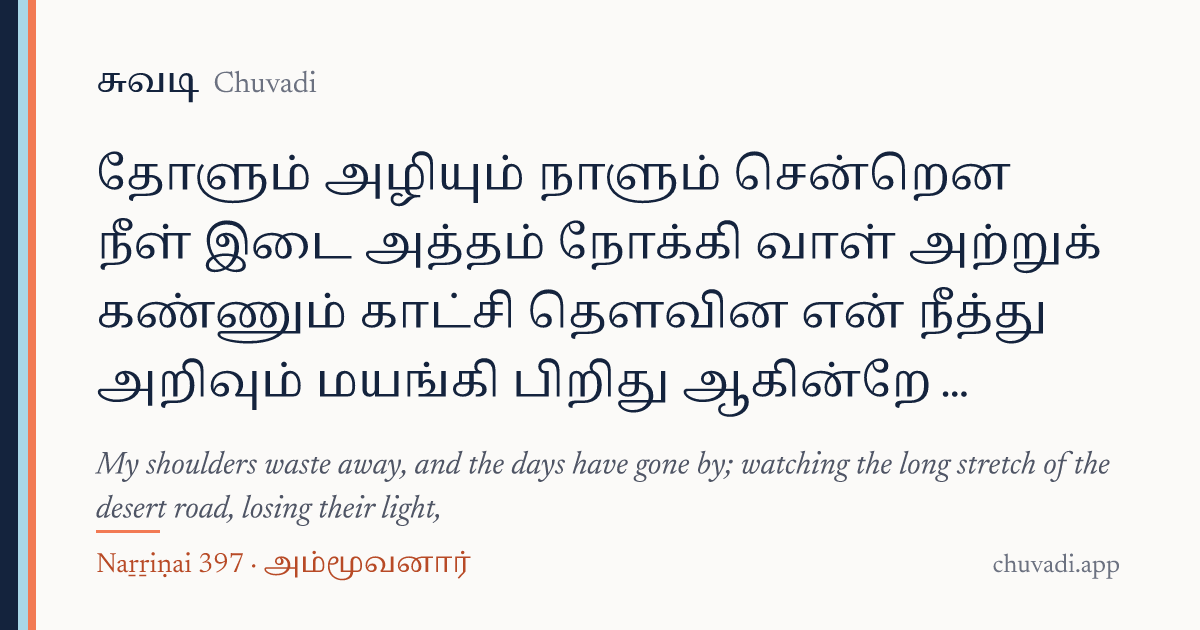
என் தோள்கள் மெலிந்து அழிகின்றன; நாள்களும் கழிந்துவிட்டன. நீண்ட பாலைவழியையே பார்த்துப் பார்த்து ஒளி இழந்து, என் கண்களும் பார்வை மங்கிவிட்டன. என்னை விட்டு நீங்கி, என் அறிவும் மயங்கி வேறாகிவிட்டது. நோயும் பெருகுகிறது; மாலைப்பொழுதும் வந்துவிட்டது. நான் என்ன ஆவேனோ? இங்கே, சாவதற்கு நான் அஞ்சவில்லை. ஆனால் நான் இறந்தால், அடுத்த பிறவி வேறாக அமைந்துவிட்டால், என் காதலனை மறந்துவிடுவேனோ என்றுதான் அஞ்சுகிறேன்.
பாலைத் திணை; பிரிவில் வருந்தும் தலைவியைத் தேற்றிய தோழிக்கு, ஆற்றியிருப்பேன் என்ற பொருள்படத் தலைவி கூறியது. சாவைவிட, மறுபிறவியில் காதலனை மறந்துவிடுவது தான் அவளுக்குப் பெரிய அச்சம்; அன்பு உயிரினும் மேலானது என்பதை இது காட்டுகிறது. மூன்றாம் அடியில் உள்ள ஒரு சொல் மூலப் பாடத்தில் சிதைந்திருக்கிறது; அதன் பொருளைச் சூழலைக் கொண்டு கொண்டோம்.
ஆங்கிலம் · English translationAI
Translation
- My shoulders waste away, and the days have gone by;
- watching the long stretch of the desert road, losing their light,
- my eyes too have lost their sight; leaving me,
- my mind too is bewildered and becomes something else;
- my sickness grows, and the evening has come;
- what will become of me? Here,
- I do not fear dying; what I fear is that, if I die,
- and my next birth should be a different one,
- I might forget the man I love.
What the poem says
The heroine speaks to her friend, who has been urging her to be strong while the hero is away. The colophon says she answers in a way that means 'I will bear it'. Her words, however, describe a woman near the end of her strength: her shoulders grow thin, her eyes have lost their light from watching the road, her mind is confused, and evening, the hardest hour, has come.
In the last three lines she says she does not fear death. Her fear is that if she dies and is born again as someone else, she might forget her lover. Love here is placed above life itself, and the only loss she cannot accept is the loss of the memory of him.
The belief in rebirth is stated as a possibility (ākuvatu āyiṉ, 'if it should become'), not as a doctrine. The poem is placed in pālai because of the separation and the 'long road' the hero has taken. The word teḷviṉa in line 3 appears to be damaged in the source; the sense 'have lost their sight' is clear from the context.