




நற்றிணை 398
பாடல் · The poem
Tap a word to see where else it occurs.
பொருள் · Meaning in TamilAI
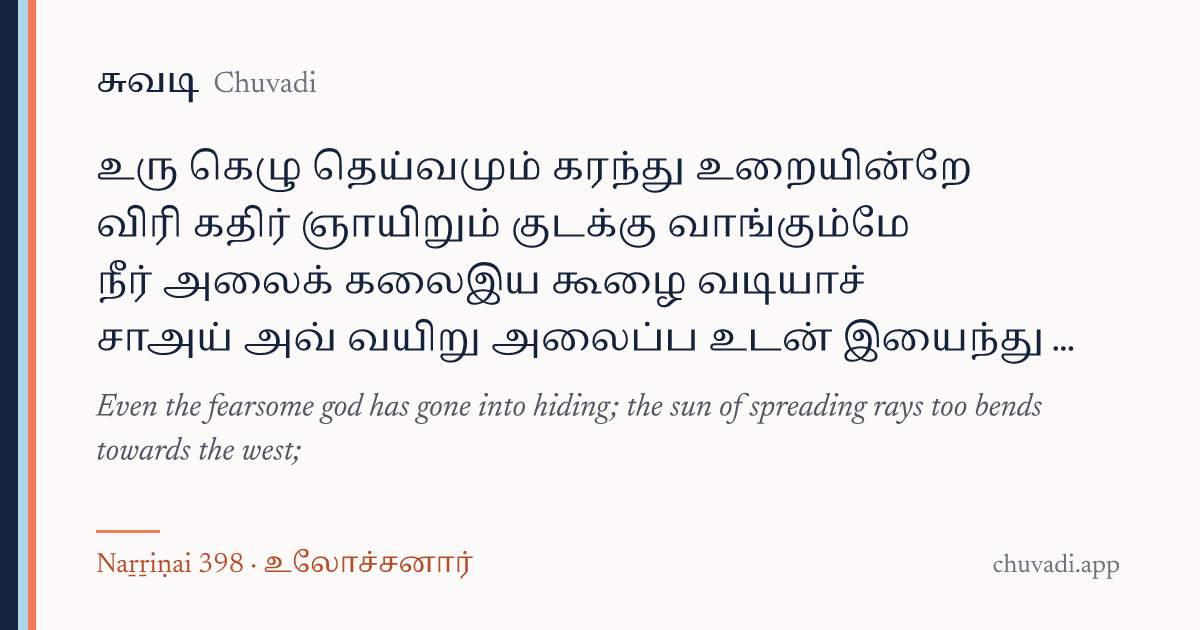
அச்சம் தரும் தெய்வமும் மறைந்து தங்கிவிட்டது. விரிந்த கதிர்களையுடைய கதிரவனும் மேற்குத் திசையில் சாய்கிறான். கடல் அலைகளால் கலைந்த கூந்தலைப் பிழியாமலேயே, மெலிந்த அழகிய வயிற்றில் நீர் அலைக்க, ஓரை விளையாடிய பெண்களும் ஒன்றுசேர்ந்து ஊருக்குத் திரும்பிவிட்டனர். பல மலர்கள் நிறைந்த மணமுள்ள சோலையைப் புகழ்ந்து, சிவந்த அணிகலன்களை அணிந்தவளே, போவோம் என்று முன்பு நான் சொன்னேன். அதற்கு மென்மையான இயல்புடைய அவள் ஒரு சொல்லும் சொல்லவில்லை. அழகிய மலர் போன்ற கண்கள் தெளிந்த கண்ணீரால் நிறைய, அவளுடைய அழகிய மார்பில் இளமையான முலைகள் நனைந்தன.
நெய்தல் திணை; பகற்குறியில் வந்து திரும்பும் தலைவனிடம், நீயே இவளைத் தேற்ற வேண்டும் என்று தோழி கூறியது. தலைவி பேசாமல் அழுததைச் சொல்வதே தோழியின் வாதம்; இவ்வாறு பிரியும் நிலை தொடரக்கூடாது, விரைவில் மணம் செய்ய வேண்டும் என்பது குறிப்பு. முதல் அடியில் சொல்லப்படும் தெய்வம் எது, நான்காம் அடியின் சரியான பொருள் என்ன என்பவை உறுதியாகத் தெரியவில்லை.
ஆங்கிலம் · English translationAI
Translation
- Even the fearsome god has gone into hiding;
- the sun of spreading rays too bends towards the west;
- not wringing out the hair the waves have tousled,
- the water slapping their lovely slender bellies, all together
- the girls who played their ōrai games have gone back to the town;
- praising the fragrant grove of many flowers, I said before,
- 'Let us go, you of red jewels'; in reply
- the gentle girl said not a word; on her fine chest
- her young fresh breasts grew wet,
- as her lovely flower-like eyes filled with clear tears.
What the poem says
The colophon says the heroine's friend speaks to the hero as he leaves after a daytime meeting, and the point of her words is 'you must comfort her yourself'. She describes the end of the day on the shore. The god of the place has withdrawn, the sun is setting, and the girls who were playing ōrai, the games of young women on the beach, have gone home with their hair still wet from the sea.
The friend told the heroine it was time to go, praising the grove so as to ease the parting. The heroine did not answer at all. She stood silent, and tears ran from her eyes onto her breast. The friend does not explain the tears; she simply reports them to the hero, and the description is the whole of her argument. Only he can console her, and only by not leaving her to such partings.
Line 1 is open to more than one reading. Karantu uṟaiyiṉṟē ('has hidden itself') may refer to a god who frequents the shore by day, or simply mean that the divine presence of daylight has withdrawn. Line 4 is also uncertain: it may describe the waves slapping the girls' slender bellies, as rendered here, or the girls beating their bellies as part of their play.