



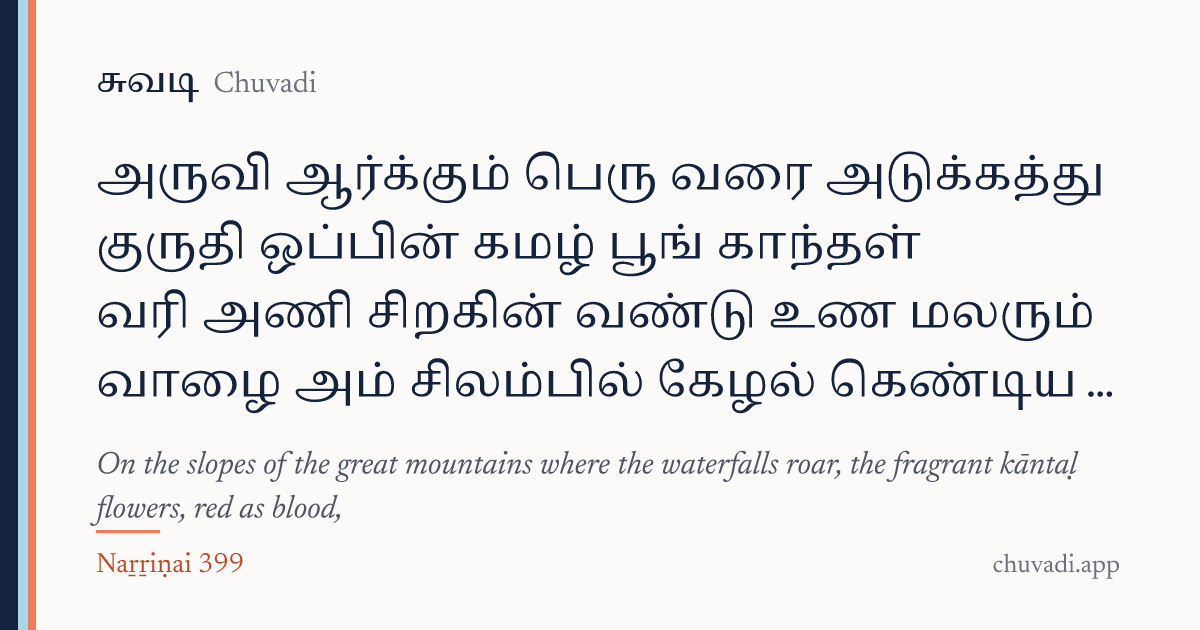

நற்றிணை 399
பாடல் · The poem
Tap a word to see where else it occurs.
பொருள் · Meaning in TamilAI
அருவிகள் முழங்கும் பெரிய மலையின் சாரலில், குருதி போலச் சிவந்த மணமுள்ள காந்தள் மலர்கள், வரிகளையுடைய சிறகுகளைக் கொண்ட வண்டுகள் தேன் உண்ணும்படி மலர்கின்றன. வாழைகள் நிறைந்த மலைச்சாரலில் காட்டுப்பன்றி கிளறியதால் நிலத்தின் மேற்பரப்புக்கு வந்த பல அரிய மணிகளின் ஒளிவிளக்கில், கன்றை ஈன்ற இளம் பெண்யானை, களிறு பாதுகாக்கத் தன் கன்றோடு தங்கியிருக்கும். அத்தகைய பெரிய மலைநாட்டுத் தலைவன் விருப்பத்தோடு வருவான். அவள் அத்தகைய பெருமை உடையவள் என்பதை, தோழி, உன் அழகிய நெற்றியின் எழில் உணர்த்துமோ?
குறிஞ்சித் திணை; புலவர் பெயர் இல்லை. நெடுநாள் களவில் வந்து ஒழுகுவதால் வேறுபட்ட தலைவியிடம், தலைவன் நல்லது செய்வான் என்று, அவன் வேலிப்புறத்தே கேட்கும்படி தோழி கூறியது. களிறு காக்கக் கன்றோடு தங்கும் பெண்யானை, மணந்த பின் தலைவன் காப்பில் வாழும் தலைவியைக் குறிக்கிறது. இறுதி இரண்டு அடிகளின் தொடர்பும் பொருளும் உறுதியாகத் தெரியவில்லை.
ஆங்கிலம் · English translationAI
Translation
- On the slopes of the great mountains where the waterfalls roar,
- the fragrant kāntaḷ flowers, red as blood,
- open so the bees with striped wings may drink;
- on the slope with its plantains, dug up by a boar,
- many precious gems raised up from the earth's surface,
- in the light they shed, the young cow-elephant that has calved
- rests with her calf while the tusker guards her —
- the man of that great mountain land comes with love;
- that she is a woman of such worth —
- will it be granted, my friend, by the beauty of your lovely brow?
What the poem says
No poet is recorded. The first colophon says the hero has been coming in secret for a long time, the heroine has changed under the strain, and the friend tells her, with the hero listening nearby, that he will surely do what is right. The second makes it the heroine's reply. The first reading fits the poem better.
The landscape carries the message. Kāntaḷ flowers open for the bees on a slope where the waterfalls roar; a boar digs up gems that lie on the surface, and by their light a cow-elephant with her newborn calf rests safely while the tusker stands guard. The guarded mother and calf are a picture of what the heroine's life will be once the hero marries her and takes responsibility for her.
The last two lines are difficult. The friend seems to ask whether the restored beauty of the heroine's brow will prove that she is worthy of being sought in marriage, or whether her fading beauty will be the sign that brings him to marry. The construction of tarumō ('will it give?') with what precedes it is not clear, and the translation here is tentative.