



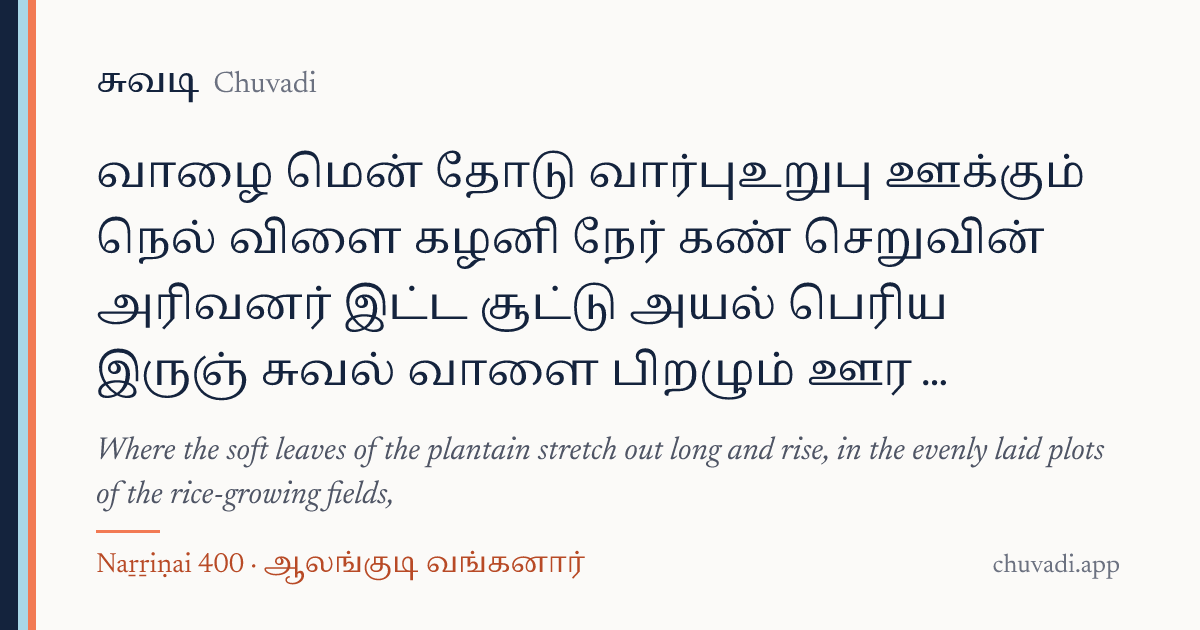

நற்றிணை 400
பாடல் · The poem
Tap a word to see where else it occurs.
பொருள் · Meaning in TamilAI
வாழையின் மென்மையான இலைகள் நீண்டு உயர்ந்து வளரும், நெல் விளையும் கழனிகளின் சீராக அமைந்த பாத்திகளில், அறுவடை செய்பவர்கள் அடுக்கிய நெற்கட்டுகளின் அருகே பெரிய கரிய முதுகையுடைய வாளைமீன்கள் துள்ளிப் பிறழும் ஊரனே, உன்னை விட்டு நான் வாழ முடியுமானால், இங்கிருந்தே உன்னைக் கடுமையான பார்வையோடு நோக்குவதில் என்ன தவறு இருக்கும்? வீரம் மிக்க சோழர்களின் உறந்தை அவையில் அறம் ஒருபோதும் கெடாதது போல, சிறந்த நட்போடு கலந்த நீ, என் நெஞ்சத்திலிருந்து ஒருபோதும் நீங்க மாட்டாய்.
மருதத் திணை; பரத்தை தலைவனைப் புகழ்ந்து கூறியது; நீ இல்லாமல் என்னால் இருக்க முடியாது என்று தலைவன் சொன்னதற்கு அவள் இவ்வாறு மறுமொழி கூறினாள் என்று கொளு விளக்குகிறது. உறந்தை என்பது சோழர் தலைநகரான உறையூர். அவையில் அறம் கெடாதது போல என்ற உவமை அவளுடைய புகழ்ச்சியை உயர்த்துகிறது. ஐந்து, ஆறாம் அடிகளின் பொருள் உறுதியாகத் தெரியவில்லை. இது நற்றிணையின் இறுதிப் பாடல்.
ஆங்கிலம் · English translationAI
Translation
- Where the soft leaves of the plantain stretch out long and rise,
- in the evenly laid plots of the rice-growing fields,
- beside the sheaves the reapers have piled, the big
- dark-backed vāḷai fish leap — O man of that town,
- if I could get by without you, then, staying here,
- with a bitter look, what fault would there be in that?
- As in the council of Uṟantai of the valiant Cōḻas
- justice has never been known to fail, so, with surpassing
- friendship, mingling with me, you
- never fail from my heart.
What the poem says
The speaker is the other woman, the parattai, and the colophon says she is praising the hero. It adds a note: she praises him because he has said 'I cannot do without you'. She answers in kind, saying that if she could get along without him she might look at him coldly, but she cannot.
The landscape is the rich marutam country of rice fields, where plantains grow along the bunds and vāḷai fish leap among the newly cut sheaves. This is the hero's town, and its abundance is the setting for his pleasures away from home.
The central simile is political. In the council (avai) of Uṟantai, the Cōḻa capital better known as Uṟaiyūr, justice was never allowed to fail; so the hero's friendship never fails in her heart. The praise is lavish, but in the akam tradition a courtesan's words to the hero are often understood as reaching the wife indirectly, as a boast. Lines 5 and 6 are compressed, and the sense 'what fault would there be' for evaṉ piḻaippu uṇṭō is one of several possible readings. This is the last poem of the anthology.