




நற்றிணை 45
பாடல் · The poem
Tap a word to see where else it occurs.
பொருள் · Meaning in TamilAI
இவள் கடற்கரைச் சோலையை ஒட்டியுள்ள அழகிய சிற்றூரைச் சேர்ந்தவள்; நீலநிறப் பெருங்கடல் கலங்கும்படி உள்ளே புகுந்து மீன் எறிந்து பிடிக்கும் பரதவரின் மகள். நீயோ, நீண்ட கொடிகள் அசையும் கடைத்தெருவையுடைய பழைய ஊரின், விரைந்து செல்லும் தேரையுடைய செல்வனின் அன்பு மகன். கொழுப்புள்ள சுறாமீனை அறுத்துக் காயவைத்திருக்கிறோம்; அதைக் காப்பதற்காகக் கூட்டமாக வரும் பறவைகளை ஓட்டிக்கொண்டிருக்கிறோம். எங்களிடம் என்ன அழகு இருக்கிறது? நாங்கள் மீன் நாற்றம் வீசுகிறோம்; நாங்கள் போக விலகி நிற்பாயா? பெருங்கடலின் விளைச்சலால் நடக்கும் எங்கள் சிறிய நல்ல வாழ்க்கை உங்களுடைய வாழ்க்கைக்கு ஒப்பாகுமா? ஆகாது. எங்களைப் போன்றவர்களிடையேயும் சிறந்த ஆண்கள் இருக்கிறார்கள்.
நெய்தல் திணை; தலைவியைச் சந்திக்க உதவுமாறு வேண்டிய தலைவனைத் தோழி தள்ளிவைத்துப் பேசுகிறாள். இரு குடும்பங்களுக்கும் இடையிலான செல்வ வேறுபாட்டைக் காட்டித் தங்களைத் தாழ்த்திக் கூறினாலும், இறுதி அடியில் தம் குலப் பெருமையை வெளிப்படுத்துகிறாள். உண்மையான அன்பு இருந்தால் முறைப்படி மணம் பேச வர வேண்டும் என்பதே அவள் மறைமுகமாகச் சொல்வது. இப்பாடலைப் பாடிய புலவரின் பெயர் தெரியவில்லை.
ஆங்கிலம் · English translationAI
Translation
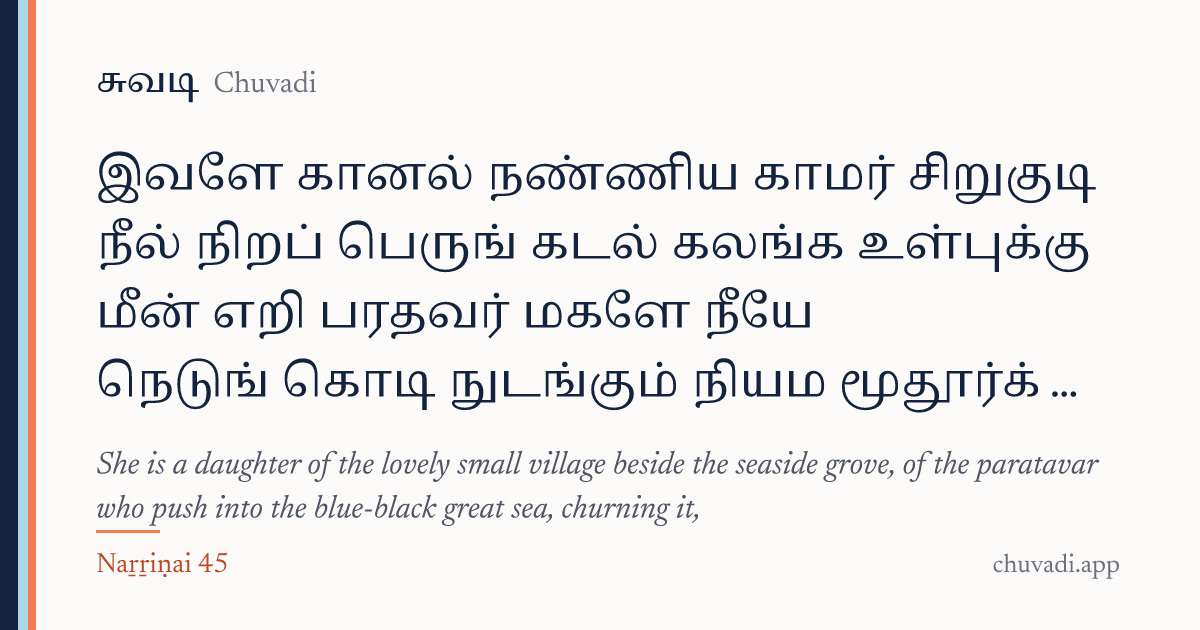
- She is a daughter of the lovely small village beside the seaside grove,
- of the paratavar who push into the blue-black great sea, churning it,
- and spear fish; and you
- of the ancient market town where long banners wave
- are the beloved son of a rich man with swift chariots.
- Wanting to dry the fatty shark we have cut,
- we scare off the flocks of birds — what beauty is there in us?
- We smell of fish. Will you stand aside and let us pass?
- Our small, good life, living off the yield of the great water,
- is it a match for yours? It is not.
- Among people like us, too, there are men of worth.
What the poem says
The hero has asked the friend to help him meet the heroine, and she puts him off (neytal; the poet's name is lost). Her refusal is built on the gap in rank between the two families.
The heroine is a daughter of the fishing people (paratavar) who live in a little village by the shore groves and go out into the dark sea; the hero is the son of a wealthy man from an old market town, with chariots and banners. The friend speaks with deliberate self-deprecation: we are the girls who chase birds off the strips of shark set out to dry, we smell of fish, so let us go about our work.
The last line turns the humility into pride. There are worthy men among our own people too, so she need not look higher. Under the coyness the friend is testing him: if he is serious, he must come with an honourable proposal rather than a request for secret meetings.