



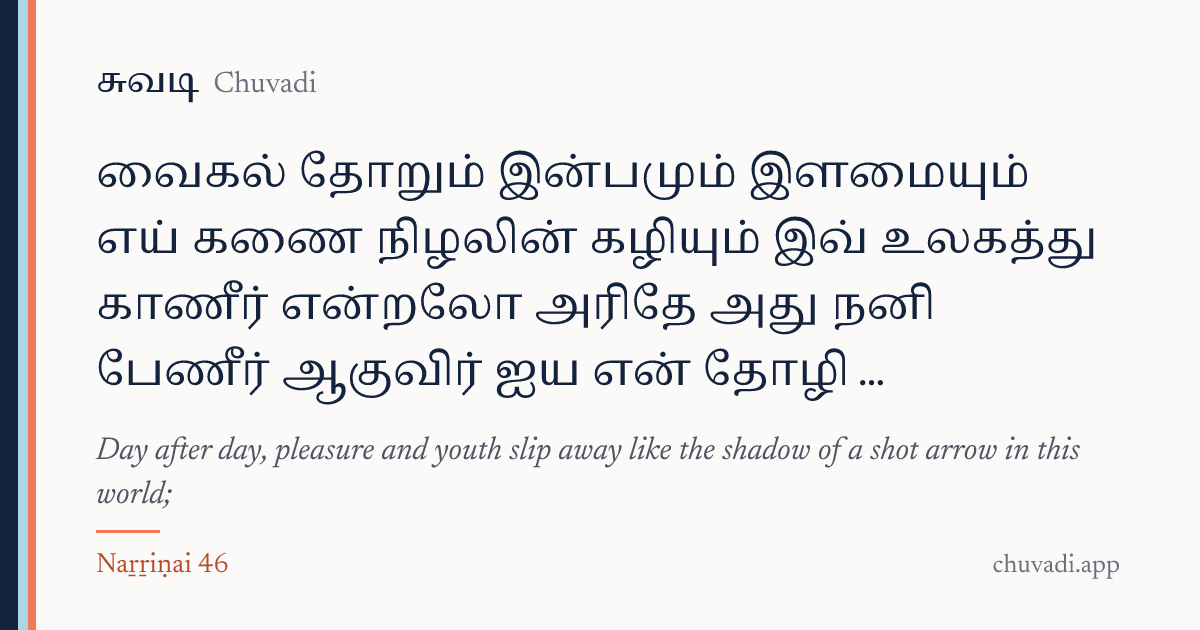

நற்றிணை 46
பாடல் · The poem
Tap a word to see where else it occurs.
பொருள் · Meaning in TamilAI
ஐயா, இந்த உலகத்தில் ஒவ்வொரு நாளும் இன்பமும் இளமையும் எய்த அம்பின் நிழலைப் போல விரைந்து கழிந்து போகின்றன. இதை நீங்கள் காணவில்லை என்று சொல்வது கடினம். அப்படியிருந்தும் அதை நீங்கள் சிறிதும் பொருட்படுத்தவில்லை. என் தோழியின் அணிகலன் அணிந்த மார்பு தனிமையில் வருந்த விட்டுவிட்டு, பாணர் கையில் எடுத்துக்கொண்டதைப் போன்ற கொன்றையின் அழகிய இனிய காய்கள், பறையை அடிக்கும் குறுந்தடிகளைப் போல மீண்டும் மீண்டும் மோதி அசைய, வெப்பக் காற்று வீசும் மூங்கில் அடர்ந்த காட்டு வழியில், துன்பம் மிகுந்த கடுமையான பாலையைக் கடந்து, நன்மையில்லாத வாழ்க்கைக்காக, நிலைக்காத பொருளின் மீதுள்ள பற்றால் “நான் பிரிந்து செல்வேன்” என்கிறீர்களே.
பாலைத் திணை; பொருள் தேடப் பிரியப் போவதாகச் சொன்ன தலைவனிடம் தோழி கூறியது. இளமை நிலையாமையையும் பொருள் நிலையாமையையும் எடுத்துக்காட்டி அவனைத் தடுக்க முயல்கிறாள். கொன்றைக் காய்களைப் பாணர் கைக்கொண்ட எதனோடு ஒப்பிடுகிறாள் என்பது தெளிவில்லை; அயிர்ப்பு என்ற சொல்லின் பொருள் உறுதியாகத் தெரியவில்லை. இப்பாடலைப் பாடிய புலவரின் பெயர் தெரியவில்லை.
ஆங்கிலம் · English translationAI
Translation
- Day after day, pleasure and youth
- slip away like the shadow of a shot arrow in this world;
- to say you do not see it would be hard; yet that, truly,
- you will not heed, sir — leaving my friend's
- jewelled breast to grieve alone — where, like something bards
- might take up, the lovely sweet pods of the koṉṟai
- swing and knock like sticks that beat a drum, stroke on stroke,
- as the hot wind blows through the bamboo-thick wilds,
- you cross the hard wasteland where misery mounts,
- and for a life that is not truly good,
- bound by wealth that does not last, you say, 'I shall leave.'
What the poem says
The hero has announced that he is going away to earn wealth, and the friend answers him (pālai; the poet's name is not recorded). She begins with a commonplace that he cannot deny: pleasure and youth pass every day, as quickly as the shadow of an arrow in flight. He sees this, and still he ignores it.
The wasteland he means to cross is drawn in a few strokes. A hot wind blows through bamboo thickets, and the long pods of the koṉṟai tree knock together like drumsticks. Against all this she sets the heroine's jewelled breast, left lonely, and the wealth he is chasing, which will not last. A life spent away from her for that wealth, she says, is no good life.
Lines 5–6 contain a doubtful phrase. The koṉṟai pods are compared to something the bards (pāṇar) 'take up' or 'hold', perhaps their drumsticks or some instrument, but the word ayirppu is uncertain and the exact picture cannot be recovered with confidence.