



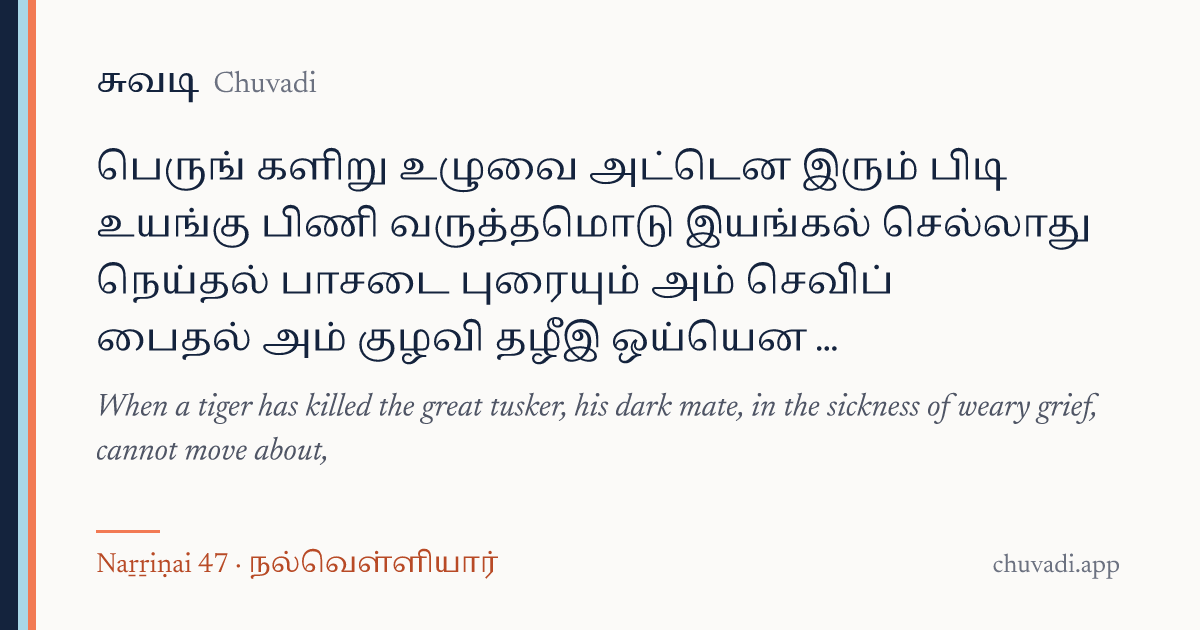

நற்றிணை 47
பாடல் · The poem
Tap a word to see where else it occurs.
பொருள் · Meaning in TamilAI
தோழி, பெரிய களிற்று யானையைப் புலி கொன்றுவிட்டதால், அதன் கரிய பெண் யானை களைப்பும் துயரும் தரும் நோயால் வருந்தி, எங்கும் நடமாட முடியாமல், நெய்தலின் பசிய இலையைப் போன்ற அழகிய காதுகளையுடைய வருந்தும் குட்டியைத் தழுவிக்கொண்டு, ஆறாத புண்பட்டவரைப் போல வருந்தித் தங்கியிருக்கும். அத்தகைய காட்டு நாட்டுக்கு உரிய தலைவனிடம், “நிலைமை இதுதான்” என்று நான் சொன்னால் என்ன கேடு? அன்னையோ உண்மையை அறியாமல் வேறாக நினைத்துக்கொண்டாள். தெய்வக் குற்றத்தை அறியும் கழங்குக் காய்களின் சாய்வைக் காட்டி, இது வெறி என்று முடிவு செய்த மனத்தோடு, ஆட்டுக்குட்டியை அறுத்து அவள் உனக்காக முருகனுக்குச் செய்யும் பூசை, பொன்னைப் போன்ற உன் பசலை நிறத்தைப் போக்க உதவாது.
குறிஞ்சித் திணை; தலைவன் வேலிப்புறத்தில் கேட்டுக்கொண்டிருக்கும்போது தோழி தலைவியிடம் பேசுவதாகச் சொல்லியது. துணையை இழந்து குட்டியோடு வருந்தும் பெண் யானை, தலைவன் இல்லாமல் வாடும் தலைவியைக் குறிக்கும் உள்ளுறை. தலைவியின் நோய்க்கு மருந்து தலைவனே என்றும், அவன் விரைந்து மணம் செய்ய வேண்டும் என்றும் தோழி மறைமுகமாக உணர்த்துகிறாள்.
ஆங்கிலம் · English translationAI
Translation
- When a tiger has killed the great tusker, his dark mate,
- in the sickness of weary grief, cannot move about,
- and holding close her sorrowing young calf, whose lovely ears
- are like the green leaf of the neytal, all at once
- suffers like one with a grievous wound, and stays there —
- to the man of that forest land, 'This is how it is,' if I
- were to say it, what harm, friend? Misjudging it,
- showing the slant of the kaḻaṅku pebbles that know the gods,
- with a mind convinced 'it is veṟi', killing a young goat,
- the rite to Murukaṉ that mother holds for you
- is of no help to your pallor, yellow as gold.
What the poem says
The friend speaks to the heroine, but she knows the hero is listening nearby (kuṟiñci, poem by Nalveḷḷiyār). Her words are meant for him.
The opening image is of the hero's own forest: a female elephant whose mate has been killed by a tiger, too stricken to move, holding her calf and suffering as if from a wound. In akam convention such a picture from the hero's land carries a hidden meaning (uḷḷuṟai): it shows how the heroine suffers without him, and perhaps hints at what will become of her if he does not act.
Meanwhile the mother has misread the girl's illness. A diviner has cast kaḻaṅku pebbles (molucca beans) and read their pattern; the trouble has been judged to be possession by Murukaṉ, and a goat is sacrificed in a veṟi rite. The friend says, loud enough for the hero to hear, that none of this will cure the heroine's pallor, the sallow colour of lovesickness. The only cure is the hero, and by asking 'what harm if I told him?' she presses him to come and marry her.