



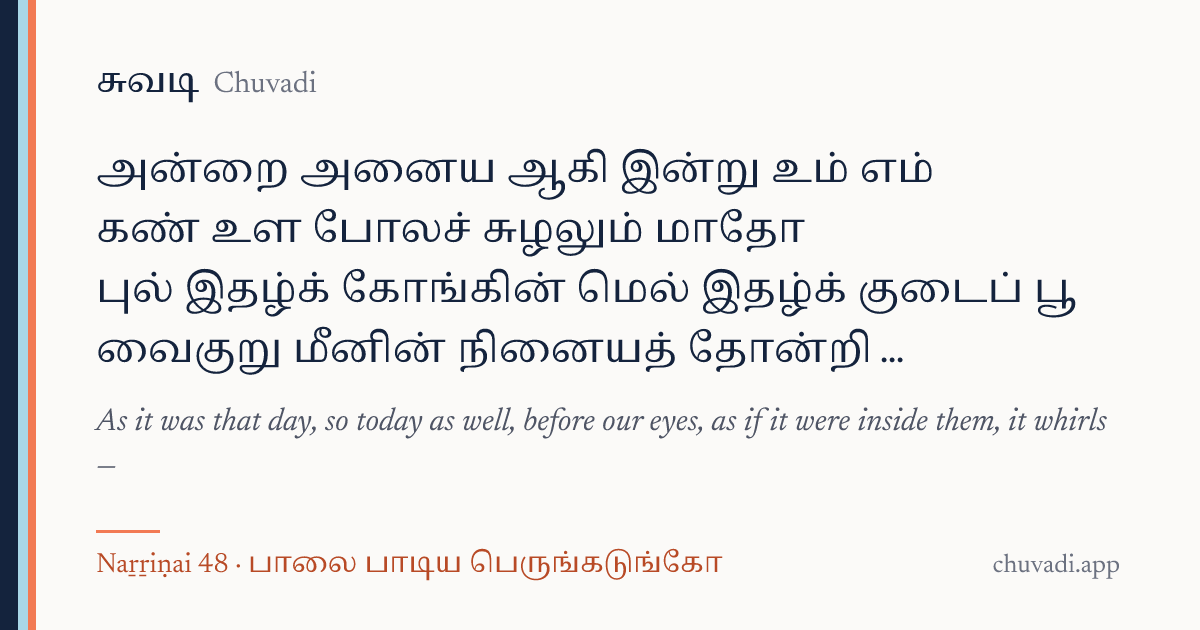

நற்றிணை 48
பாடல் · The poem
Tap a word to see where else it occurs.
பொருள் · Meaning in TamilAI
அன்று இருந்தது போலவே இன்றும், அந்தக் காடு எங்கள் கண்களுக்குள்ளேயே இருப்பது போலச் சுழன்று தோன்றுகிறது. அங்கே புல்லிய புறவிதழையுடைய கோங்க மரத்தின் மென்மையான இதழ்களைக் கொண்ட குடை போன்ற பூக்கள், விடியற்காலையில் தெரியும் விண்மீன்களை நினைவூட்டும்படி தோன்றின. முல்லை நிலத்துக்கு அழகு சேர்க்கும் பூமணம் வீசும் அந்தக் காட்டு வழியில், “கிடின்” என்ற ஒலியுடன் தாக்கும், கோல் போன்ற தொடி அணிந்த, கூரிய அம்பு எய்வதில் பழகிய மறவர்கள் எங்களை எதிர்த்து வந்தார்கள். நீங்கள் அஞ்சாமல், போரில் அவர்கள் நெருங்கியபோது அவர்களை விரட்டினீர்கள். எங்கள் உறவினர்கள் அருகே வந்தபோது எங்களை மறைத்து வைத்தீர்கள். அந்தக் காடு இன்றும் கண்முன் சுழல்கிறது.
பாலைத் திணை; பிரியப் போவதாகச் சொன்ன தலைவனிடம் தோழி பழைய நிகழ்ச்சியை நினைவூட்டுகிறாள். அன்று அஞ்சாமல் காத்தவன் இன்று கைவிடலாமா என்பதே அவள் உட்கருத்து. இந்த நிகழ்ச்சியின் பின்னணி தெளிவாகத் தெரியவில்லை; உறவினர் வந்தபோது தன்னையே மறைத்துக்கொண்டான் என்றும் பொருள் கொள்ள இடமுண்டு.
ஆங்கிலம் · English translationAI
Translation
- As it was that day, so today as well, before our
- eyes, as if it were inside them, it whirls —
- where the soft-petalled cup flowers of the coarse-calyxed kōṅku
- appear, so that one recalls the stars at break of day,
- in the flower-fragrant wilds that adorn the woodland,
- where warriors with bracelets on their arms, striking with a crash,
- skilled with honed arrows, came at us; unafraid,
- you drove them off when they pressed in among us in the fight, and you
- hid us when our own kin came near — that forest.
What the poem says
The friend speaks to the hero after he has told them he will leave (pālai, poem by Pālai pāṭiya Peruṅkaṭuṅkō). Instead of arguing, she reminds him of a shared memory: a forest that still spins before her eyes as vividly as on the day itself.
In that forest the kōṅku trees were in bloom, their pale cup-shaped flowers scattered like the last stars at dawn. There armed men, apparently highway robbers, attacked, and the hero drove them off without fear. When the girls' own kinsmen came near, he hid them. The reminder works on two levels: it recalls his courage and care, and suggests that a man who protected them so well should not now abandon her.
The situation behind the memory is not fully clear. It may refer to an earlier journey with the heroine, or simply to an encounter in the hills; 'hid us' could also be read as 'hid yourself' from the kinsmen. The meaning of the first two lines, with the forest whirling 'as if inside our eyes', is reasonably secure; the rest is a reconstruction.