



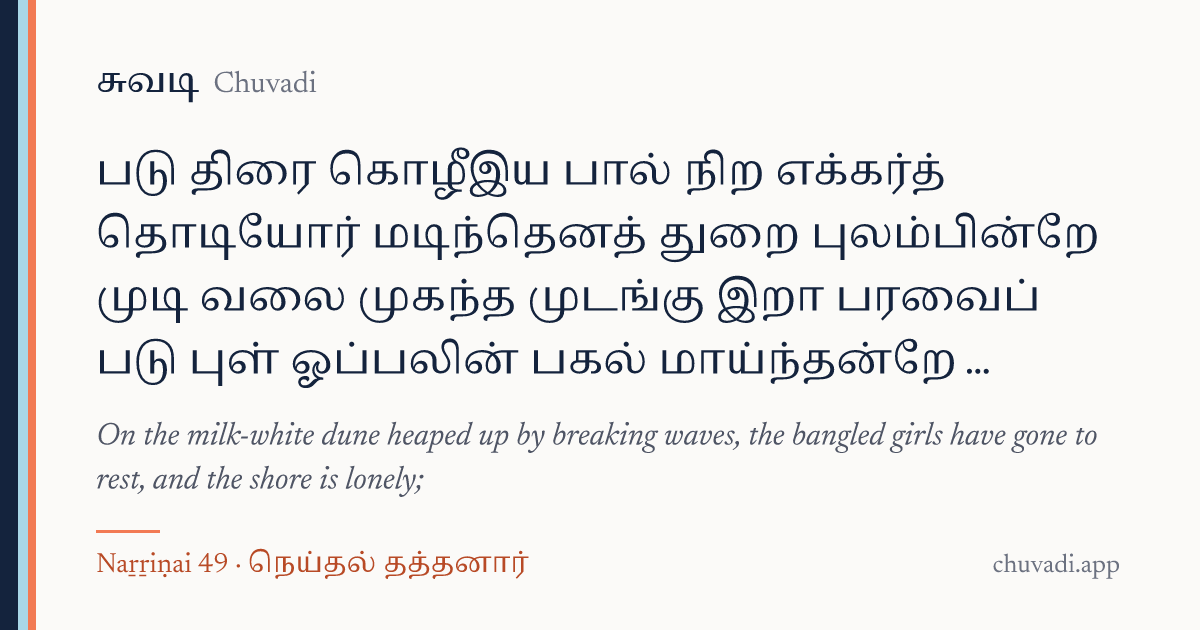

நற்றிணை 49
பாடல் · The poem
Tap a word to see where else it occurs.
பொருள் · Meaning in TamilAI
அலைகள் மோதிக் குவித்த பால்போல் வெண்மையான மணல்மேட்டில், வளையல் அணிந்த பெண்கள் உறங்கச் சென்றுவிட்டதால் கடற்றுறை தனிமையாக இருக்கிறது. முடிச்சுப் போட்ட வலையில் அள்ளிய வளைந்த இறால்களைப் பரப்பிக் காயவைத்து, வந்து இறங்கும் பறவைகளை ஓட்டிக் காத்ததில் பகல் முடிந்துவிட்டது. கொம்புள்ள மீன்களை எறிந்து பிடித்த மகிழ்ச்சியோடு வேட்டையை முடித்து, எங்கள் உறவினரும் வந்து தங்கிவிட்டார்கள். “நாம் பாதுகாப்பாக இருக்கிறோம்” என்று எண்ணி, தோழி, ஊர்ப் பொதுவிடத்தில் நிற்கும் புன்னை மரத்தின் கரிய கிளைகளில் பூத்த மணமுள்ள மலர்கள், வீட்டு முற்றத்தின் தாழையோடு சேர்ந்து மணம் வீசும், தெளிந்த கடலையுடைய தலைவன் வாழும் சிறிய நல்ல ஊருக்கு நாம் சென்று பார்த்தால் என்ன கேடு?
நெய்தல் திணை; தோழி தலைவியை இரவில் சந்திக்கத் தூண்டுகிறாள்; அருகில் இருக்கும் தலைவன் கேட்கும்படி அவள் பேசுகிறாள் என்றும் கொள்ளலாம். துறை வெறிச்சோடி, ஊரார் எல்லாம் அமைதியாக இருப்பதைச் சொல்லி, இன்றிரவு அச்சமில்லை என்று உணர்த்துகிறாள். கொம்புள்ள மீன் என்பது சுறா போன்ற ஒருவகை மீனாக இருக்கலாம்.
ஆங்கிலம் · English translationAI
Translation
- On the milk-white dune heaped up by breaking waves,
- the bangled girls have gone to rest, and the shore is lonely;
- the curled shrimp scooped up in knotted nets and spread out
- we have guarded from the landing birds, and the day is over;
- glad from spearing horned fish, their hunting done,
- our men too have settled in; 'We are safe,' so
- if we went and saw for ourselves, what harm, friend,
- where the fragrant flowers on the dark boughs of the puṉṉai in the common ground
- mingle their scent with the tāḻai in the front yards,
- the small, good village where the lord of the clear sea lives?
What the poem says
The friend urges the heroine to a meeting by night, and the colophon adds that she may be speaking so that the hero, nearby, will hear (neytal, poem by Neytal Tattaṉār). Everything she describes is a reason why tonight is safe.
The shore is empty: the girls have gone home, the shrimp spread out on the sand no longer need guarding from birds, and the fishermen have come back pleased with their catch of 'horned fish', probably sharks or sawfish, and are at rest. With the whole village asleep and secure, she suggests, why not go and see the hero's own village?
The ending pictures that village with affection. The puṉṉai tree that stands in the common ground scents the air along with the screw-pine (tāḻai) planted before the houses. The friend's 'let us go and see' is a bold proposal; it may equally be a hint to the listening hero that the time is right for him to come.