




நற்றிணை 50
பாடல் · The poem
Tap a word to see where else it occurs.
பொருள் · Meaning in TamilAI
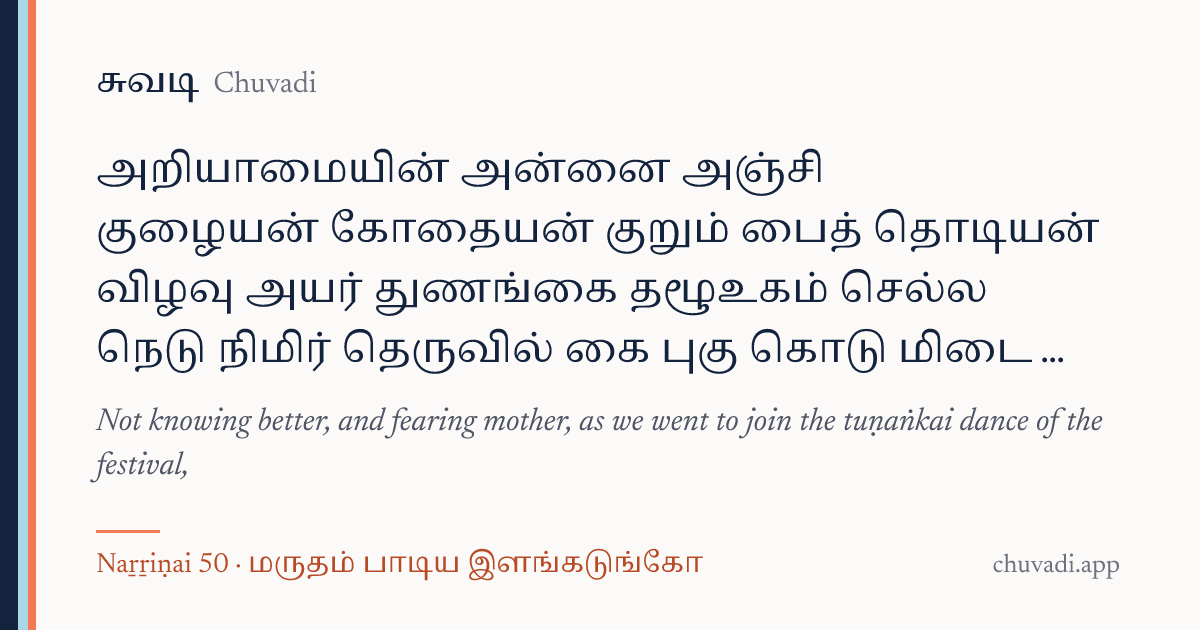
அறியாமையால், அன்னைக்கு அஞ்சிக்கொண்டே, விழாவில் நடக்கும் துணங்கைக் கூத்தில் கைகோத்து ஆடச் சென்றபோது, நீண்டு நேராகச் செல்லும் தெருவில் கைகள் இடிபடும் நெருக்கமான கூட்டத்தில், குழையும் மாலையும் சிறிய பசிய தொடியும் அணிந்த ஓர் அயலான் திடீரென்று என்மேல் மோதினான். “கேட்பவர் யாரேனும் இருக்கிறார்களோ இல்லையோ, கவனமாக இரு; உன் பசலை புதிது” என்றான். அதற்கு எதிராக, “நண்பா, உனக்கு நாணம் இல்லை” என்று சொல்லிவிட்டு வந்துவிட்டேன். பகைவரும் விரும்பும் பெருந்தன்மையுடையவன் என்று அவனை நம்பி, மணமுள்ள நெற்றியையுடைய என் தலைவியை நான் காக்கவில்லை. அவனுடைய பெருமையைக் கண்டு அவனுடைய சிறுமையைக் காணாமல் துணிந்துவிட்டேனே.
மருதத் திணை; பரத்தையரிடம் சென்று திரும்பிய தலைவனுக்காகத் தூது வந்த பாணனுக்குத் தோழி வாயில் மறுக்கிறாள். கூட்டத்தில் தன்மேல் மோதிக் கேலி பேசியவன் தலைவனே என்று அவள் குறிப்பால் சொல்லி, அவன் எந்தப் பெண்ணிடமும் இப்படி நடப்பவன் என்று காட்டுகிறாள். முதல் அடியும் யாணது பசலை என்ற தொடரும் உறுதியாகப் பொருள் கொள்ள முடியாதவை; இங்குத் தந்த பொருள் ஒரு முயற்சியே.
ஆங்கிலம் · English translationAI
Translation
- Not knowing better, and fearing mother,
- as we went to join the tuṇaṅkai dance of the festival,
- on the long, straight street, in the crush where hands meet,
- a stranger with earrings, a garland and a small green bangle
- suddenly bumped into me,
- and said, 'Is anyone listening, or not? Take care,
- your pallor is new'; and in answer to that
- I said, 'You have no shame, fellow,' and came away.
- Thinking him a noble man whom even enemies would desire,
- I did not guard the young woman of fragrant brow,
- too rash to see his meanness for his greatness.
What the poem says
In the marutam poems the hero's bard often comes to the heroine's house to plead for him after he has been with other women. Here the friend turns the bard away (marutam, poem by Marutam pāṭiya Iḷaṅkaṭuṅkō) with a story about his master.
She tells how, at a festival, she was walking to join the tuṇaṅkai, a dance in which the dancers link arms. In the jostling street a dressed-up man, earrings, garland and bangle, deliberately bumped into her and murmured a familiar remark. She snapped at him and came away. The man, it is clear, is the hero himself, ready to flirt with any woman in a crowd.
The last lines are her regret. She had trusted him as a noble man, admired even by his enemies, and so had not protected the heroine from him; she failed to see the smallness hidden under his greatness. The bard can expect no welcome.
Several phrases are uncertain. The opening words 'not knowing, fearing mother' are hard to fit to the situation, and 'your pallor is new' (yāṇatu pacalai) may be a teasing hint that she too is lovesick; the reading is tentative.