




நற்றிணை 51
பாடல் · The poem
Tap a word to see where else it occurs.
பொருள் · Meaning in TamilAI
தோழி, நாம் என்ன செய்வோம்? உயர்ந்த மூங்கில்கள் வளர்ந்த மலைப்பிளவுகள் எதிரொலிக்க, பாம்புகளைச் சினந்து தாக்கி, உயர்ந்த மலைகள் அதிரும்படி ஆட்டி, பெருகிச் செல்லும் கடுமையான குரலையுடைய இடியோடு, அடர்ந்த துளிகளைப் பொழிந்து, வானம் மழை பெய்வதை நிறுத்தவில்லை. அந்த மழையோடு, மின்னல் மேலே எழுந்தது போல வேலன் வந்துவிட்டதால், பின்னல் அவிழ்ந்த அவளுடைய கூந்தல் முடியை அன்போடு தடவுவதும் நிற்கவில்லை. பெரிய குளிர்ந்த குளவிக் கொடியை மிதித்துக் குழைத்த அகன்ற அடிகளையும், கரிய சேற்றில் புரண்ட நெற்றியையும் உடைய கொல்லும் களிறு, இளைய ஆசினி மரத்தை முறித்துப்போட, பூக்கள் சிதைந்து கிடக்கும் வேங்கை மரங்களையுடைய மலைக்கு உரிய தலைவனுக்கு என்ன ஆகுமோ?
குறிஞ்சித் திணை; தலைவன் வரும் வழியின் இடர்களுக்கு அஞ்சித் தலைவி மெலிந்ததால் வெறியாட்டு ஏற்பாடு செய்யப்பட்டபோது, அவன் கேட்கும்படி தோழி பேசுகிறாள். வெளியே நிற்காத மழையும் உள்ளே நிற்காத வேலனின் சடங்கும் ஒன்றுக்கொன்று இணையாக வைக்கப்படுகின்றன. கூந்தலைத் தடவுவது அன்னையா வேலனா என்பதும், இறுதி அடிகளின் தொடர்பும் உறுதியாகத் தெரியவில்லை.
ஆங்கிலம் · English translationAI
Translation
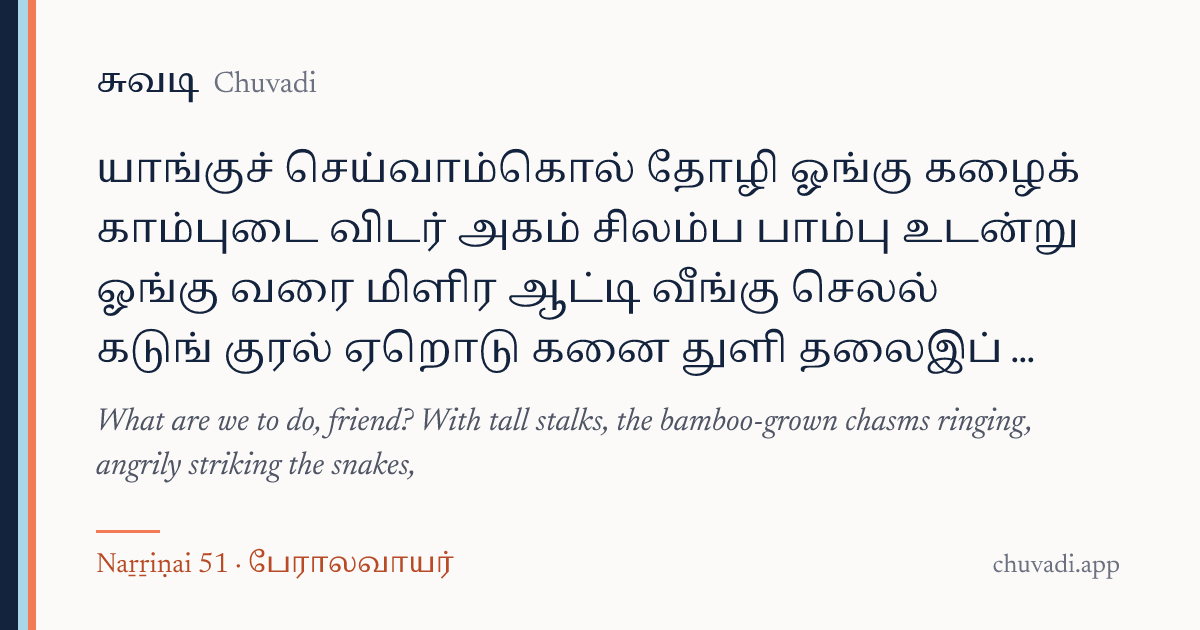
- What are we to do, friend? With tall stalks,
- the bamboo-grown chasms ringing, angrily striking the snakes,
- shaking the high peaks so they seem to tremble, swelling as it moves,
- with the harsh-voiced thunder, pouring dense drops,
- the rain will not stop from the sky; and with the rain,
- now that the vēlaṉ has come, like lightning shooting up,
- the stroking of her loosened, unplaited hair will not stop —
- and the lord of the mountain, where a killer tusker, whose broad feet have crushed the great cool kuḷavi,
- his brow daubed from bathing in dark mud,
- has broken the young āciṉi tree,
- on a mountain of vēṅkai trees with blossoms trampled — what of him?
What the poem says
The colophon explains that the heroine has fallen ill from fear of the dangers the hero faces on the road to her, and a veṟi rite has been arranged; the friend speaks so that the hero, outside, will hear (kuṟiñci, poem by Pērālavāyar).
She sets two unceasing things side by side. Outside, a storm rages on the mountain: thunder echoes through the bamboo chasms, the rain pours, and thunder was believed to strike and kill snakes. Inside, the vēlaṉ, the priest of Murukaṉ, has arrived, and the mother keeps anxiously stroking her daughter's loosened hair. The heroine's real fear is for the hero, who must come through this storm by night.
The last four lines describe his mountain. A killer elephant tramples the wild jasmine (kuḷavi), smears itself with mud, and breaks a young āciṉi tree among vēṅkai trees whose flowers lie crushed. The violence of the tusker suggests the dangers of his path, and perhaps the harm being done to the innocent girl.
Line 7 is open to doubt. The caressing of the hair may be the mother's, or part of the vēlaṉ's rite; and the sentence that ends with 'for the lord of the mountain' has no finished main verb, so its exact construction is uncertain.