




நற்றிணை 52
பாடல் · The poem
Tap a word to see where else it occurs.
பொருள் · Meaning in TamilAI
கரிய கொடியையுடைய அதிரல் பூவோடு, பாதிரியின் தூய இதழ்களையுடைய புதிய மலர்களைச் சூடிய இவளுடைய கூந்தலின் மணம் கமழும் நறுமணம் எங்கள்மேல் படிந்திருக்க, சுணங்கு அழகு செய்யும் இவளுடைய மார்பை இறுகத் தழுவி, மகிழ்ச்சி பெருகும் அணைப்பிலிருந்து நாங்கள் நீங்க மாட்டோம். நெஞ்சே, நீயோ முயற்சியைப் பெரிதாக மதித்து, நாள்தோறும் பிரிந்து வாழும் வாழ்க்கையையே விரும்பி, அமைதி அடையாமல் இருக்கிறாய். நீ வாழ்க, உனக்கு அன்பு இல்லை! கடும் போரில் வல்ல மழவர் தலைவனான பெருவள்ளல் ஓரியின் கை வழங்கும் செல்வமே கிடைப்பதாக இருந்தாலும், முயன்று தேடும் பொருள் மிக அற்பமானதே.
பாலைத் திணை; பொருள் தேடப் பிரிய நினைத்த தலைவன் தன் நெஞ்சோடு பேசிப் பயணத்தைக் கைவிடுகிறான். ஓரி என்பவன் கொடைக்குப் புகழ்பெற்ற மழவர் குலத் தலைவன். இறுதி அடியின் பொருளும், ஐந்தாம் அடியில் உள்ள உவர் என்ற சொல்லின் பொருளும் உறுதியாகத் தெரியவில்லை; காதலை விடப் பொருள் சிறியது என்பதே பாடலின் கருத்தாகத் தோன்றுகிறது.
ஆங்கிலம் · English translationAI
Translation
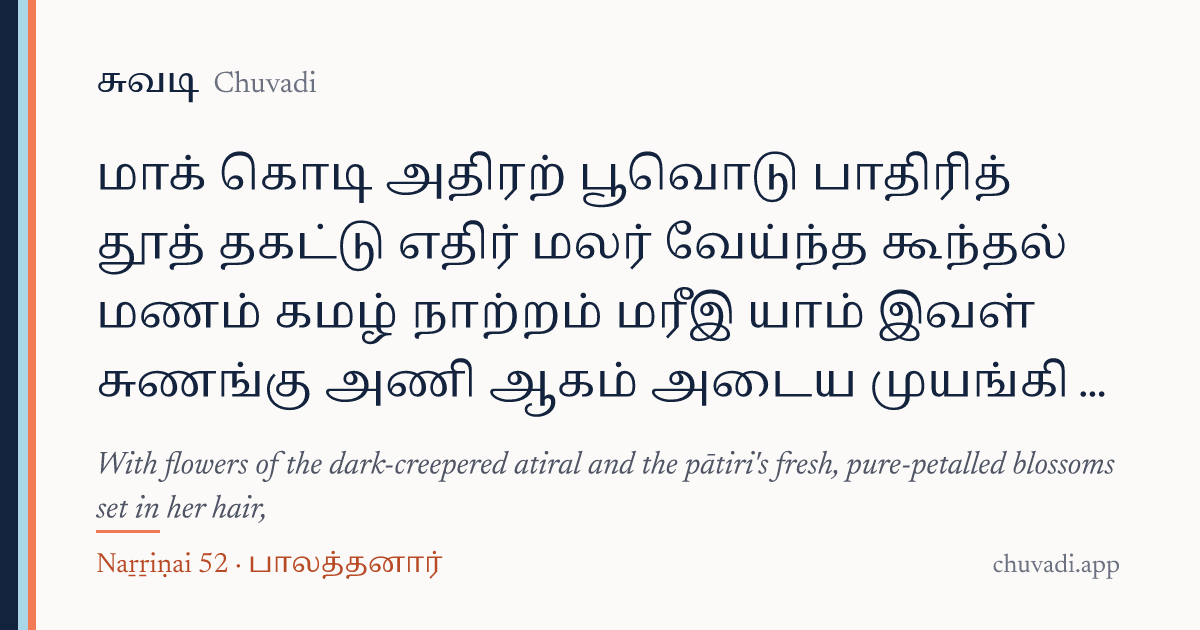
- With flowers of the dark-creepered atiral and the pātiri's
- fresh, pure-petalled blossoms set in her hair,
- its fragrance clinging to us, we, her
- breast adorned with cuṇaṅku spots embracing close,
- in an embrace swelling with delight, cannot bring ourselves to leave;
- but you, thinking much of manly effort, every day
- long for a life lived apart and are never content.
- You have no love, long may you live, my heart! Fierce in war,
- the great man of the Maḻavar, the bountiful Ōri —
- even if the wealth of his giving hand were ours to gain,
- it is a slight thing, see, the wealth one makes by toil.
What the poem says
Here the hero talks himself out of a journey (pālai, poem by Pālattaṉār). The colophon calls it his 'holding back from going'. He divides himself in two: 'we', the lover who cannot leave the heroine's embrace, and 'you', his ambitious heart, which keeps urging him to go and earn.
The first five lines are sensuous: her hair dressed with atiral and pātiri flowers, the scent clinging to him, the cuṇaṅku spots on her breast (pale beauty-marks of a young woman), and an embrace he cannot loosen. Against this, his heart prizes effort and wants the life of men who live away from home.
He ends by naming Ōri, a chieftain of the Maḻavar, famed in Sangam poetry for his generosity. Even wealth as great as Ōri's gifts would be small, he says, compared with what he would lose.
The last line is not certain. The words iyaintu cey poruḷ may mean 'wealth made by toil' or 'wealth made by going', and aitu ('slight, thin') could also be read more weakly; but the drift, that wealth is worth less than love, seems clear. The word rendered 'delight' in line 5 (uvar) is also doubtful.