




நற்றிணை 60
பாடல் · The poem
Tap a word to see where else it occurs.
பொருள் · Meaning in TamilAI
மலையைக் கண்டது போல உறுதியாக இணைந்து உயர்ந்து நிற்கும் பெரிய நெற்கூடுகள் பலவற்றை உடைய, எருமைகளால் உழும் உழவனே! உறக்கம் இல்லாமல், இருள் விலகும் குளிர்ந்த விடியற்காலையில், கரிய கண்களையுடைய வரால் மீனின் பெரிய துண்டுகளைப் பொரித்ததோடு, புள்ளியுள்ள அரிசியால் ஆக்கிய பொங்கிய பெரிய சோற்றை, அள்ளும் கையால் வயிறு நிறைய உண்டு, நீர் நிறைந்த வயலில் நாற்று முடிகளை நட உன் நடவு ஆள்களோடு நீ அங்கே சென்றால், அங்குள்ள சாய்ப்புல்லையும் நெய்தல் மலரையும் அழிக்காமல் காப்பாயாக. எங்கள் வீட்டில் இருக்கும் கரிய நீண்ட கூந்தலையுடைய இளம்பெண் அவற்றைத் தன் அழகிய வளையல்களோடு சேர்த்து அணிந்துகொள்கிறாள்.
மருதத் திணை; தலைவன் வேலிப்புறத்தில் கேட்கும்படி தோழி உழவனிடம் பேசுவது போலத் தலைவி வீட்டில் காவலில் இருப்பதை அறிவிக்கிறாள். அவள் இனி வெளியே வர முடியாது, வயல் மலர்களை வீட்டுக்குக் கொண்டுவந்தே விளையாடுகிறாள் என்பதைக் கேட்டு, தலைவன் மணம் பேச வர வேண்டும் என்பது குறிப்பு. புகர்வை என்ற சொல்லின் பொருள் உறுதியாகத் தெரியவில்லை.
ஆங்கிலம் · English translationAI
Translation
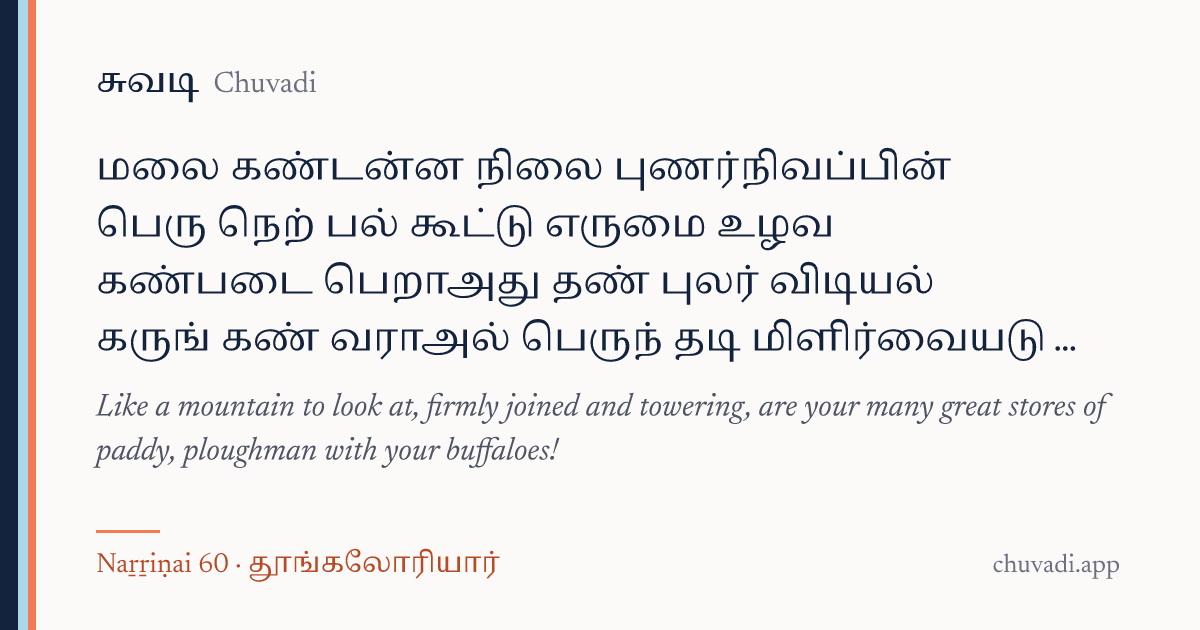
- Like a mountain to look at, firmly joined and towering,
- are your many great stores of paddy, ploughman with your buffaloes!
- Without your sleep, in the cool dawn as the dark fades,
- with great chunks of black-eyed varāl fish, fried,
- and a big heap of rice from spotted grain, puffed and soft,
- you eat your fill with your grabbing hand,
- and to press the bundled seedlings into the watery field, if with your
- planters you go out there,
- spare the cāy rushes and the neytal lilies, please; in our house
- the young girl with dark, thick hair
- adds them to her fine bangles and wears them too.
What the poem says
The friend speaks to a farmer, ostensibly about his work, while the hero is within earshot; her purpose is to let him know that the heroine is now kept at home (marutam, poem by Tūṅkalōriyār).
She flatters the farmer with a hearty picture of his life: granaries piled like mountains, an early start before dawn, a big breakfast of fried varāl fish and fluffy rice, then out with the planters to transplant the paddy. Her only request is small: when you clear the fields, spare the rushes (cāy) and the water lilies (neytal).
The reason is in the last lines. The girl at home now plays at making bracelets and ornaments from those stems and flowers, the only playthings of the field that can be brought to her. The hero hears that she can no longer come out, and that the season of open meetings is over; the hint is that he must ask for her hand. The pairing of cāy and neytal as bangles is a small, touching detail of a young girl's life.
The word puṟkarvai in line 5 is uncertain; 'spotted grain' is a guess.