




நற்றிணை 61
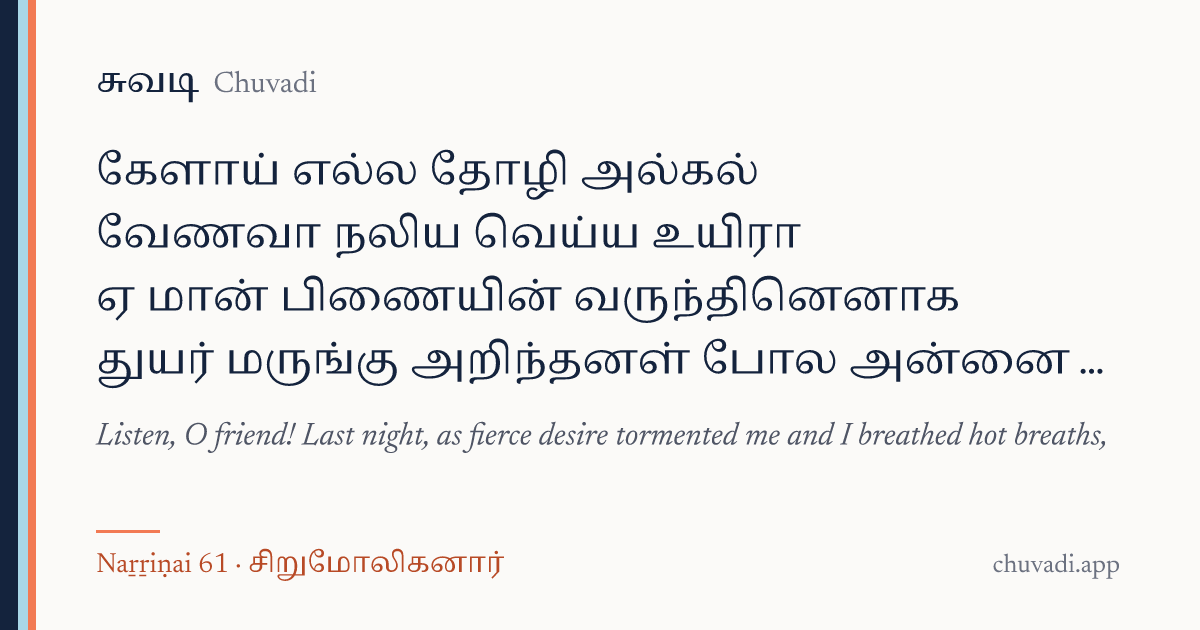
பாடல் · The poem
Tap a word to see where else it occurs.
பொருள் · Meaning in TamilAI
தோழி, கேள்! நேற்று இரவு மிகுந்த ஆசை என்னை வருத்த, வெப்பமான பெருமூச்சு விட்டுக்கொண்டு, அம்பு பட்ட பெண்மானைப் போல நான் வருந்திக்கொண்டிருந்தேன். என் துயரத்தின் காரணத்தை அறிந்தவள் போல, அன்னை “என் சின்னப் பெண்ணே, நீ உறங்கவில்லையா?” என்று கேட்டாள். அதனால் சொல் வெளியே வராதபடி, மெல்ல என் நெஞ்சுக்குள்ளேயே நான் சொல்லிக்கொண்டேன்: “கனமழை பொழிந்த பாறையின் அருகே, மீன்கொத்தியின் அலகு போன்ற அரும்புகளையுடைய தளவுக் கொடிகள் நிறைந்த பரல் கற்கள் உள்ள பள்ளத்தையுடைய, காடுகள் செறிந்த நாட்டுக்குரிய தலைவனை நினைத்து ஏங்குபவர்களுக்குக் கண்ணில் உறக்கம் வருமா?”
குறிஞ்சித் திணை; தலைவன் வந்திருப்பதை அறிந்த தோழி அவன் கேட்கும்படி தலைவியிடம் பேசுகிறாள். தலைவியின் துயரத்தைத் தன்னுடையது போல அவள் கூறுகிறாள். அன்னை ஐயுறத் தொடங்கிவிட்டாள்; தலைவன் விரைந்து மணம் செய்ய வேண்டும் என்பது குறிப்பு. சிரல் வாய் உற்ற என்ற தொடரின் பொருள் உறுதியாகத் தெரியவில்லை; மீன்கொத்தி கொத்திய மலர் என்றும் கொள்ளலாம்.
ஆங்கிலம் · English translationAI
Translation
- Listen, O friend! Last night,
- as fierce desire tormented me and I breathed hot breaths,
- suffering like a doe struck by an arrow,
- as though she had guessed the cause of my grief, mother
- said, 'Don't you sleep, my little one?', and so,
- not letting the words come out, softly in my heart
- I said: beside the rock where the heavy rain had poured,
- in the gravelly hollow where the taḷavu buds are like a kingfisher's beak,
- for those who long for the man of the forest country,
- can the eyes ever close in sleep? I said.
What the poem says
The friend has sensed that the hero is nearby, and speaks to the heroine so that he will hear (kuṟiñci, poem by Ciṟumōlikaṉār). Curiously, she tells the story in the first person, as if she herself were the one who lay awake; this is a known device by which the friend voices the heroine's state as her own, so that the hero hears it without the heroine having to confess.
The night before, she says, desire tormented her like an arrow in a deer. The mother, as if she had guessed the cause, asked why she could not sleep. She dared not answer aloud, but answered silently: how can anyone who longs for the man of the forest sleep?
The image in lines 7–8 belongs to his country: a rock-hollow full of gravel and rainwater, where the taḷavu (wild jasmine) blooms. The point for the hero is clear. The mother is beginning to suspect, the heroine cannot sleep, and he must act.
The phrase ciral vāy uṟṟa in line 8 is doubtful. It may compare the taḷavu buds to a kingfisher's beak, or describe the flowers as pecked by a kingfisher.