




நற்றிணை 63
பாடல் · The poem
Tap a word to see where else it occurs.
பொருள் · Meaning in TamilAI
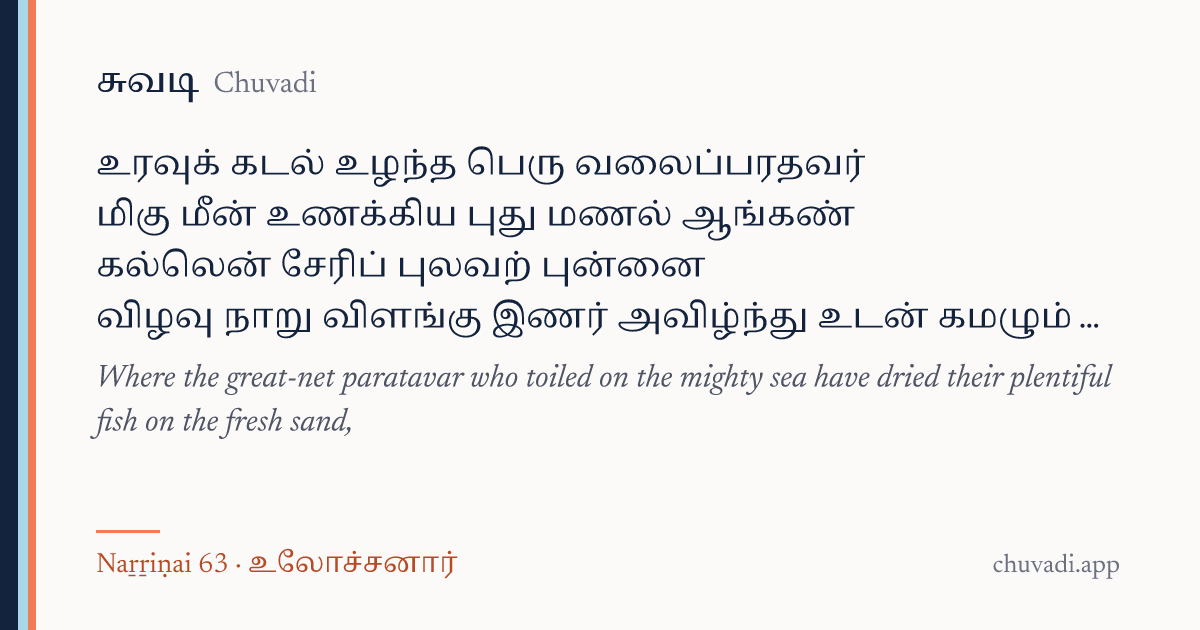
வலிய கடலில் உழைத்த பெரிய வலைகளையுடைய பரதவர் மிகுதியான மீன்களைக் காயவைத்த புதுமணல் பரப்பில், ஆரவாரம் மிகுந்த சேரியில், புலால் நாற்றம் வீசும் புன்னை மரம் விழாவின் மணம் கமழும் ஒளிரும் பூங்கொத்துகளை விரித்து மணம் வீசுகிறது. அப்படிப்பட்ட இரைச்சல் மிகுந்த இந்த ஊர் அறம் இல்லாதது. அதனால் அறம் இல்லாத அன்னையும் இவளைக் கடுமையான காவலில் வைத்துவிட்டாள். பறவைகள் அமர்ந்ததால் ஒடிந்த பூக்கள் கலந்து கிடக்கும் சேற்றில், கழிக்கரை வழியில் பெருஞ்சிறகுடையவை போல ஏறிச் செல்லும் குதிரைகளை, அலைகள் கொண்டு வரும் கடல்நீர் கழுவும், நிறைந்த அலைகளையுடைய கடற்கரைத் தலைவனோடு நமக்கு அமைந்த உறவு, பசலை படர்ந்து அழிந்துவிடுமோ?
நெய்தல் திணை; ஊரார் பேசும் அலருக்கு அஞ்சித் தோழி, தலைவன் கேட்கும்படி தலைவி காவலில் இருப்பதை அறிவிக்கிறாள். புலால் நாற்றத்தோடு கலந்த புன்னையின் மணம் போல, ஊரின் ஆரவாரத்திடையே அவர்கள் காதல் பேசப்படுகிறது. இருஞ்சிறை இவுளி என்ற தொடரின் பொருள் உறுதியாகத் தெரியவில்லை.
ஆங்கிலம் · English translationAI
Translation
- Where the great-net paratavar who toiled on the mighty sea
- have dried their plentiful fish on the fresh sand,
- in the noisy settlement the fish-smelling puṉṉai
- opens its bright clusters with a festival scent, all fragrant together;
- this clamouring town has no justice; and so,
- as our unjust mother puts her under strict guard,
- will it turn to pallor and die,
- where in the mire, strewn with flowers broken by perching birds,
- the horses, as if on great wings, climb the backwater track
- and are washed by the surf the waves bring in —
- our bond with the lord of the shore of full waves?
What the poem says
Afraid of village gossip, the friend speaks within the hero's hearing to let him know that the heroine is now confined (neytal, poem by Ulōccaṉār). Her words are sharp: the town is unjust, and the mother who has locked the girl up is unjust too.
The first lines set the noisy fishing village: nets, fish drying on new sand, and the puṉṉai tree in bloom, whose flowers smell of festival above the stink of fish. The mixture suits the town she complains of, full of busy, gossiping talk (alar). Because of that talk the heroine is under guard, and the friend wonders whether the love between her and the hero will simply fade into pallor and die.
The hero is seen in his chariot crossing the backwater: his horses splash through mud scattered with flowers and are washed clean by the surf. The vivid picture shows how often and how openly he comes, the very thing that has set the town talking.
The phrase iruñ ciṟai ivuḷi in line 9 is unclear. Ciṟai usually means 'wing', and the horses may be compared to birds, but the exact sense is uncertain.