




நற்றிணை 64
பாடல் · The poem
Tap a word to see where else it occurs.
பொருள் · Meaning in TamilAI
அவர் எப்படிப்பட்டவராக இருந்தாலும், இனி அவரைப் பற்றிய நினைவு ஒழியட்டும். நிலைமை அப்படி ஆகிவிட்டதால், தோழி, நீ வருந்தாதே. நாம் இந்த நிலையில் இருக்கும்போது நம்மைக் கைவிட்டுச் சென்றவரின் நட்பால் என்ன பயன்? மரல் நாரால் ஆன ஆடையை உடுத்தி மலையில் வாழும் குறவர்கள் அறியாமல் வெட்டிவிட்ட சிறிய இலையுடைய சந்தன மரம், வறண்டு அதன் வயிரம் வாடி, மெல்ல மெல்ல உள்ளீடு இல்லாமல் சோர்ந்து விழுவது போல, என் அறிவும் உள்ளமும் அவரிடம் சென்றுவிட்டதால், தோழி, என் உடல் வெறுமையாகிவிட்டது. இனி அவர் வந்தாலும் இந்த நோய்க்கு மருந்தாக மாட்டார். வராமல் அங்கேயே இருக்கட்டும் என் காதலர். இங்கே காதல் ஏக்கம் நம்மை அழுத்த நாம் படும் நோய் நிறைந்த துயரத்தை நம் உறவினர் காணாமல் இருக்கட்டும்.
குறிஞ்சித் திணை; தலைவன் பிரிந்திருக்கும்போது தலைவியின் வாட்டத்தைக் கண்டு அவனுக்குத் தூது அனுப்ப நினைத்த தோழியிடம் தலைவி சொல்லியது. உள்ளே வறண்டு விழும் சந்தன மரம் அவளுடைய உள்ளம் இழந்த உடலுக்கு உவமை. பிரிவுத் துயரே பாடலின் பொருள் என்பதால் இது பாலைக்கோ நெய்தலுக்கோ நெருக்கமாகத் தோன்றுகிறது; தரப்பட்ட திணை குறிஞ்சி.
ஆங்கிலம் · English translationAI
Translation
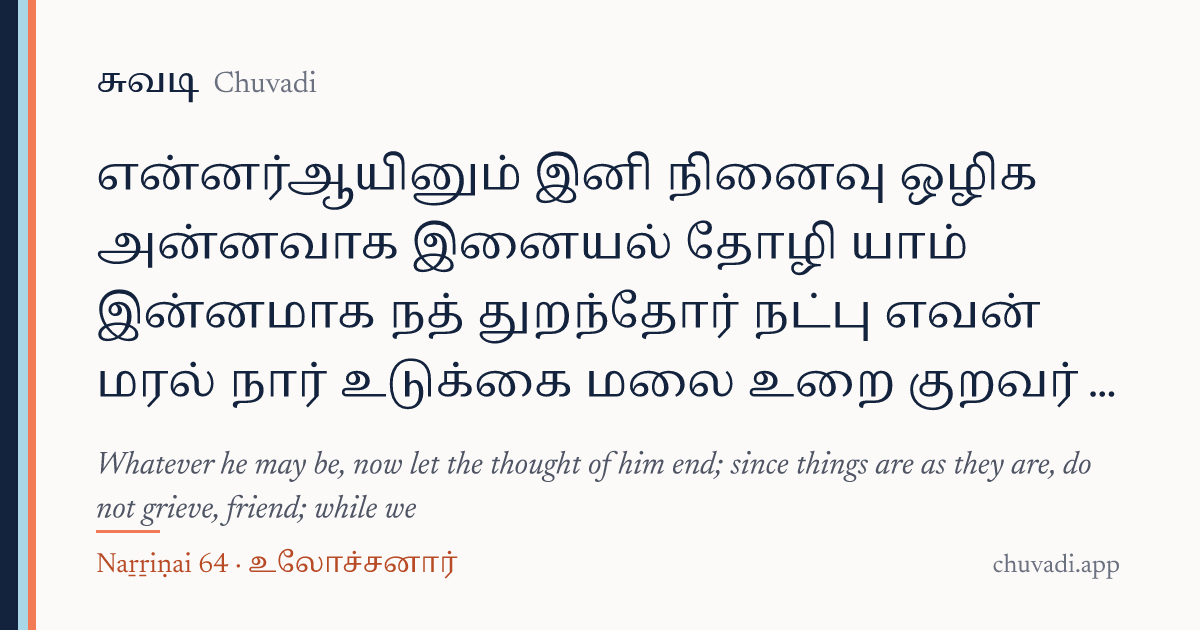
- Whatever he may be, now let the thought of him end;
- since things are as they are, do not grieve, friend; while we
- are in this state, what is the friendship of one who left us?
- The kuṟavar who live on the mountain, dressed in maral fibre,
- unknowingly cut a small-leaved sandal tree;
- it dried, its heartwood withered, and slowly
- the tree became hollow and drooped and fell; just so, my
- sense and my mind went off to him, and so
- my body is empty, my friend; now even if he
- comes, he is no medicine for this sickness; let him not come,
- let him stay there, my lover; here, our
- suffering, as love's longing crushes us,
- our sick and heavy pain — may our own people not see it.
What the poem says
The hero has gone away, and the friend, seeing how hard the separation is for the heroine, wants to send him a message. The heroine forbids it (labelled kuṟiñci, poem by Ulōccaṉār). Her answer is proud and despairing at once.
Whatever he is, she says, stop thinking about him; what is his friendship worth to people in our state? Then comes a precise image from the hills. The hill people, who wear clothes of maral fibre, have cut a sandal tree without realising it; the tree slowly dries out from within, its fragrant heartwood wasting until it collapses. In the same way her mind and heart have gone to him, and her body is left hollow.
So even if he came now, he could not cure her. Let him stay where he is. Her only wish is that her family should not see how she suffers. The tiṇai label kuṟiñci fits the hill imagery, but the theme of separation and wasting is closer to pālai or neytal; the label is kept as given.