



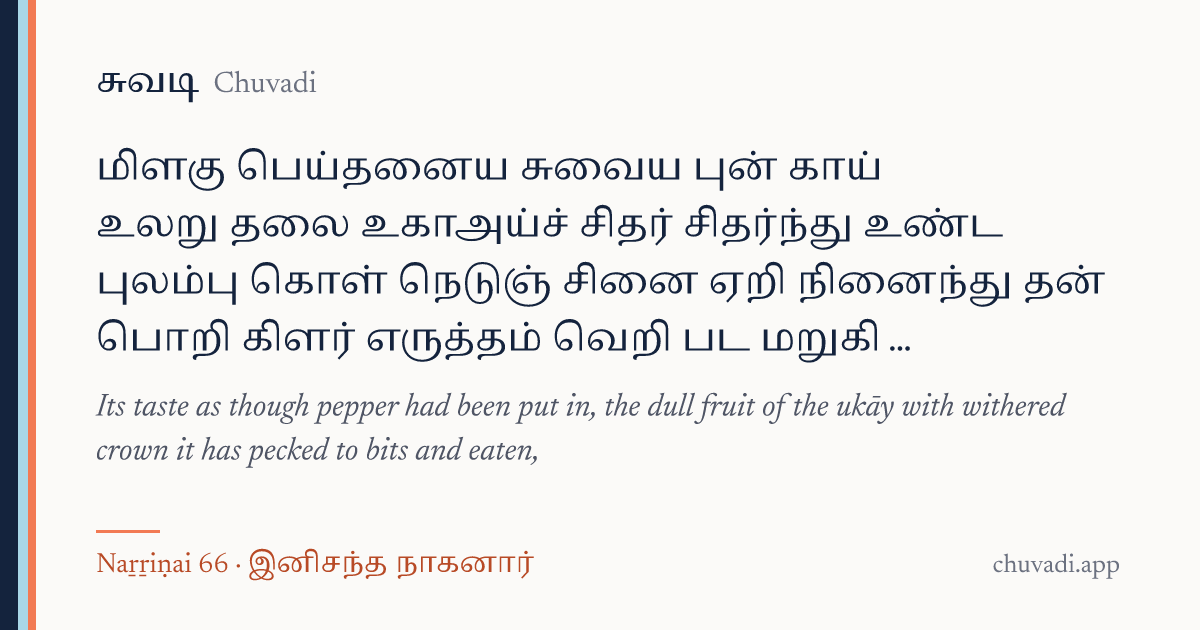

நற்றிணை 66
பாடல் · The poem
Tap a word to see where else it occurs.
பொருள் · Meaning in TamilAI
மிளகு இட்டது போன்ற காரச் சுவையுடைய, காய்ந்த உச்சியையுடைய உகாய் மரத்தின் புல்லிய காய்களைக் கொத்திச் சிதறவைத்து உண்ட புல்லிய புறா, தனிமையான நீண்ட கிளையில் ஏறி அமர்ந்து, எதையோ நினைத்துக்கொண்டு, புள்ளிகள் விளங்கும் தன் கழுத்தை மயங்கியதுபோல் சிலிர்த்துத் திரும்பித் திரும்பி, வெப்பமான புழுதி நிறைந்த வழியில் வருந்திக் கூவும். அந்த வழியில் தான் விரும்பிய காதலனோடு அவள் சேர்ந்து சென்றிருந்தாலும், அவளுடைய மாலை கலைந்தபோதும், சிறு வளையல்கள் நெகிழ்ந்தபோதும், அல்குலில் அணிந்த காசுமாலை முறை தவறிப் புரண்டபோதும், சிறந்த அழகு கெடும்படி அழுது, என் மாயச் சிறுமகளின் மலர் போன்ற அழகிய கண்கள் சிவந்து ஒளி மங்கி வருந்தியிருக்குமோ?
பாலைத் திணை; காதலனோடு உடன்போக்குச் சென்ற மகளை நினைத்து வீட்டில் இருக்கும் தாய் மயங்கி வருந்துவது; இது மனை மருட்சி எனப்படும். தனிமையில் கூவும் புறா தாயின் துயரத்தையும் பாலை வழியின் வெறுமையையும் காட்டுகிறது. மாயக் குறுமகள் என்பது மயக்கும் அழகுடையவள் என்றும், சொல்லாமல் மறைந்து சென்றவள் என்றும் பொருள்படும்.
ஆங்கிலம் · English translationAI
Translation
- Its taste as though pepper had been put in, the dull fruit
- of the ukāy with withered crown it has pecked to bits and eaten,
- then, climbing a lonely, long branch, brooding, its
- spotted neck ruffled wildly, it turns this way and that —
- the dull dove moans along the road of hot dust;
- though she has joined the lover whom she longed for,
- will they have reddened, lost their brightness, and grown troubled,
- when her garland tangled, when her small bangles slipped,
- when the strung coins on her girdle lost their order,
- weeping until their fine beauty was beyond help —
- my bewitching little girl's eyes, lovely as flowers?
What the poem says
The colophon calls this maṉai maruṭci, 'bewilderment in the house'. A mother whose daughter has eloped with her lover through the wasteland broods at home on what the girl is suffering (pālai, poem by Iṉicanta Nākaṉār).
The first five lines show the road the girl has taken. A lonely dove has eaten the peppery fruit of the ukāy tree and sits on a long bare branch, ruffling its neck and moaning in the hot dust. The dove's sad call is a typical sound of the pālai landscape, and its loneliness echoes the mother's own.
Then she turns to her daughter. The girl has gone with the man she loved, and the mother does not deny her that joy; but she cannot stop imagining the hardships of the road: her garland in a tangle, her bangles loose, the coin-girdle twisted, and her flower-like eyes red from crying. She calls her 'my māyak kuṟumakaḷ', a phrase that suggests both the girl's enchanting charm and the way she slipped away without a word.