




நற்றிணை 67
பாடல் · The poem
Tap a word to see where else it occurs.
பொருள் · Meaning in TamilAI
தொலைவான வானத்தில் ஏறிச் சென்ற செழுமையான கதிர்களையுடைய ஞாயிற்று மண்டிலம் பெரிய மலைக்குப் பின்னால் மறைந்துவிட்டது. கடற்றுறை தனிமையாகிவிட்டது. இறாமீனை உண்டு எழுந்த கரிய கால்களையுடைய வெண்ணிறக் குருகுகள், வெண்மையான மணல்மேடுகளின்மேல் வலிய சிறகுகளை விரித்துக் கூவிக்கொண்டு, கரிய கிளைகளையுடைய புன்னை மரத்தில் வந்து தங்கிவிட்டன. திரண்ட தண்டுகளையுடைய பெரிய மலர்களை மறைக்கும்படி நீர் நிறைந்த கழியில் இணையாகச் சுறாமீன்களும் திரிகின்றன. அதே நேரத்தில், இருளில் முழங்கும் குளிர்ந்த கடலில் பல விளக்குகளை ஏற்றிக்கொண்டு எங்கள் உறவினரும் மீன்வேட்டைக்குச் சென்றுவிட்டார்கள். ஆகவே ஐயா, பொங்கும் நீர்த்திவலைகளோடு முழவு போல ஒலிக்கும் அலைகள் எழுந்து வரும், உடைந்து அலைக்கும் கடலருகே தோட்டங்களையுடைய நாங்கள் வாழும் ஊரில் நீ தங்கினால் என்ன கேடு?
நெய்தல் திணை; பகலில் சந்தித்துப் பிரிந்து செல்லும் தலைவனைத் தோழி மணம் செய்யத் தூண்டுகிறாள். இரவில் ஊரில் தங்கச் சொல்லும் அழைப்பு, மணந்தவனாகவே அவன் வெளிப்படையாகத் தங்க முடியும் என்பதை உணர்த்துகிறது. நான்காம் அடியில் உள்ள வெண்கோடு என்ற சொல்லின் பொருள் உறுதியாகத் தெரியவில்லை.
ஆங்கிலம் · English translationAI
Translation
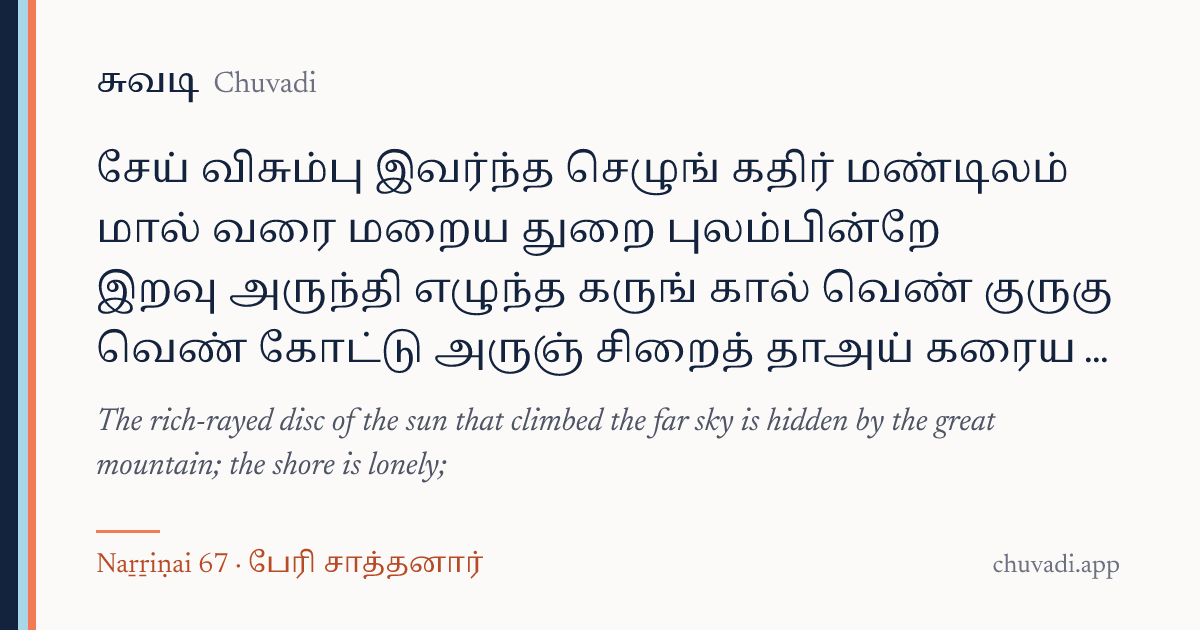
- The rich-rayed disc of the sun that climbed the far sky
- is hidden by the great mountain; the shore is lonely;
- the black-legged white herons that rose after eating shrimp
- spread their strong wings over the white sand-ridges, calling,
- and have come to roost in the black-branched puṉṉai;
- in the brimming backwater, as it hides the great flowers on their thick stalks,
- pairs of sharks swim about as well; and meanwhile,
- lighting many lamps on the cold sea that roars in the dark,
- our men have gone out to fish; and so
- if you stayed, sir, what harm would there be? Where, with bursting spray,
- the surf, with a sound like drums, comes rising
- by the breaking sea, our village where we live, with its gardens?
What the poem says
The hero has met the heroine by day and is about to leave; the friend urges him to marry her (neytal, poem by Pēri Cāttaṉār). On the surface she invites him to stay the night in their village.
She describes evening falling over the shore. The sun has gone behind the mountain, the herons have finished feeding and come home to the puṉṉai trees, the backwater has risen over the flowers, and sharks move in it. The fishermen, her own kin, have gone out to sea with their lamps. Everything says that the day's meeting is over, and that night on this coast is lonely and even dangerous to cross.
Why not stay, then? The question is double-edged. A man can stay openly in her village only as a husband, so the invitation is really a call to make the bond public. The sharks in the backwater may also hint at the risks of the road he takes at night.
The phrase veṇ kōṭṭu aruñ ciṟai in line 4 is difficult; 'white sand-ridges' is one possible reading of veṇ kōṭu, which could also mean white branches or white crests.