



பதிற்றுப்பத்து 11 · இரண்டாம் பத்து
பாடல் · The poem
Tap a word to see where else it occurs.
பொருள் · Meaning in TamilAI
அலைகள் மலைபோல் எழுந்து வெண்துளிகளாக உடையும், காற்று மோதிக் கலக்கும் கரிய பெருங்கடலை அடைந்து, அச்சம் தரும் அவுணர்களைக் காத்த சூரனை அவனது அடிமரத்தோடு வெட்டி வீழ்த்திய பெரும்புகழ் உடைய சினம் மிக்க முருகன் யானைமீது ஏறிச் சென்றது போல, நீ உன் சிவந்த வாய் கொண்ட வேல்களால் எதிர்த்தவர்களை அறுத்தாய். அவர்களின் மார்பைப் பிளந்த புண்களிலிருந்து பீறிட்ட குருதியால் நீலமணி நிறக் கழிநீர் தன் நிறம் மாறிச் சாதிலிங்கக் கலவை போலச் சிவந்தது. பகைவரின் அரண்களை அழித்து, பலர் கூடிக் காத்த பூங்கொத்துகள் உடைய கடம்ப மரத்தின் காவல் மிக்க அடிமரத்தை வெட்டச் செய்து, அதனால் வெற்றி முழங்கும் முரசைச் செய்வித்தாய். ஆரம் அணிந்த மார்பும், நாரால் வடித்த கள்ளும், போரில் வெல்லும் படையும் உடைய சேரலாதனே! முகபடாமும் பசுமாலையும் விளங்கும், வலப்பக்கம் உயர்ந்த கொம்புகள் உடைய குற்றமற்ற யானையின் பொன்னணிந்த கழுத்தில் நீ ஏறி விளங்கும் காட்சியையும், பலர் புகழும் உன் செல்வத்தையும் நாங்கள் இனிதே கண்டோம். கவிர மரங்கள் நிறைந்த மலைச்சாரலில் உறங்கும் கவரிமான் அருவிகளோடு நரந்தம் புல்லைக் கனவு காணும், ஆரியர் நிறைந்த புகழ்மிக்க இமயம் முதல் தெற்கே குமரி வரையிலான நிலத்தில், மேம்பட்டவர் எனத் தம்மைச் சொல்லிக்கொண்ட மன்னர்களின் வீரம் அழியுமாறு நீ வென்றாய்.
துறை: செந்துறைப் பாடாண்பாட்டு. குமட்டூர்க் கண்ணனார் இமையவரம்பன் நெடுஞ்சேரலாதனைப் புகழ்கிறார். பெயர் 'புண்ணுமிழ் குருதி' (அடி 8). முருகன் சூரனை வென்றதோடு அரசனின் போரை ஒப்பிடும் உவமை, கடம்பு மரத்தை வெட்டி முரசு செய்தது, இமயம் முதல் குமரி வரை பரந்த ஆட்சி ஆகியவை முதன்மையான படிமங்கள்.
ஆங்கிலம் · English translationAI
Translation
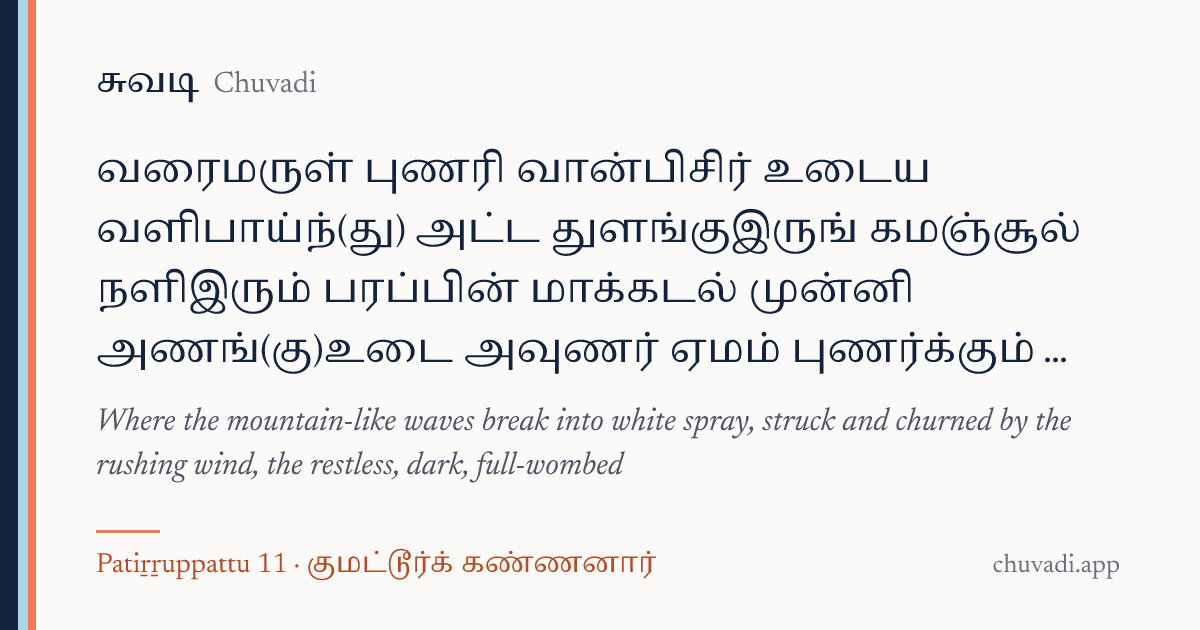
- Where the mountain-like waves break into white spray,
- struck and churned by the rushing wind, the restless, dark, full-wombed
- vast black expanse of the great sea he approached,
- and the one who kept safe the fearsome Avuṇars,
- Cūr, he cut down at his whole great trunk; of great fame,
- the fierce-angered victorious Vēḷ rode his elephant; like him,
- while your red-mouthed spears cut down those who stood against you,
- with the blood that spurted from wounds that opened their vital chests,
- the sapphire-coloured dark backwater lost the colour of its water
- and became like a mixture of vermilion; destroying their fortresses,
- you of lofty zeal, with an excellence great in strife,
- the kaṭampu of clustered flowers, which many crowded round and guarded,
- its guarded great trunk you ordered to be cut down,
- and had a roaring drum made, beaten in victory; victorious in war,
- with a chest wearing a garland, with toddy strained through fibre,
- Cēralātaṉ of the army that slays in battle!
- With its forehead plate and the fresh garland that fills its chest, it shines,
- the faultless elephant with tusks raised on the right;
- you mount its gold-adorned neck, and your splendid
- wealth, praised by many, we have seen with joy.
- Where the yak sleeps on the slopes thick with kavir trees
- and dreams of narantam grass beside the wide shining waterfalls,
- from the Himalaya of great fame, crowded with Āriyar,
- to southern Kumari, in all the land between,
- you overcame the kings who claimed to stand above, so that their valour perished.
What the poem says
The poet Kumaṭṭūr Kaṇṇaṉār speaks to the Chera king Imaiyavarampaṉ Neṭuñcēralātaṉ. This is the first poem of the Second Ten, and it opens with a long simile. The god Vēḷ (Murukaṉ) went to the stormy sea and cut down Cūr, the protector of the demon Avuṇars, and then rode in triumph on his elephant. The king is like him: his spears cut down his enemies, and their blood turns the dark blue backwater red like vermilion paste.
The poem then names the king's best-known deed in this decade. His enemies guarded a kaṭampu tree as their tutelary tree. He had it cut down and had a war drum made from its wood. The poet says that he has seen the king's wealth with joy as the king rides high on the neck of his gold-adorned war elephant. The last lines give the reach of his rule, from the Himalaya, where yaks sleep and dream of fragrant narantam grass, to Kumari in the south. This range explains the title Imaiyavarampaṉ, 'he whose border is the Himalaya'.
The colophon names the poem 'puṇṇumiḻ kuruti' (line 8), 'blood spurting from wounds'. The phrase carries the central image of the battle that turns the water red. In line 13 the word 'vēey' is read here as 'ordered'; this reading is not certain.