



பதிற்றுப்பத்து 12 · இரண்டாம் பத்து
பாடல் · The poem
Tap a word to see where else it occurs.
பொருள் · Meaning in TamilAI
வீரர்கள் வீழும்படி வாட்போரில் கலக்கி, நிலம் கவரும் குடியின் அரசர்கள் தலைநடுங்கக் கடம்பு மரத்தை அடியோடு வெட்டிய கடுஞ்சினம் உடைய வேந்தே! பிடரி மயிரும் நீண்ட கூர்நகமும் உடைய சிங்கம் உலவும் மலைச்சாரலில் மற்ற விலங்குகள் கூட்டமாக நெஞ்சு நடுங்குவது போல, முரசு முழங்கும் பெருநகரங்களில் மன்னர்களை உறங்கவிடாமல் திசைகளை நடுங்கவைக்கும் வீரம் மிக்க உன் பல புகழும் கேட்பதற்கு இனியது. உன் செல்வத்தைக் கேட்கும்போதெல்லாம் அதைக் காணும் ஆசையோடு, மணம் கமழும் குளவி மலர்கள் இடையே, வாடாத பசிய மயிரும் அசைந்த நடையும் உடைய இளங்களிறுகள் வண்டுகளை ஓட்டும், கன்றுகளோடு பிடிகள் திரியும் பல குன்றுகளைக் கடந்து வந்தோம். அங்கே நிறுத்திய எங்கள் பெரிய சுற்றத்தின் நெடுநாள் பசித்துயர் நீங்கியது. கத்தியால் அறுத்த கொழுத்த ஊன் துண்டுகளையும், இறைச்சி கலந்த வெண்ணெல் சோற்றையும், மூங்கிலில் முதிர்ந்த தெளிந்த கள்ளையும் உண்டோம். நீரில் நனைந்த பருந்தின் கரிய சிறகு போன்ற எங்கள் கந்தல் ஆடையை நீக்கிய பின், நுண்ணிய ஆடையை எங்கள் இடையில் உடுத்தினாய். சுருண்ட கரிய கூந்தலும் மூங்கில் போன்ற மென்தோளும் உடைய குற்றமற்ற மகளிர் ஒளிரும் அணிகளை அணிந்தனர். அன்போடு தழுவும் சுற்றத்தோடு உன் பெரும் ஆரவார மகிழ்ச்சி நுகர்வதற்கு இனியது.
துறை: செந்துறைப் பாடாண்பாட்டு. பாணர் குடும்பத்தின் சார்பில் குமட்டூர்க் கண்ணனார் நெடுஞ்சேரலாதனிடம் பேசுகிறார். பெயர் 'மறம்வீங்கு பல்புகழ்' (அடி 8). 'கேட்டற்கு இனிது', 'நுகர்தற்கு இனிது' என்ற இரு பகுதிகளாகப் பாடல் அமைந்துள்ளது. சிங்க உவமை, நனைந்த பருந்துச் சிறகு போன்ற கந்தல், விருந்தும் ஆடையும் முதன்மையான படிமங்கள்.
ஆங்கிலம் · English translationAI
Translation
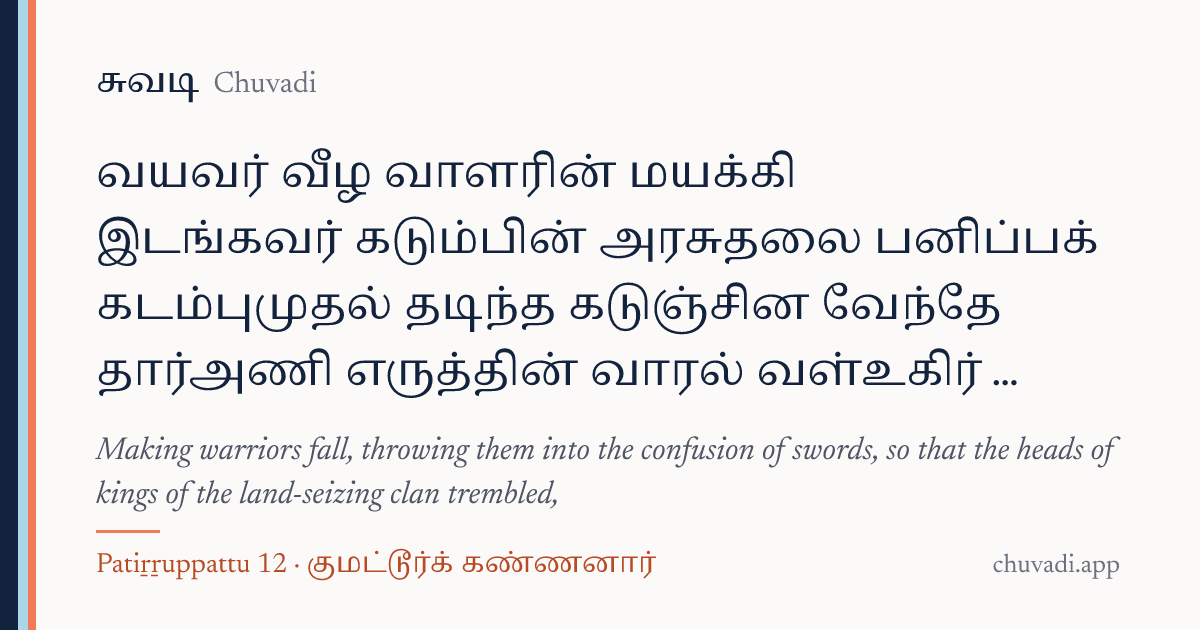
- Making warriors fall, throwing them into the confusion of swords,
- so that the heads of kings of the land-seizing clan trembled,
- O fierce-angered king who cut down the kaṭampu at its trunk!
- With a garlanded mane, with long sharp claws,
- a lion roams the slope, and the other beasts
- in their herds and rows shake in their hearts; like that,
- in long cities where drums roar, it lets the kings have no sleep,
- your many fames, swelling with valour, which make the directions tremble;
- sweet it is to hear; and each time we heard of your wealth,
- with the wish to see it, through fragrant wild jasmine,
- where young elephants with fresh unwithered hair and swaying gait,
- noble young tuskers, fan away the striped bees,
- with cow elephants joined with their calves, we crossed many hills;
- we came and set down there our great and large family,
- and the old misery they suffered from long hunger fell away;
- rich pieces of white fat, split and cut by knives,
- white rice of white paddy mixed with mutton,
- we gorged on, with clear toddy ripened in bamboo;
- like the dark wings of a kite that has fallen in water
- were our rags trailing on the ground; and after you took them away,
- you dressed our white waists in fine cloth not spun from thread;
- with curling dark hair and shoulders soft as bending bamboo,
- blameless women wore bright jewels;
- with our kin who embraced us in love,
- sweet it is to enjoy your great and noisy festive joy.
What the poem says
The poet speaks to the king as a bard who has come with his whole hungry family. The first half praises the king's fame in war. He cut down the enemies' kaṭampu tree. A long simile compares him to a lion on a hillside: when it roams, all the other beasts tremble in their herds. In the same way, his fame keeps rival kings awake in their drum-filled cities. The poet says that this fame is 'sweet to hear'.
The second half answers this with what is 'sweet to enjoy'. The bard and his kin heard of the king's wealth and crossed many hills to see him. On the hills young elephants fan away bees among the wild jasmine. At the court their old hunger ended. They ate pieces of fat, rice cooked with mutton and clear toddy matured in bamboo. The king took away their rags, which were like the wet wings of a kite, and dressed them in fine cloth. The women of the family wore bright jewels. This is the pāṭāṇ convention of the generous patron who changes the lives of poor bards.
The colophon names the poem 'maṟamvīṅku palpukaḻ' (line 8), 'many fames swelling with valour'. Lines 10 to 13 describe the hill landscape the bards crossed. Their syntax is loose, and the link between the elephants and the hills is my reading.