



பதிற்றுப்பத்து 13 · இரண்டாம் பத்து
பாடல் · The poem
Tap a word to see where else it occurs.
பொருள் · Meaning in TamilAI
பசுக்கூட்டம் மேயும் வயல்களில் ஆரல் மீன்கள் துள்ளும்; காளைகள் பொருத செறுவில் உழாமலே விதைப்பர்; கரும்புப் பாத்தியில் பூத்த நெய்தல் கரிய கண் எருமைகளின் வரிசையைத் தடுக்கும்; ஆரவாரமான துணங்கைக் கூத்து ஆடிய இடத்தின் அருகே வளைந்த தலை உடைய முதிய பசுக்கள் ஆம்பலை மேயும்; ஒலிக்கும் தென்னையும், பறவைகள் இரைக்கும் மருதமும், நீர்வாயிலில் பூக்கள் நிறைந்த குளங்களும் உடைய, பாடலுக்குத் தகுந்த வளமான ஊர்கள் இருந்தன. அந்நாட்டின் அழகு அழியும்படி நீ அச்சம் தோன்றச் செய்தாய். கூற்றுவன் கொன்று நின்ற உடல் போல, நீ சினந்து தங்கிய ஊர்கள் நீர்வளம் அழிந்தன. கரும்பு வயல்கள் வெறுமையாகி, முறுக்கிய காய் உடைய விடத்தேரும் காருடையும் வளர்ந்தன. பிளவுபட்ட தலை உடைய பேய்மகள்கள் பேய்களின் மேல் ஏறித் திரியும் நெருஞ்சி படர்ந்த புழுதிப் போர்க்களமாயின. விழா அழிந்த மன்றங்களில் எரு இடப்படுவதில்லை. முயன்றவர்களின் வலிமையும் உள்ளமும் அழிந்து, நினைப்பவர்கள் நடுங்கும் பாழ்நிலங்களாயின. ஆனால் நீ காக்கும் நாட்டில் காடுகள் கடவுளர் உறையும் இடம்; முல்லை நிலங்கள் அணிகலன் அணிந்த மகளிரோடு வீரர்கள் வாழும் இடம்; வழிகள் அச்சமில்லாதவை. அதோடு கூலம் விற்கும் வணிகர் குடிகளைக் காத்து, குடிகளைப் புரக்கும் உழவர்களின் சுமையையும் நீ தாங்குகிறாய். வெள்ளி தெற்கே ஓடுவதில்லை; வேண்டும் இடத்தில் மழை பெய்கிறது; நோயும் பசியும் நீங்கின. பெருமானே, நீ காத்த நாடு செழித்துப் பூத்தது.
துறை: செந்துறைப் பாடாண்பாட்டு. குமட்டூர்க் கண்ணனார் நெடுஞ்சேரலாதனிடம் கூறுகிறார். பெயர் 'பூத்த நெய்தல்' (அடி 3). பகைவர் நாட்டின் முந்தைய வளமும் அழிவும், அரசன் காக்கும் நாட்டின் செழிப்பும் எதிரெதிராக வைக்கப்படுகின்றன. தூக்கு செந்தூக்கும் வஞ்சித்தூக்கும் கலந்தது.
ஆங்கிலம் · English translationAI
Translation
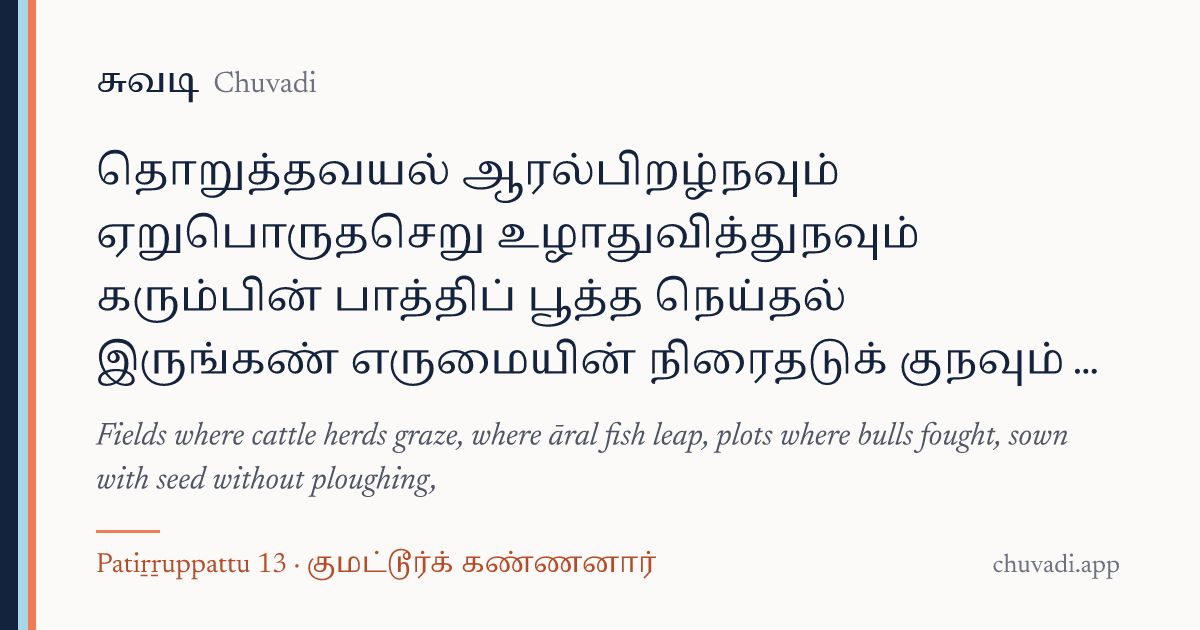
- Fields where cattle herds graze, where āral fish leap,
- plots where bulls fought, sown with seed without ploughing,
- where the neytal flowering in the sugarcane beds
- stops the lines of dark-eyed buffaloes,
- where beside the place where the lively tuṇaṅkai was danced
- old cows with curving heads graze on the āmpal lilies,
- with rustling coconut palms and marutam trees loud with birds,
- with flowering ponds at the mouths of the water channels,
- settlements worthy of song and rich in yield,
- so that the beauty of the country perished, you showed terror;
- like a body that Death has killed and stands over,
- the villages ruined of water where you camped in red rage,
- the fields of spreading-flowered sugarcane turned bare,
- with viṭattar of twisted pods and kāruṭai grown tall,
- forked-headed demon women ride on ghouls and roam
- the battlefield where spreading neruñci thorns are bathed in dust;
- in the common grounds, their festivity gone, no dust of dung is spread;
- breaking the hearts and the might of those who strove,
- they have become wastes that make those who think of them tremble.
- But the forests are where the gods dwell; the pastures
- are where warriors dwell with women of bright jewels;
- the roads are safe; and besides all that, in the world
- you protect the clans of those who sell grain,
- and bear the burden of those who protect the clans;
- Venus does not run to the side where the fire has gone,
- rain stays on the lands that wish for rain,
- and disease and hunger have left and gone far;
- it has flourished, great one, the land that you guard.
What the poem says
The poet contrasts two lands. The first part shows the rich riverine country of the king's enemies as it was before his attack. There, āral fish leap in the fields, seed is sown without ploughing, neytal flowers in the cane beds stop the buffaloes, and old cows graze on lilies near the dancing ground. The king came in red rage and camped there. The land then became like a body that Death has killed. The fields went bare and thorn scrub grew. Demon women rode on ghouls over the battlefield, and the common grounds lost their festivals.
The second part, from line 20, turns to the king's own land. There the forests belong to the gods, the pastures to warriors and their women, and the roads are safe. The king protects the grain merchants and the farmers who support the people. The planet Venus does not move to the side where the fire has gone, probably the south; this was likely taken as a sign of drought (line 25), but the reading is not certain. The rain comes when people need it, and disease and hunger are gone. The last line ends with 'pūttaṉṟu', 'it has flowered', which echoes the flowering neytal of line 3.
The colophon names the poem 'pūtta neytal' (line 3), 'the flowering neytal', a water lily that grows even in the sugarcane beds. The metre changes between long and short lines, and the colophon notes this mix. The plant names in line 14 and the exact sense of line 17 are uncertain.