



பதிற்றுப்பத்து 14 · இரண்டாம் பத்து
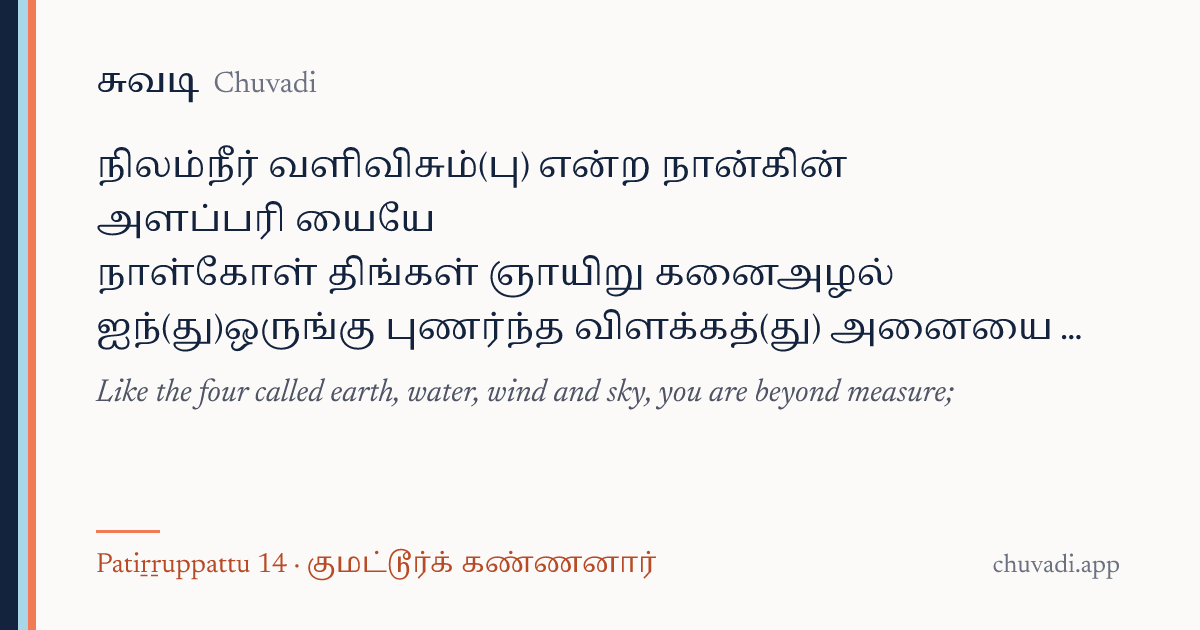
பாடல் · The poem
Tap a word to see where else it occurs.
பொருள் · Meaning in TamilAI
நிலம், நீர், காற்று, வானம் என்ற நான்கையும் போல நீ அளக்க முடியாதவன். விண்மீன், கோள், திங்கள், ஞாயிறு, எரியும் தீ என்ற ஐந்தும் ஒருங்கு சேர்ந்த ஒளியைப் போன்றவன். போர்முனையில் சிறந்த நூற்றுவரோடு வலிமையின் நெறிகளை முழுதும் கற்ற துணிவுடைய ஆண்மை கொண்ட அக்குரனைப் போலக் கைவண்மை உடையவன். போரில் தும்பை சூடி வந்து பொருத பகைவரை வென்று அவர்களின் போர்ச்செருக்கை அழித்த, போரை விரும்பும் வலியோனே! கூற்றுவனே சினந்து வந்தாலும் தடுக்கும் ஆற்றல் உடையவன் நீ. ஏழு முடிகளைக் கொண்ட, திருமகள் தங்கும் அகன்ற மார்பும், வலிமையுடைய பெரிய கைகளும் உடைய நீ சான்றோர்க்குக் கவசம் போன்றவன். வானுலக மகளிரின் அழகோடு போட்டியிடும், ஒளிரும் அணிகள் மறைந்த வண்டு மொய்க்கும் கூந்தலும், வளைந்த குழையும் உடையவளின் கணவனே! பல யானைக் கூட்டங்களோடு வெற்றிக்கொடி அசையும் படையை ஏராகக் கொண்டு உழும் உழவனே! பாடினியரின் வேந்தே! ஒளிரும் மணிகள் பதித்த பொன்னாலான ஆணைச் சக்கரத்தால் கடல் சூழ்ந்த இவ்வுலகம் முழுதும் ஆண்ட உன் முன்னோர்களைப் போல நீயும் நின்று, அழியாத நல்ல புகழை நிலைநாட்டி, இவ்வுலகத்தோடு சேர்ந்து நீடு வாழ்வாயாக.
துறை: செந்துறைப் பாடாண்பாட்டு. குமட்டூர்க் கண்ணனார் நெடுஞ்சேரலாதனை வாழ்த்துகிறார். பெயர் 'சான்றோர் மெய்ம்மறை' (அடி 12). ஐம்பூதங்கள், ஒளிகள், அக்குரன் ஆகிய உவமைகள், 'படையேர் உழவ' என்ற படிமம், முன்னோர் போல வாழ வாழ்த்து ஆகியவை முதன்மையானவை.
ஆங்கிலம் · English translationAI
Translation
- Like the four called earth, water, wind and sky,
- you are beyond measure;
- stars, planets, the moon, the sun and blazing fire:
- you are like the light of these five joined together;
- like Akkuraṉ, who with the twice fifty who excelled at the head of battle
- had bold manliness that mastered the ways of strength,
- you have generosity of hand;
- the foes who wore tumpai and fought, you overcame in battle
- and destroyed their pride in war, strong one eager for battle!
- Even if Death came in rage, you have the strength to hold him back;
- on your broad chest, where Tiru dwells, which holds seven crowns,
- with large hands that hold firm, you are the armour of noble warriors;
- rivalling the beauty of the women who dwell in heaven,
- with bright jewels hidden in her bee-swarmed hair,
- with narrow wet tresses, husband of her with curved earrings!
- With herds of many elephants and waving victory flags,
- ploughman whose plough is the army, king of the women singers!
- Like those who, with a gold wheel set with shining gems,
- ruled all this land within the bounds of the sea,
- your forefathers of the ancient line, you too stand,
- and establish a good fame that does not die;
- may you not perish, together with this world!
What the poem says
This poem praises the king through a chain of comparisons and ends with a blessing. Like the four elements, earth, water, wind and sky, he cannot be measured. He is like the light of stars, planets, moon, sun and fire joined together. In generosity he is like Akkuraṉ, a hero of old stories who was linked with 'the twice fifty', the hundred warriors who excelled in battle. He breaks the pride of enemies who wear tumpai flowers, the sign of battle, and he could hold back even Death.
The poet then calls him the armour of noble warriors and the husband of a beautiful queen, whose beauty rivals that of the women of heaven. He is the 'ploughman whose plough is the army'. This image comes again in Sangam praise: the king farms war as a farmer farms fields. He is also the 'king of the women singers', who rewards bards. The last lines ask him to stand like his ancestors, who ruled the whole sea-bounded earth with a jewelled wheel. They wish that his fame may last as long as the world.
The colophon names the poem 'cāṉṟōr meymmaṟai' (line 12), 'the armour that shields the noble'. The 'seven crowns' of line 11 are probably the crowns of seven defeated kings worn in a garland. The identity of Akkuraṉ and the link with 'the twice fifty' (lines 5 to 7) are not clear from the text.