



பதிற்றுப்பத்து 15 · இரண்டாம் பத்து
பாடல் · The poem
Tap a word to see where else it occurs.
பொருள் · Meaning in TamilAI
ஆண்டுகள் மாற மாற, நீ விரும்பிய பகைநாடுகளில் தங்கி, போர்முனையில் தீயைப் பரப்பிய நெருங்க முடியாத சினத்தோடு, மேகம் தவழ்ந்து பெய்யும் மதில்களின் மரங்களை முறித்தாய். யானை வரிசைகள் ஒழுகும் நரகம் போன்ற உன் படைவெள்ளம், கழங்கு ஆடிய மன்னர்களின் குடியை அறுத்தது. புகை எழுந்து சிதறக் காற்று மோத, தீ பற்றிய இடங்களை உருத்தெரியாமல் அழித்தாய். பழைய அழகு அழிந்த அந்த அகன்ற ஊர்களில் வெண்பூ வேளையும் பசுஞ்சுரையும் செழித்தன; நீர் வற்றிய குளக்கரையில் பீர்க்கங்கொடி படர்ந்தது; இடிந்த பழைய வீடுகளில் செங்காந்தள் வளர்ந்தது; புலால் நாறும் வில்லால் வாழும் கீழ்மக்கள் திரிகின்றனர். அறியாமையால் உன் வலிமையை மறந்து எதிர்த்த உன் பகைவர் நாட்டையும் கண்டு வந்தேன். கடலும், மலையும், ஆறும் தரும் பல வளங்கள் நிறைந்த அகன்ற நல்ல நாட்டில், விழா ஓய்வதறியாத முழவு ஒலிக்கும் பழைய ஊரில், கொடிகளின் நிழல் படரும் பொன் நிறைந்த கடைத்தெருவில், மகிழ்ச்சி முரசு முழங்கும் வீரர்களின் வேந்தே! பரிசிலர்க்குச் செல்வமே! மாலை அணிந்த, பூண் தேய்ந்த கொம்புகளுடைய போர்யானைகளை உடைய சேரலாதனே! 'இவ்வுலக மக்களுக்காக நீ வாழ்க' என்று, கள் உண்டு குழறிய நாவும் மென்சொல்லும் உடைய பாணர்கள் பையோடு வந்து நல்ல பாட்டால் வாழ்த்துகின்றனர். துன்பம் அறியாத செழித்த வாழ்க்கையும், பணிசெய்து மகிழும் சுற்றமும், ஒரே உண்மைச் சொல்லில் அடங்கிய கொள்கையும் உடைய, ஊரைவிட்டுப் பிரியாமல் இன்பம் நுகரும், நரகத்தைத் தவிர்த்த சான்றோர் வாழும், பலரும் புகழும் உன் நாட்டை, நீ காப்பதால் நோய் நீங்கிய வளமான நாட்டையும் கண்டு வியந்தேன். உலகத்து உயிர்களுக்கு எஞ்சாமல் கொடுத்துக் கை சோராத வலிமை உடையவனே! தகுந்தவர்க்கெல்லாம் பெரிதாக வழங்கி, காவலாக அமைந்த சிறப்புமிக்க விழாக்களை உடைய திருமால் போன்ற நல்ல புகழ் உடைய வலியோனே! உன் பல பண்புகளை விரும்பியே நான் வந்தேன்.
துறை: செந்துறைப் பாடாண்பாட்டு. குமட்டூர்க் கண்ணனார் நெடுஞ்சேரலாதனிடம் பேசுகிறார். பெயர் 'நிரைய வெள்ளம்' (அடி 4). அழிந்த பகைநாடும் செழித்த சேரநாடும் எதிரெதிராகக் காட்டப்படுகின்றன. நரக வெள்ளம் போன்ற படை, பாழ்நிலத் தாவரங்கள், திருமால் உவமை முதன்மையான படிமங்கள்.
ஆங்கிலம் · English translationAI
Translation
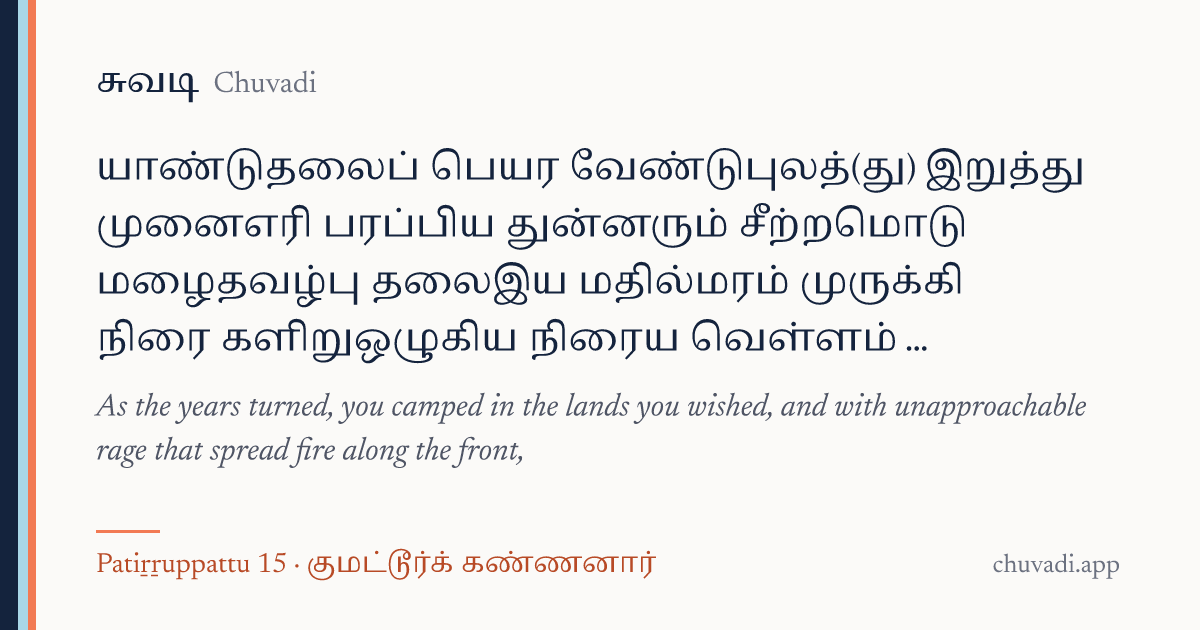
- As the years turned, you camped in the lands you wished,
- and with unapproachable rage that spread fire along the front,
- you smashed the trees by the walls where clouds crawl and pour;
- your hell-like flood of an army, where rows of elephants flowed,
- cut off the line of kings, whose spread-out play with kaḻaṅku pebbles was ended;
- as streaks of coloured smoke rose and scattered and the wind struck,
- you ruined the places that the fire seized until no shape was left;
- in the wide settlements whose old beauty had perished,
- white-flowered vēḷai grew thick with green gourd,
- pīr creepers climbed and spread at the base of dried-up tanks,
- red kāntaḷ grew in old houses with crumbling walls,
- wretched men who plough with flesh-smelling bows roam
- those settlements of sparse leaves, with violence that ruins the fields;
- through ignorance, forgetting, they set themselves against your strength,
- and I have seen the lands of those enemies of yours too, and come.
- With riches of the sea, of the hills, of the rivers and others,
- many riches arising, in a good land of wide spaces,
- in the old town where drums sound, which never knows festivals to cease,
- in the market rich in gold under the shade of curving banners,
- with drums that sound great festive joy,
- king of warriors, treasure of the gift-seekers,
- with beautiful garlanded tusks whose rings are worn away,
- Cēralātaṉ of the elephants able in war!
- 'May you live long for the people of this world!' so
- the bards of prattling tongues, their speech changed after drinking,
- soft-spoken and carrying their bags, praise you in well-made verse;
- a life that thrived and never knew hardship,
- with kin who delight in serving them,
- of a principle restrained to a single true word, who always
- never fail their place, and come to enjoy their lives,
- noble ones of desire who have kept far from hell,
- live there together, of a nature praised by many;
- because you protect it, freed of disease and gone far from it,
- I have seen that prosperous good land too, and I was amazed.
- To the lasting lives in the world of earth, holding nothing back,
- giving, with a hand that never tires of giving, of fierce strength,
- in worthy place after worthy place you give great gifts;
- of festivals full of fame, which became protection for all,
- with good fame like that of Neṭiyōṉ,
- unbroken strong one, it was in love of your many virtues that I came.
What the poem says
In this long poem the poet tells the king that he has seen two lands. First he has seen the lands of the king's enemies. For years the king camped in the lands he chose, burned the front lines and smashed the trees along the walls. His army of elephants poured on like a flood from hell. After the fire, wild plants took the place of the villages: vēḷai and gourd vines, pīr creepers by dried-up tanks, kāntaḷ in ruined houses. Wretched men who live by the bow wander there. These enemies opposed the king 'through ignorance'.
From line 16 the poet turns to the king's own country, which is rich in the produce of the sea, hills and rivers. Festivals never stop in its old towns, and its markets are full of gold. The bards, tipsy and soft-spoken, bless the king. Noble householders live there in truth and keep far from hell, and they never have to leave their homes. The poet says he saw this land and 'was amazed'. He then praises the king's tireless giving and compares his fame to that of Neṭiyōṉ, 'the tall one', most likely the god Viṣṇu. The poem ends with the reason for the visit: love of the king's virtues.
The colophon names the poem 'niraiya veḷḷam' (line 4), 'the hell-flood', the king's terrible army. Line 5, about kings and kaḻaṅku pebbles, and lines 12 to 13, about the men with bows, are hard to read, and my rendering of them is uncertain.