



பதிற்றுப்பத்து 16 · இரண்டாம் பத்து
பாடல் · The poem
Tap a word to see where else it occurs.
பொருள் · Meaning in TamilAI
மலைச்சிகரங்களோடு போட்டியிடும் உயரத்தில் எழுப்பிய, வளைந்த ஞாயில்கள் உடைய இஞ்சி மதிலும், ஒரு நாட்டைக் கண்டாற் போன்ற, அம்புகள் தங்கும் அரணும், துஞ்சுமரக் கூட்டங்கள் நிறைந்து, புதிதாக ஈன்ற பெண் அணியாத ஐயவியைத் தொங்கவிட்ட மதிலும் உடைய கோட்டையின் அழகிய நெடிய கதவுகளை முறித்து, கொன்று, நுனி முறிந்து பன்றிக் கொம்பு போலான கொம்புகளுடன், மதநீர் வடிய, கடுஞ்சினம் மூண்டு, மரங்களை முறிக்கும் இளங்களிறுகள் முழங்கும் பாசறையில் நீ நீண்ட காலம் தங்கியதால் உன்னைக் காண வந்தேன். அடங்கிய கற்பும் அமைதியான சாயலும் உடையவள்; ஊடினாலும் இனிய சொல் பேசுபவள்; இனிய புன்னகையும், அமிழ்தம் நிறைந்த சிவந்த வாயும், அமைதியான பார்வையும், ஒளிரும் நெற்றியும், அசைந்த நடையும் உடையவள் உன்னை நினைப்பதற்கு உரியவள். அவள் தனிப் படுக்கையில் தப்புவாளோ? குற்றமற்ற தலைவனே! அழகிய மணிகளும் பசும்பொன்னும் ஒளிரும் வயிரமும் கலந்து அணிகள் சுடர்விடும், ஏழு முடி கொண்ட, திருமகள் தங்கும் அகன்ற உன் மார்பு, மை தீட்டிய கண் உடைய அந்தச் சான்றோள் உறங்கும் படுக்கை. அதைப் பகிரவும் கொள்ளவும் வல்லவனே! உன் மென்மையான மார்பு அவளை மிகவும் வருத்தியது.
துறை: செந்துறைப் பாடாண்பாட்டு. குமட்டூர்க் கண்ணனார் பாசறையில் இருக்கும் நெடுஞ்சேரலாதனிடம் பேசுகிறார். பெயர் 'துயிலின் பாயல்' (அடி 18). பகைவர் கோட்டையும் யானைகளும், தனித்திருக்கும் அரசியின் ஏக்கமும் முதன்மையான படிமங்கள்; அரசனை வீடு திரும்பத் தூண்டுகிறார்.
ஆங்கிலம் · English translationAI
Translation
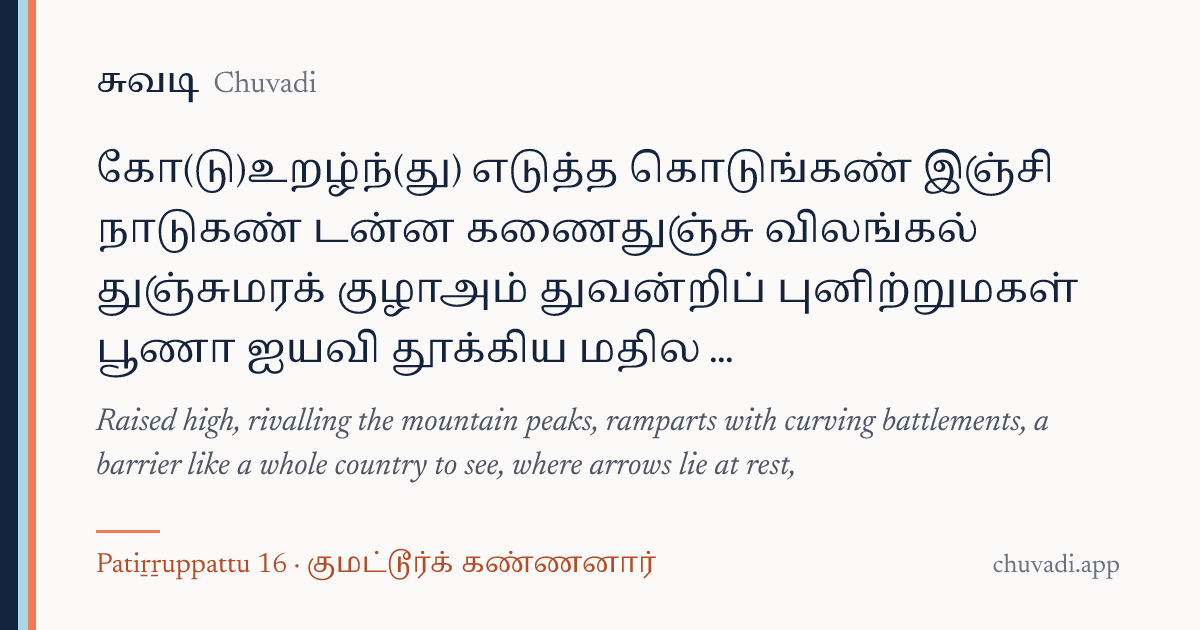
- Raised high, rivalling the mountain peaks, ramparts with curving battlements,
- a barrier like a whole country to see, where arrows lie at rest,
- crowded with clusters of sleeping beams, walls where hang the white mustard
- that a newly delivered mother does not wear, the ayyavi;
- smashing the tall gates of fine beauty, and killing,
- with tusks whose tips are broken so that they have become like a boar's,
- with must flowing and fierce rage kindled,
- the young tree-killing elephants roar in the war camp;
- since you have stayed there long, I have come to see you.
- With calm chastity and restrained grace,
- speaking sweetly even when she sulks, with a sweet smile,
- with coral lips full of nectar and a gentle look,
- bright-browed and slow of gait, she has a right to long for you;
- will her bed spare her? Noble one without fault,
- fine gems clashing with shining green gold,
- with diamonds of bright rays, so that your ornaments blaze,
- on your broad chest where Tiru dwells, which holds seven crowns,
- the bed of sleep for the kohl-lined eyes of a noble woman,
- you who are able both to share it and to keep it, your
- gentle chest has troubled her greatly.
What the poem says
The poet comes to the king's war camp. The king has stayed there a long time, besieging a great enemy fort. The fort is described in detail: ramparts as high as mountain peaks, a barrier where arrows lie stored, rows of 'sleeping beams' (logs held ready as a defence) and walls hung with ayyavi. The word plays on two senses: white mustard, which a mother who has just given birth does not wear, and a war engine of that name. The king's young elephants have smashed the gates. Their tusk tips are broken until they look like a boar's, and they roar in the camp.
The second half turns to the queen at home. She is chaste, gentle, sweet even when she sulks, with coral lips and a slow walk. The poet asks whether she can bear her lonely bed. The king's chest, blazing with gems and gold and holding seven crowns, is her 'bed of sleep'. It now troubles her because he is away. So the poet uses love, the akam theme, to call the king home from war, inside a puṟam praise poem.
The colophon names the poem 'tuyiliṉ pāyal' (line 18), 'the bed of sleep'. Lines 2 to 4 (the fort's defences) and line 19 ('able both to share and to keep') are obscure, and my reading of them is tentative.