



பதிற்றுப்பத்து 20 · இரண்டாம் பத்து
பாடல் · The poem
Tap a word to see where else it occurs.
பொருள் · Meaning in TamilAI
'உங்கள் அரசன் யார்?' என்று கேட்டால், எங்கள் அரசன், பெருங்கடலின் நடுவே உள்ள தீவில் பகைத்தவர்களை எதிர்த்துச் சென்று அவர்களின் கடம்ப மரத்தை அடியோடு வெட்டிய கடுஞ்சினமும் வலிமையும் உடைய நெடுஞ்சேரலாதன். அவன் கண்ணி வாழ்க! பகைவர் நாட்டில் அவன் செய்த செயல்கள் வெயிலில் தெரியும் தூசி அளவும் தவறியதில்லை. கண்ணால் மகிழ்ந்து நெஞ்சு நெகிழாத பகைவர் நாட்டிலும், கனவிலும் அவன் பொய் அறியான். பகைவர் தேயுமாறு உயர்ந்து நடந்து, எதிரிகளை அழித்து, மணிகள் இரட்டித்து ஒலிக்கும் மதயானைக் கூட்டங்களால் பகைவரை அலறவைத்து, அகன்ற பெருநிலத்தை வென்று, புலவர்கள் போற்ற உயர்ந்த புகழை நிலைநாட்டினான். பிடரி மயிர் விரிந்த குதிரைகளையும், யானைகளையும், தேர்களையும் வயிரியருக்கும் கண்ணுளருக்கும் சேர்த்து வைக்காமல் வழங்கினான். காவற்காடும் ஆழ்ந்த அகழியும், நெடிய மதிலும் ஞாயிலும் அம்புகளும் உடைய அரிய கோட்டைகளை உள்ளே புகுந்து அழித்துக் கைக்கொண்டான். வெல்ல முடியாத பகைவரைக் கொன்று பரந்த மார்பை உடையவன். எம்மவர்க்கும் பிறர்க்கும், யாராயினும், பரிசில் வேண்டி வருவோர் திறமையற்றவரே ஆயினும், கொடை என்னும் கடமையை விரும்பும் கோணாத நெஞ்சினன். உயிர்கள் அழியுமாறு பல ஆண்டுகள் குளிர்ந்த மேகம் பெய்யாது போனாலும், அவன் எவரையும் வயிற்றுப்பசியால் வருந்தவிடமாட்டான். அவனைப் பெற்ற தாயின் வயிறு குற்றமற்றதாக வாழ்க!
துறை: இயன்மொழி வாழ்த்து. குமட்டூர்க் கண்ணனார் 'உங்கள் அரசன் யார்?' என்ற வினாவுக்கு விடையாக நெடுஞ்சேரலாதனைப் புகழ்கிறார். பெயர் 'அட்டுமலர் மார்பன்' (அடி 20). கடம்பு வெட்டிய வெற்றி, பொய்யாமை, கலைஞர்க்குக் கொடை, மழை பொய்த்தாலும் பசி தீர்க்கும் வள்ளன்மை, தாய்க்கு வாழ்த்து முதன்மையான கருத்துகள்.
ஆங்கிலம் · English translationAI
Translation
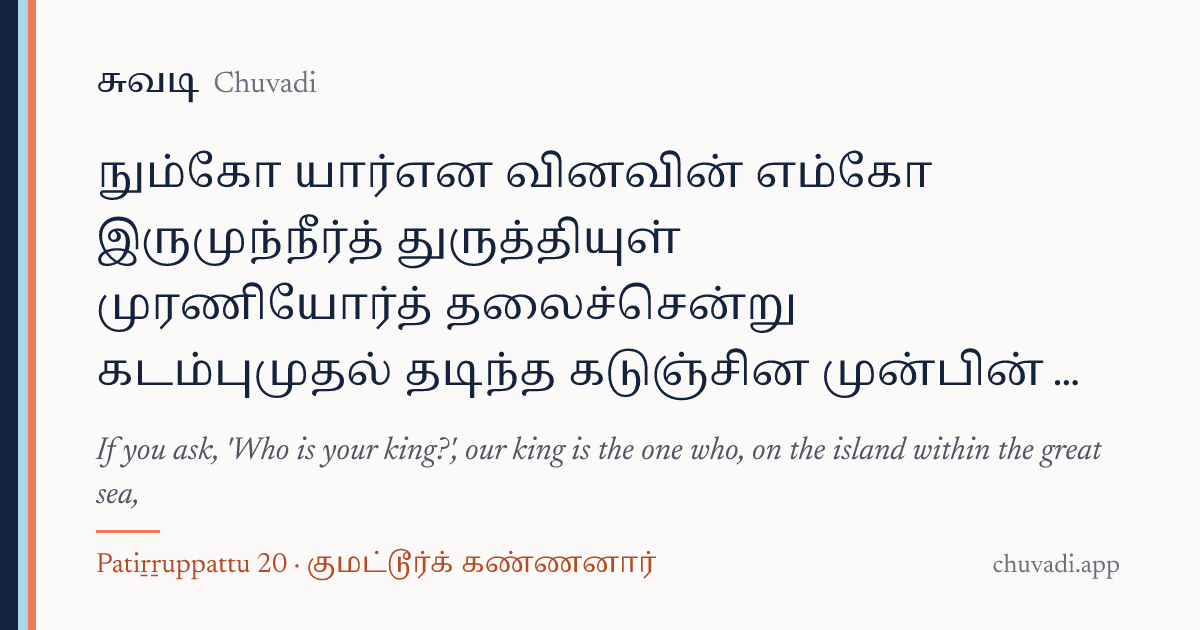
- If you ask, 'Who is your king?', our king
- is the one who, on the island within the great sea,
- went against those who were hostile
- and cut down the kaṭampu at its trunk, of fierce-angered strength,
- Neṭuñcēralātaṉ; long live his garland!
- He has never known his aims to fall short, not even by a mote in the sunlight,
- in deeds turned against his foes in their country;
- of those who are glad in their eyes but never know their hearts to open,
- even in the country of such unfriendly foes, he does not know falsehood,
- not even in a dream; rising high, he marched so that his foes wasted,
- crushing rivals, with polished bells that clang in pairs,
- as herds of must elephants in rows made the foes cry out,
- he crossed the great land of wide expanse
- and set up towering fame for poets to praise;
- horses with spreading manes, elephants and chariots
- to the Vayiriyar and the Kaṇṇuḷar he gave, holding nothing back;
- with guarded forest belts and deep moats,
- with tall walls and standing battlements,
- strong forts full of arrows he destroyed from within and took;
- he slew the foes who could not be slain, the man whose chest grew broad from slaying;
- to our people and to others, whoever they may be,
- to the seekers of gifts, even if they lack skill,
- he is a man of straight heart devoted to the duty of giving;
- even if, so that lasting lives perish, for many years failing,
- the cool-natured cloud does not pour,
- he will not let bellies grow sharp with hunger;
- may the womb of the mother who bore him be free of blemish!
What the poem says
The last poem of the Second Ten is again an iyaṉmoḻi vāḻttu. It is built as an answer to a question: 'Who is your king?' The bard answers with a portrait of Neṭuñcēralātaṉ. He attacked his enemies on an island in the sea and cut down their kaṭampu tree. His deeds against foes never fail by even a mote of dust, and he never tells a lie, even in a dream.
The poem moves through his war deeds. His elephants with clanging bells crush his rivals. He conquers wide lands and takes strong forts with moats, forest belts and walls full of arrows. Then it moves to his giving. He gives horses, elephants and chariots to performers, the Vayiriyar (musicians) and the Kaṇṇuḷar (actors or dancers). He gives to all gift-seekers, ours or others, even those who lack skill. As in poem 18, the poet says that even if the rains fail for years, the king will not let anyone go hungry.
The poem ends with a blessing on his mother: may her womb be free of blemish. The colophon names the poem 'aṭṭumalar mārpaṉ' (line 20), 'the man whose chest grew broad from slaying'. Lines 6 to 9 are compressed. My reading, that his deeds against foes never fail and that he never lies, is the most likely one but not certain.