



பதிற்றுப்பத்து 21 · மூன்றாம் பத்து
பாடல் · The poem
Tap a word to see where else it occurs.
பொருள் · Meaning in TamilAI
சொல், பெயர், நாட்டம், கேள்வி, நெஞ்சம் என்னும் ஐந்தையும் ஒருசேரப் போற்றி, அறிஞர் அவையைத் துணையாகக் கொண்டு, தீங்கு எண்ணாத ஒளிவிடும் கொள்கையும், விடியலைப் போன்ற சிறந்த வாய்மொழியும் உடையவனே! அச்சம் தரும் மரபுடைய தெய்வங்களைப் போற்ற, மூட்டிய தீயில் சுடர் எழும்போதெல்லாம் பெரும்புகழ் வாய்ந்த ஆவுதி பரவுகிறது. வருபவர்களைத் தடுக்காமல் வரவேற்க விரும்பி, விருந்தினர் தவறாமல் உண்ணும்படி, இறைச்சி வெட்டுவோர் வெட்டுக்கட்டையில் வெண்ணிணம் கொண்ட கொழுத்த துண்டுகளை வெட்டுகின்றனர். அவற்றைத் தாளிக்கும்போதெல்லாம் கடல் ஒலி போல ஓயாத ஓசை எழுகிறது. செழித்த நகரின் நடுவே சமையலறையிலிருந்து எழும் அடுநெய் ஆவுதியும் வேள்வி ஆவுதியும் ஒன்றாக மணக்க, வானில் நிலைபெற்ற தெய்வங்களும் விரும்பும்படி போற்றினாய். நிறைந்த வளமும் ஐயமற்ற சிறப்பும், மழைபோல் மிகுந்த கள்ளும், போரில் வல்ல யானைகளும் உடையவனே! தோல் போர்த்த முரசு முழங்க, ஆரவாரம் மிக, நல்ல அணிகலன்களைக் கொண்டுவரும், நிலத்தை வென்ற மார்பனே! முல்லைக் கண்ணி அணிந்த கோவலர் புல் நிறைந்த பரந்த நிலத்தில் பல பசுக்களை மேயவிட்டு, கற்கள் உயர்ந்த காட்டில் ஒளிரும் மணிகளைப் பெறுகின்றனர். பூழியர் தலைவனே! கண்ணி அணிந்த மழவர்க்குக் கவசம் போன்றவனே! பல வளம் நிறைந்த உயர்ந்த சிகரங்களும், அச்சமின்றித் திரியும் கொக்குகளும் உடைய, பகைவர் முனையை அழித்து நிற்கும் அயிரை மலையின் தலைவனே! ஆண்டுதோறும் தவறாமல் மழை பொழிந்து, நோயற்ற மக்களுக்கு நல்ல காலம் ஆகட்டும். கழுவாமலே மணக்கும் வாயும், கார்கால மலர் மணக்கும் நீண்ட கருங்கூந்தலும், அழகிய முகத்தில் சுழலும் மதர்த்த குளிர்ந்த கண்களும், மூங்கில் போன்ற பருத்த தோள்களும் உடைய இவளோடு நீ ஆயிர வெள்ளம் ஆண்டுகள் வாழ்வாயாக!
துறை: செந்துறைப் பாடாண்பாட்டு. பாலைக் கௌதமனார் பல்யானைச் செல்கெழு குட்டுவனைப் பாடியது. பெயர் 'அடுநெய் ஆவுதி' (13): சமையலில் எழும் நெய்ப்புகையும் வேள்விப் புகையும் கலந்து தெய்வங்களையும் மகிழ்விக்கிறது. மன்னனின் கல்வி, வேள்வி, விருந்தோம்பல், நாட்டுவளம் ஆகியவற்றைப் போற்றி, அரசியோடு நீடு வாழ வாழ்த்துகிறது.
ஆங்கிலம் · English translationAI
Translation
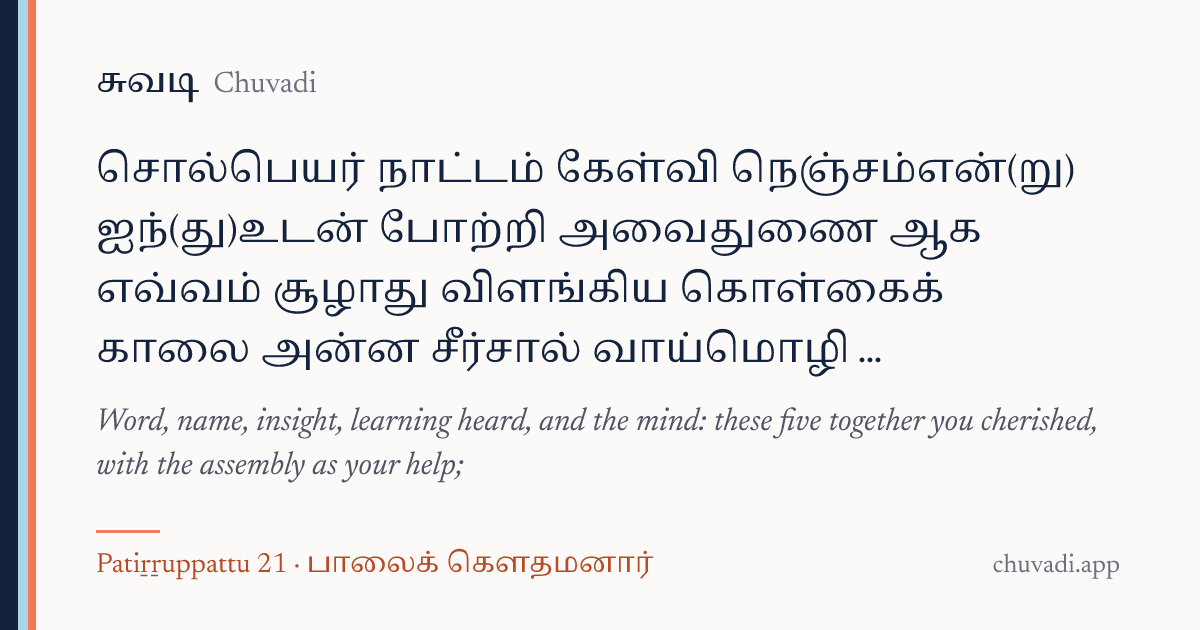
- Word, name, insight, learning heard, and the mind: these
- five together you cherished, with the assembly as your help;
- with a creed that shone, never plotting harm,
- with truthful speech of great worth, like the dawn,
- to honour the gods of awe-inspiring tradition,
- each time the flame rises from the kindled fire,
- the oblation of great renown spreads out in eager devotion;
- and wishing that comers, refused by none, may stream in,
- so that guests may eat without fail, the meat-cutters
- carve on the chopping block rich chunks of white fat;
- each time they drop them into the seasoning, a ceaseless sizzle roars,
- taking on the sound of the sea; in the middle of the rich city
- the oblation of cooking ghee rises from the kitchens;
- with the fragrance of the two smoking together, you tended
- even the gods who abide in the sky so that they longed for it.
- With full abundance ripened, with glory beyond doubt,
- with toddy plentiful as rain, with elephants strong in war,
- with the leather-covered drum sounding, its uproar excelling,
- O broad-chested lord who has won the land and brings fine jewels!
- Cowherds of many cattle, wearing mullai garlands,
- spread their many cows over the wide grassy tracts
- and find bright gems in the wilderness where rocks rise high:
- O king of the Pūḻiyar, who wear sandals for treading!
- O body-shield of the Maḻavar with their heaped garlands!
- With tall peaks that hold many good things, full of yield,
- where, beside the rippled sand of streams, the far-ranging
- watchful heron has no fear of being hunted on the run,
- standing across the land of glory, ruining the enemy front:
- O lord of Ayirai, the upright, high, long mountain!
- Rain of plenty pours, never failing in any year,
- so that for people free of illness it may be an age of good.
- With fragrance that rises from her unwashed mouth,
- with her low-hanging dark hair fragrant with monsoon flowers,
- where mingled flowers stay as if they had left their stems,
- with her great proud cool eyes that roam over her lovely face,
- in the wide bright-watered tract where kāntaḷ sways
- with her, whose rounded arms rival the bamboo,
- may you live many thousands of veḷḷams of years!
What the poem says
The first poem of the Third Ten. The poet Pālaik Keḷatamaṉār addresses the Chera king Palyāṉaic Celkeḻu Kuṭṭuvaṉ, "Kuṭṭuvaṉ of many elephants, rich in wealth". It is a straight praise poem (centuṟaip pāṭāṇ pāṭṭu) that ends with a blessing on the king and his queen.
The opening lines praise the king's learning and piety. Line 1 names five branches of knowledge: word, name, insight, what is heard, and the mind. These are often taken as grammar, lexicon, astrology, scripture and reasoning, but the line itself only gives the five words. The king keeps the assembly of the learned as his help, and makes Vedic offerings to the gods. Then the poem turns to a second kind of offering: in the middle of the city, cooks fry great chunks of meat for guests, and the smoke of the cooking ghee rises with the smoke of the sacrificial fire. The two fragrances mix so richly that even the gods in the sky long for them. This "cooking-ghee oblation" (aṭuney āvuti, line 13) gives the poem its name, and it neatly makes the king's hospitality a kind of worship.
Lines 20 to 29 name the king's lands and peoples: cowherds who find gems in rocky wastes, the Pūḻiyar, the Maḻavar whom he shields, and Ayirai, the mountain he rules. The poem closes with an image of his queen, her fragrant hair, restless eyes and bamboo-smooth arms, and wishes the pair life for thousands of veḷḷams, a huge number.
Several phrases are obscure and my readings are tentative: line 7 (the oblation "spread in eager devotion"), line 19 ("chest that has won the land"), line 23 (the Pūḻiyar's sandals), lines 26 to 28 (the heron on the mountain) and line 34 (the flowers in the queen's hair).