



பதிற்றுப்பத்து 22 · மூன்றாம் பத்து
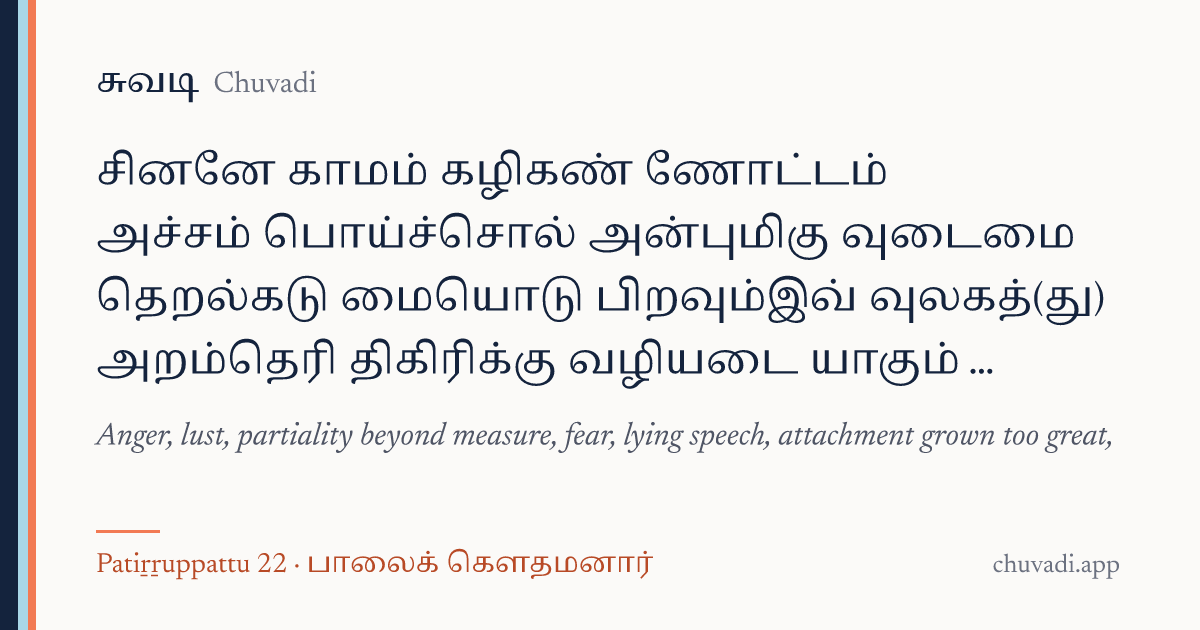
பாடல் · The poem
Tap a word to see where else it occurs.
பொருள் · Meaning in TamilAI
சினம், காமம், அளவுகடந்த கண்ணோட்டம், அச்சம், பொய்ச்சொல், மிகுந்த பற்று, கடுமையான தண்டனை முதலியவை இவ்வுலகில் அறத்தை ஆராயும் ஆட்சிச் சக்கரத்தின் வழிக்குத் தடைகள் ஆகும். அவற்றைத் தொலைவில் விலக்கி, நன்மையை மிகுதியாகச் செய்து, கடலும் காடும் பல வளங்களைத் தர, ஒருவரை ஒருவர் துன்புறுத்தாமல், பிறர் பொருளை விரும்பாமல், குற்றமற்ற அறிவுடையோர் நேர்மையாக நடந்து, அன்புத் துணையைப் பிரியாமல், பகிர்ந்து உண்டு, மக்கள் நோயின்றி முதுமை அடைந்து வாழும்படி நல்லூழியை நடத்திய வலியோரின் வழித்தோன்றலே! பொன்னால் செய்த கடப்பாரையால் கடின நிலத்தை உடைத்து, சில ஊற்றுகள் கசியும் நீர்த்தொட்டியில் குறுகிய கயிறுடைய வாளியைச் சுற்றிப் பசுக்கள் மொய்க்கும், பசுக்கள் நிறைந்த கொங்கர் நாட்டைக் கைப்பற்றிய, வேல் ஏந்திய படையுடைய அச்சம் தரும் தலைவனே! பிடரிமயிர் பொலியும் குதிரைகள், அணிகலன் பொலியும் களிறுகள், துணி பரப்பிய தேர்கள், போரை எதிர்கொண்ட ஆர்வமுள்ள மறவர்களோடு சென்று, கணையமரங்கள் நிறைந்த வாயிலும், பொறிகளும், ஐயவியும், காவற்காடும், ஆழ்ந்த அகழியும், நீண்ட மதிலும், வரிசையான ஞாயில்களும் கொண்ட அரணின் உள்ளரணை அழித்த, பொன்னாலான உழிஞை மாலை அணிந்த, வெற்றிப் போருடைய குட்டுவனே! பறை முழக்கத்தோடு வெள்ளத்தை அணைகட்டித் தடுப்பவர்களும், வெள்ளம் தரும் ஆரவாரத்தில் நீரை விலக்குபவர்களும் நிறைந்து, ஆரவார விழாக்கள் மலியும் புதுவளம் உடைய குளிர்ந்த வயல்நாடுகளை நீ சினந்தாய். ஆகவே அவை, நண்பகலிலும் வெள்ளைநரி ஊளையிட, கூகை குழறி ஒலிக்க, கருங்கண் பேய்மகள் திரியும் பெரும்பாழ் ஆகும். அவை இரங்கத்தக்கவை!
துறை: வஞ்சித்துறைப் பாடாண்பாட்டு. பாலைக் கௌதமனார் குட்டுவனைப் பாடியது. பெயர் 'கயிறுகுறு முகவை' (14): நீர் அரிய கொங்கு நாட்டில் குறுகிய கயிறு கட்டிய வாளி. நல்லாட்சி மரபு, கொங்கர் நாட்டு வெற்றி, அரண் முற்றுகை, பகைநாடு பாழாதல் ஆகியவை முக்கியப் படிமங்கள்.
ஆங்கிலம் · English translationAI
Translation
- Anger, lust, partiality beyond measure,
- fear, lying speech, attachment grown too great,
- harshness with cruelty, and other such things in this world
- are barriers on the path of the wheel that discerns the right.
- They put evil far away and did good in full measure;
- sea and forest gave their many yields;
- no one harmed another, none coveted what was not his,
- men of flawless knowledge walked straight, and from their
- beloved companions never parted, sharing their food; people
- passed on in aged bodies free of disease:
- descendant of the mighty ones who brought about such an age!
- Breaking the hard-packed ground with gold-made pickaxes,
- in the trough at the water-mouth where a few springs seep,
- cattle throng and crowd about the short-roped bucket:
- you seized the land of the Koṅkar, rich in cattle,
- O fearsome lord with an army bristling with spears!
- With horses splendid in their plumes,
- tuskers splendid in their ornaments,
- chariots spread with cloth,
- and eager warriors who faced the battle,
- by the wide open field, at gates packed with cross-bars,
- at the tall gateway, with the hanging, holding defences,
- with bow-engines fitted, with the famed aiyavi trap,
- with the guarded thorn-belt and deep moat,
- with long walls and rows of battlements,
- you broke the inner fort of cool beauty and great towers,
- O Kuṭṭuvaṉ of conquering war, wearing the gold-wrought uḻiñai!
- There are those who dam the flood to the beat of covered drums,
- and those who drive back the water in the uproar the flood brings;
- with festivals of clamorous crowds abounding in new wealth
- are the cool fields famed in the land; since you raged against them,
- while the sun, which set in the west and rose first in the east,
- with its kindly nature that drives off the spreading dark,
- stands upright at the bright noon hour,
- at the forked paths the white fox will raise its howl again and again,
- the bulging-eyed owl will beat time with its hooting voice,
- and the black-eyed demoness will roam there:
- they will become a vast ruin. How pitiable they are!
What the poem says
The poet Pālaik Keḷatamaṉār speaks to Kuṭṭuvaṉ. This is a vañci poem, the kind of praise poem that celebrates a king's march against his enemies.
It opens with a short lesson in kingship. Anger, lust, too much favour, fear, lies, too much attachment and cruelty all block the "wheel of justice". The king's ancestors avoided them and ruled in a golden age: sea and forest gave their yield, no one harmed or coveted, and people grew old without disease. Kuṭṭuvaṉ is their descendant.
Then the poem turns to conquest. He seized the cattle-rich land of the Koṅkar, where people break hard ground with pickaxes to reach a few seeping springs and cattle crowd round "the bucket on a short rope" (kayiṟukuṟu mukavai, line 14). This vivid picture of a dry pastoral country gives the poem its name. Lines 17 to 26 describe a siege. Horses, elephants, chariots and warriors attack a fortress with gate-bars, hanging defences, bow-engines, the aiyavi (a defensive device named after mustard seed), a thorny belt, a moat and battlements. The king wears the uḻiñai flower worn by besiegers.
The close is a threat, and also a lament. The enemy's well-watered farmland is full of festivals, and its people dam floods to the beat of drums. Because the king is angry with it, that land will become a ruin where foxes howl at noon, owls hoot and demonesses roam. Line 29 is obscure. I read it as people driving back the flood waters. Lines 21 to 23 use technical words for fortifications whose exact meaning is uncertain.