



பதிற்றுப்பத்து 23 · மூன்றாம் பத்து
பாடல் · The poem
Tap a word to see where else it occurs.
பொருள் · Meaning in TamilAI
காய்ந்த தலையுடைய உன்ன மரத்தின் அழகிய கவட்டில் அமர்ந்து சிள்வண்டு ஒலிக்க, பெரும் வறட்சி மிகுந்து, நிலம் பசுமை இழந்து வயல்கள் கெட்ட காலத்திலும், இசைக்கருவிப் பைகளைத் தூக்கிக் கட்டிக்கொண்டு மன்றத்திற்கு வந்து தெருவோரங்களில் பாடும் வயிரியர் தம் கடும்பசி நீங்க, பொன் அணிகலன்கள் ஒலிக்க, பெரிதும் மகிழ்ந்து, நெஞ்சு நிறைந்த உவகையோடு உண்டு களித்து ஆடும்படி, சிறிது மகிழ்ந்த நிலையிலும் பெரிய பரிசுகளை வீசும், போரில் வெல்லும் படையும் பொன்மாலையும் உடைய குட்டுவனே! உன்னை விரும்பி நாங்கள் வந்தோம்; வழியில் கண்டோம்: புல் மிகுந்து, செல்வோர் இல்லாததால் வழிகள் தூர்ந்து, அழகிழந்த பாதைகளில் காளையோடு சேர்ந்து மரைப்பசு இனிதாக வாழ்கிறது; வானளாவிய ஊர்கள் காடாகிவிட்டன. உன் வலிமை மிக்க பெரும்புகழை அறியாமல் உன்னோடு போரிட்ட வேந்தர்கள், தம் தூசிப்படை அழிந்து ஓடியதால், மருதமரங்கள் ஒலித்து உயர்ந்த பரந்த நிலமும், மணல் நிறைந்த பெருந்துறையில் நெருங்கிய காஞ்சி மரங்களும், நெருப்புப் போல் மலரும் முருக்கு தாழ்ந்த கரையும், நத்தையும் நாரையும் செவ்வரிக் கயலும் துள்ளும் வயல்வாயில் தோட்டங்களும், தீப்போன்ற தாமரையும், பறிக்கப்படாமல் மலர்ந்த ஆம்பலும் கொண்ட, வளம் குன்றாத அவர்களின் அகன்ற நாடுகள் இப்படிக் காடாயின.
துறை: வஞ்சித்துறைப் பாடாண்பாட்டு. பாலைக் கௌதமனார் குட்டுவனைப் பாடியது. பெயர் 'ததைந்த காஞ்சி' (19): ஆற்றுத்துறையில் நெருங்கி வளர்ந்த காஞ்சி மரங்கள். மன்னனின் கொடைச்சிறப்பையும், பகைவர் நாடு முன்பு வளமாக இருந்து இப்போது காடானதையும் ஒப்பிட்டுக் காட்டுகிறது.
ஆங்கிலம் · English translationAI
Translation
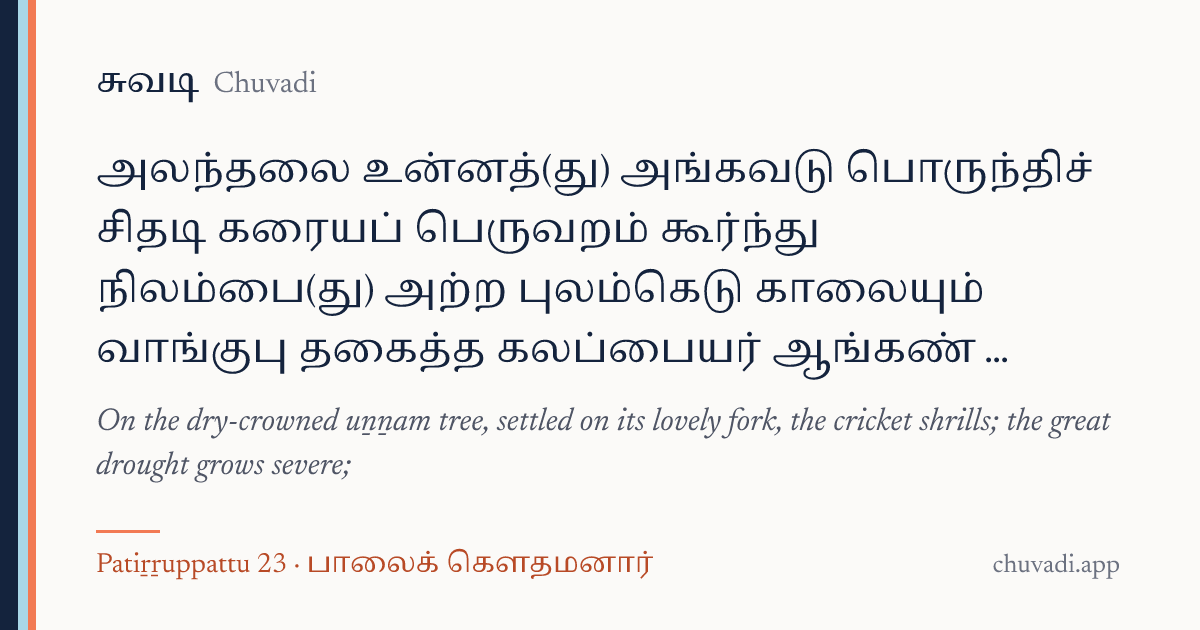
- On the dry-crowned uṉṉam tree, settled on its lovely fork,
- the cricket shrills; the great drought grows severe;
- even in the time when the land has lost its green and the fields are ruined,
- with their packs of instruments lifted and tied, there
- they come to the common ground and sing at the edges of the streets,
- the vayiriyar folk; so that their fierce hunger leaves them,
- their gold-wrought fine ornaments jingling, greatly glad,
- with hearts full of joy, they eat, are sated and dance;
- even with a little cheer of wine you fling out great gifts,
- O Kuṭṭuvaṉ of the golden garland and the army that kills in war!
- Longing for you we came, and we saw: the grass grown thick,
- with no one travelling, the paths filled in and lost,
- the roads with their great beauty gone; mating with the bull,
- the noble wild cow lives there sweetly at ease;
- the places that rose to the sky have become forest. Your
- great fame, full of strength, they did not know, who fought you,
- the kings who faced you in war; since they fled, their vanguard broken,
- in the vast dense expanse where marutam trees hum and stand tall,
- with the thick-set kāñci on the great sand-filled ford,
- with the bank where the drooping murukku blooms bright as fire,
- where the conch-snail and the stork and the red-striped fish leap,
- with the gardens by the ponds at the mouth of the fields,
- with the lotus of flame-like flowers, and, since the bangled woman
- does not pluck them, the āmpal in full bloom:
- such were their wide lands of unceasing new wealth.
What the poem says
Pālaik Keḷatamaṉār speaks to Kuṭṭuvaṉ, but here he speaks as a traveller who has crossed the lands of the king's defeated enemies. The poem is a vañci praise poem.
The first ten lines praise the king's generosity. Even in a terrible drought, when crickets shrill in the dry uṉṉam tree and the fields are ruined, the vayiriyar, wandering musicians who sing in village squares, come to his court. There they are fed, they dance, and they receive gold ornaments. Even when he is only a little merry with wine, the king gives away great gifts.
From line 11 the poet tells what he saw on his way. In the lands of the kings who fought Kuṭṭuvaṉ and fled, the roads are lost under grass, and wild cattle mate and graze where towns stood. The places "that rose to the sky have become forest." The last lines, 18 to 25, remember what that land was like before: tall marutam trees, kāñci trees thick on the sandy ford (tatainta kāñci, line 19, the poem's name), bright murukku flowers, leaping fish, lotus and āmpal ponds. The contrast between the lush past and the empty present shows the cost of opposing the king.
Line 17 is compressed. I read "their garland broken" as the defeat of the enemy's vanguard. In lines 23 and 24 the "woman with bangles" (vaḷaimakaḷ) seems to be the one who would pluck the āmpal, so that the lilies bloom because she leaves them. The exact sense is unclear.