



பதிற்றுப்பத்து 25 · மூன்றாம் பத்து
பாடல் · The poem
Tap a word to see where else it occurs.
பொருள் · Meaning in TamilAI
குதிரைகள் ஓடிய நிலத்தில் கலப்பை ஓடாது; மதநீர் வழியும் தலையும் கடுமையான கண்ணும் உடைய யானைக் கூட்டம் பரவிய நிலத்தில் வளம் பரவாது. உன் படைவீரர் சென்றடைந்த ஊர் மன்றங்களில் கழுதைகள் செல்கின்றன. நீ சினந்ததால், பகைவரின் உறுதியான மதில்களில், காவல் இல்லாத இடங்களில், கடுங்காற்று தாக்கியதால் தீ மிகுந்து சீறி, பசுமையான தீப்பொறிகளோடு ஒளிரும் நெருப்பு ஆடிய இடங்களில், ஆண்கள் மட்டுமே செல்லும் காடு காய்ந்த கடுமையான வழி, முன்னிடம் அகன்ற பெரும்பாழாக நிலைத்துவிட்டது. இடிபோல் முழங்கும் முரசோடு, பெருமலையிலிருந்து இழியும் அருவி போல ஒளிரும் கொடிகள் அசைய, விரைந்த குதிரைகள் சிறகுபோல் பாய, நீ உன் நெடுந்தேரை ஓட்டிய பிற வேந்தர்களின் அகன்ற நாடுகள் இவ்வாறு ஆயின.
துறை: வஞ்சித்துறைப் பாடாண்பாட்டு. பாலைக் கௌதமனார் குட்டுவனைப் பாடியது. பெயர் 'கான் உணங்கு கடுநெறி' (8): காடு காய்ந்துபோன கடுமையான வழி. பகைவர் நாடு பாழானதையும், மன்னனின் தேர், கொடி, முரசு ஆகியவற்றின் பெருமையையும் காட்டுகிறது.
ஆங்கிலம் · English translationAI
Translation
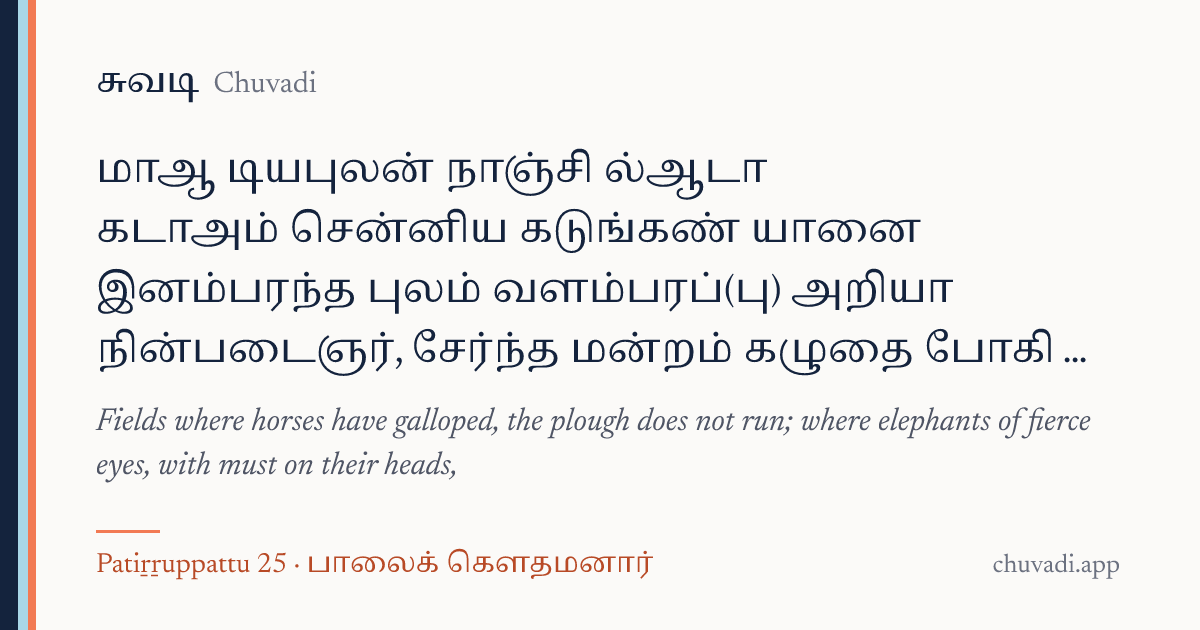
- Fields where horses have galloped, the plough does not run;
- where elephants of fierce eyes, with must on their heads,
- have spread in herds, the fields do not know the spread of wealth;
- the common squares your soldiers reached, asses now tread;
- you raged; and on the enemies' firm walls, where no guards are set,
- since the fierce wind struck, the flame grew bright and furious,
- and where the shining fire danced with fresh flying sparks,
- the cruel path where only men pass, through scorched forest,
- has become a great ruin wide at the front, and so it stays.
- With drums that thunder like thunderbolts, as on a great mountain
- waterfalls come down the slope, your bright flags waving,
- while the swift horses' quick wings beat, you
- drove your tall chariot: so are the wide lands of others.
What the poem says
A short vañci poem by Pālaik Keḷatamaṉār to Kuṭṭuvaṉ. It describes the ruin of enemy lands after his campaign.
It begins with the pattern that the next poem repeats: fields where war-horses galloped can no longer be ploughed, and fields where must elephants trampled no longer bear crops. Asses tread the village squares where the king's soldiers came. Driving asses over a captured place was a sign of complete conquest. The enemies' forts burned in a wind-driven fire, and the forest road became "the harsh road through scorched forest" (kāṉuṇaṅku kaṭuneṟi, line 8). That phrase gives the poem its name.
The last lines show the king himself. His drums thunder, his flags ripple like waterfalls on a mountain, and his swift horses seem to fly as he drives his chariot through the wide lands of others.
Line 5 is difficult. The word tōṭṭi can mean an elephant goad or a gate-guard, and I have read "where no guards are set". Line 8, "where only men pass" (āṇtalai vaḻaṅkum), may instead mean a path strewn with men's heads.