



பதிற்றுப்பத்து 26 · மூன்றாம் பத்து
பாடல் · The poem
Tap a word to see where else it occurs.
பொருள் · Meaning in TamilAI
தேர்கள் பரவிய நிலத்தில் உழவர் ஏர் பரவாது; களிறுகள் ஆடிய நிலத்தில் கலப்பை ஓடாது; மத்து ஒலித்த வீடுகளில் இனிய இசை ஒலிக்காது. முன்பு அந்நாட்டை நன்கு அறிந்தவர்கள் அறிந்த அதன் செழுமையான வளத்தை நினைத்தால், நான் வருந்துகிறேன்; வருத்தம் வருகிறது. பெய்யும் மழை காவாமல் வெப்பம் மிகுந்து, 'அம்மா! வளம் இல்லை; இது காலத்தின் இயல்பு' என்று கூறி, பெருகிவரும் கண்ணீரை அடக்கிக்கொண்டு, கைகளைப் புடைத்துக்கொண்டு, மெலிந்த நெஞ்சுடைய மக்களின் துன்பம் மிகுகிறது. பீர்க்கங்கொடி படர்ந்த வேலியுடைய பாழ்வீடுகளில் நெருஞ்சி முளைத்து, அவை காடுறு கடுநெறி ஆகி நிலைபெற்றன. முருகன் சினந்ததுபோல் கருகி, மகிழ்ச்சியிழந்த அந்த மூதூர், அச்சமற்ற கூற்றுவனைப் போன்ற உன் திறமைமிக்க வீரர்கள் சீறிய நாடு ஆகும்.
துறை: வஞ்சித்துறைப் பாடாண்பாட்டு. பாலைக் கௌதமனார் குட்டுவனைப் பாடியது. பெயர் 'காடுறு கடுநெறி' (11): காடு மண்டிய கடுமையான வழி. பகைநாட்டின் முந்தைய வளத்தையும் இன்றைய அழிவையும் ஒப்பிட்டு, புலவர் தம் இரக்கத்தை வெளிப்படுத்துகிறார்.
ஆங்கிலம் · English translationAI
Translation
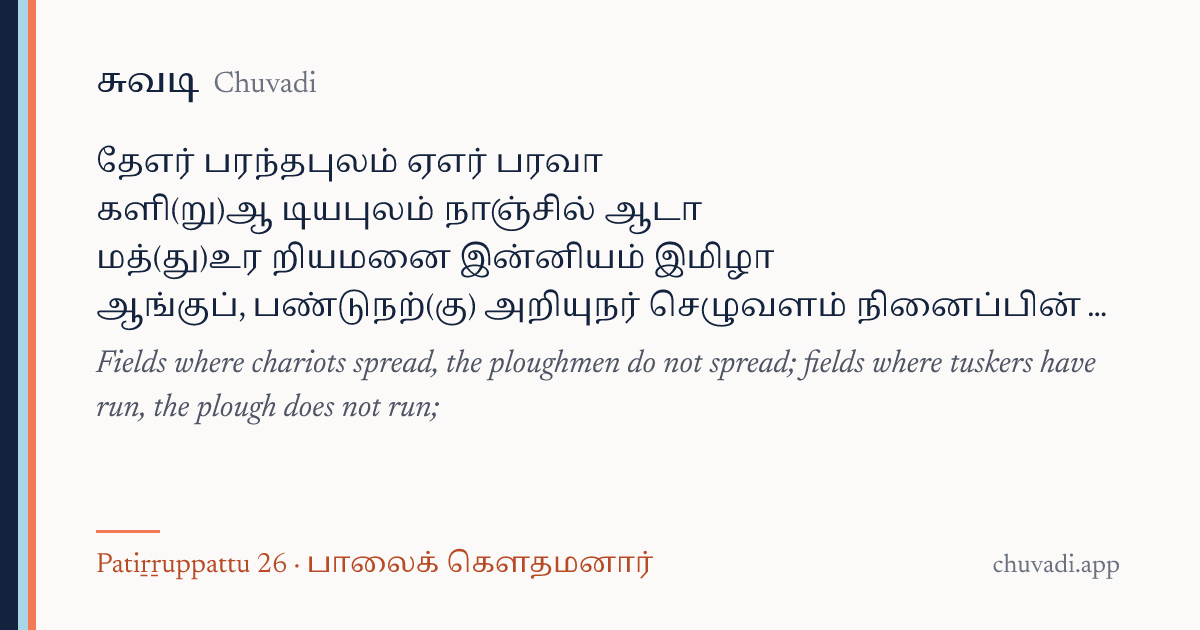
- Fields where chariots spread, the ploughmen do not spread;
- fields where tuskers have run, the plough does not run;
- houses where the churn roared, sweet music no longer sounds;
- there, when I think of its rich wealth, as those who knew it well of old knew it,
- I grieve; grief comes upon me.
- The rain from the clouds gives no protection, all is scorched;
- 'There is no bounty, alas; such is the nature of the times,' they say,
- holding back their brimming flood of tears, beating their hands,
- people with fainting hearts, their misery deepening.
- Ruined houses, their fences overgrown with pīr creeper, with neruñci,
- have become a harsh path through the wild, and so it stays:
- the old town, its joy destroyed, darkened as when Murukaṉ raged.
- Like Death who knows no fear are your
- warriors of perfect skill; so is the land they raged against.
What the poem says
A companion to the previous poem. Pālaik Keḷatamaṉār again describes an enemy land wasted by Kuṭṭuvaṉ's army, but this time the poet himself speaks of his grief.
The first three lines are a set of contrasts. Where chariots ran, no ploughs run. Where elephants played, the plough cannot work. In houses where butter churns used to roar, no music sounds. The poet says that when he thinks how rich this country once was, "I grieve; grief comes upon me" (line 5). The survivors say the rains have failed and "such is the nature of the times". They hold back tears and beat their hands.
The houses are in ruins, with pīr creeper on their fences and thorny neruñci growing. The town has become "a harsh path overgrown with forest" (kāṭuṟu kaṭuneṟi, line 11), the poem's name. The old town is as dark and joyless as a place where Murukaṉ has vented his anger. The king's warriors are like Death that knows no fear.
The poem is unusual in that the praise comes almost entirely through pity for the defeated. Line 13 is uncertain. I take urumpil, "without fear", as describing Death, but the word may have another sense.