



பதிற்றுப்பத்து 27 · மூன்றாம் பத்து
பாடல் · The poem
Tap a word to see where else it occurs.
பொருள் · Meaning in TamilAI
நீ சினந்து பார்த்ததால் அது உறுதியாக அழிந்தது. தொடுத்த குவளை மலர்களைத் தூய முறையில் அணிந்து, மலர்ந்த ஆம்பலை ஆடை மடிப்பில் செருகி, சுருண்ட அழகிய தலையில் பூமாலை சூடி, வடித்த கள்ளை உண்டு இனிது கூடியவர்கள், துறையருகே உள்ள மருத மரத்தில் ஏறி நீரில் பாய்கின்றனர். ஒளிரும் வளையல் அணிந்த மகளிர் தெளிவாகக் கூவி அழைக்கும்போது, வயலருகே உள்ள சோலையில் பச்சை மயில் ஆடுகிறது. பொய்கை வாயிலில் நீர் மோதும் மதகருகே, நெய்தல் மலர்கள் வரிசையாக வளரும் வயலில், வலிய சக்கரங்கள் திடீரென ஆழ்ந்து சேற்றில் பதிந்து துள்ள, நல்ல எருதுகள் சேற்றைக் கடக்க முயன்று வருந்தும்போது எழும் வண்டிக்காரர்களின் ஆரவாரம் தவிர வேறு பூசல் அறியாத அந்த நல்ல நாட்டின், வளம் குன்றாத விரும்பத்தக்க அழகு அது.
துறை: செந்துறைப் பாடாண்பாட்டு. பாலைக் கௌதமனார் குட்டுவனைப் பாடியது. பெயர் 'தொடர்ந்த குவளை' (2): தொடுத்து அணிந்த குவளை மலர். மன்னனின் சினப்பார்வையால் அழிந்த பகைநாட்டின் முந்தைய அமைதியையும் வளத்தையும் விவரிக்கிறது.
ஆங்கிலம் · English translationAI
Translation
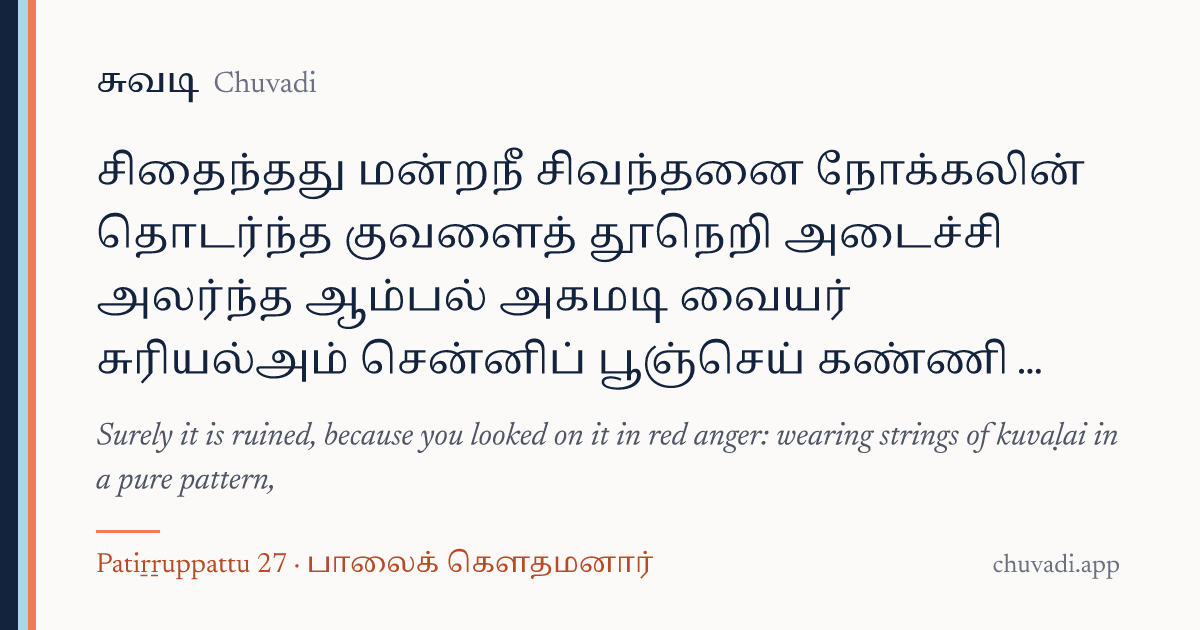
- Surely it is ruined, because you looked on it in red anger:
- wearing strings of kuvaḷai in a pure pattern,
- with opened āmpal tucked within their folded cloth,
- with flower garlands on their lovely curly heads,
- those who drink filtered toddy, sweetly gathered together,
- climb the marutam near the ford to dive;
- when women with bright bangles call out their clear cries,
- in the grove by the pond the green peacock dances;
- at the pool's mouth, by the sluice where the flood beats,
- in the fields where neytal grows in rows by custom,
- the strong-rimmed wheels suddenly sink deep,
- caught in the mud, they jolt as they are pushed on;
- the good oxen strain, in distress going through the mire;
- except the clamour of the cart-men,
- no uproar is known in that good land,
- its lovely beauty of unceasing new wealth.
What the poem says
A straight praise poem by Pālaik Keḷatamaṉār to Kuṭṭuvaṉ, in the form of a lament for an enemy land. Its first line states the end of the story: "Surely it is ruined, because you looked on it in red anger." The rest of the poem shows what that land was like before.
It was a land of rivers and fields. Young men wore strings of kuvaḷai (blue water-lily, line 2, which gives the poem's name, toṭarnta kuvaḷai, "the linked kuvaḷai") and āmpal flowers. They drank toddy together and climbed marutam trees by the ford to dive into the water. Women with bangles called out, and peacocks danced in the grove. The only noise ever heard there was the shouting of carters whose heavy wheels sank in the rich mud of the fields while their oxen strained. In other words, it was a land so peaceful that a cart stuck in mud was its only trouble.
The poem praises the king by showing the beauty he can destroy. Lines 2 and 3 are uncertain in detail: "pure pattern" (tūneṟi) and the sense of akamaṭivaiyar, which I take as tucking flowers into a fold of the waist-cloth.