



பதிற்றுப்பத்து 28 · மூன்றாம் பத்து
பாடல் · The poem
Tap a word to see where else it occurs.
பொருள் · Meaning in TamilAI
அம்மா! இந்நாடு செல்வம் உடையது. பெருவலிமை கொண்ட பகைவர்களின் பசுங்கண் யானைகளின் நெருங்கிய வரிசைகள் சிதைய, வலிமையோடு செலுத்திப் போரிட்ட, குருதிக்கறை படிந்த அடியும் கழலும் உடைய, விரைந்த குதிரை வீரர்கள் விரைவான அம்புத் தொடுப்பை மறக்கும்படி, நீ இனிதாகக் காவல் தருகிறாய். விளைச்சல் தடைபடாமல், மக்கள் தம் வீடுகளை விட்டு நீங்காமல் நீண்ட உழைப்பைச் செய்வதால், தரிசு நிலத்தின் வெடிப்புகளும் பொந்துகளும் நிறைய, கோடைக்காலம் நீண்டு குன்றுகள் பொலிவிழந்து, அருவிகள் வற்றிய பெருவறட்சிக் காலத்திலும், கரைமீறிப் பெருகும் அகன்ற பேராறு, சிறந்த பரந்த வயல்களில் பரந்து மிகும்படி, தழைகளைச் சூடிக்கொண்டு சீறிவரும் பெருவெள்ளமாக வருகிறது. அந்தச் செந்நீர் வெள்ளத்தின் ஆரவாரத்தைத் தவிர, உன் அகன்ற நாட்டில் வெம்மை அரிது.
துறை: நாடுவாழ்த்து. பாலைக் கௌதமனார் குட்டுவனைப் பாடியது. பெயர் 'உருத்துவரு மலிர்நிறை' (12): சீறிப் பெருகிவரும் வெள்ளம். பூசல், வெம்மை என்னும் சொற்கள் போரையும் துன்பத்தையும் குறிக்கும்; நாட்டில் வெள்ளப் பூசலைத் தவிர வேறு போர்ப் பூசல் இல்லை என்பது நயம்.
ஆங்கிலம் · English translationAI
Translation
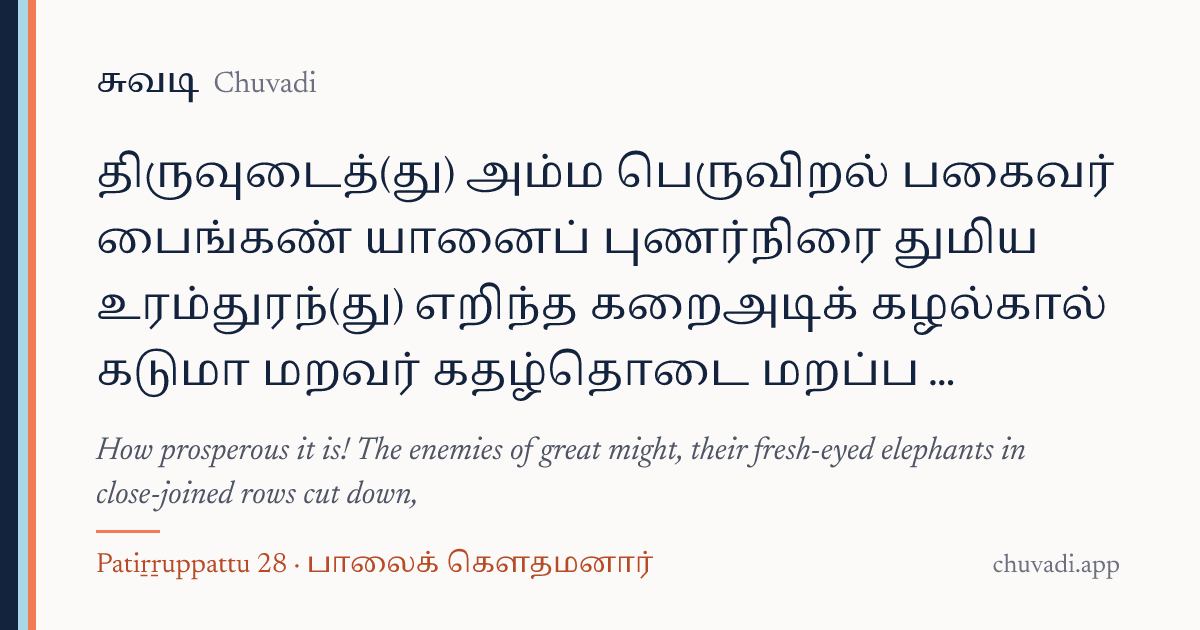
- How prosperous it is! The enemies of great might,
- their fresh-eyed elephants in close-joined rows cut down,
- driven back in their strength, by warriors with blood-stained feet and anklets
- on swift horses; so that those warriors forget their quick volleys,
- you give protection sweetly; with harvests unhindered,
- since people do long labour in homes never left empty,
- the fallow ground of the waste land has its cracks and holes filled;
- even when summer drags on and the hills grow bare,
- even in the time of great drought when the waterfalls cease,
- the great river of wide course, swelling and spilling over its banks,
- spreading wide over the glorious broad fields to overflow them,
- wearing leafy debris, comes rushing in a furious brimming flood;
- except the uproar of that red water,
- heat is rare in your wide land.
What the poem says
This is a nāṭu vāḻttu, a poem in praise of the king's country. Pālaik Keḷatamaṉār tells Kuṭṭuvaṉ how prosperous his land is.
The opening lines give the reason. The king's horsemen broke the enemy's elephant ranks so completely that they no longer need to shoot. With war ended, he protects his people. Their homes are never deserted, they work long hours, and the harvest never fails. Even in the worst drought, when summer drags on, the hills are bare and the waterfalls dry up, the great river floods over its banks. It spreads over the fields and fills every crack of the fallow land. It comes wearing a crown of leaves and twigs, "the brimming flood that rushes in fury" (uruttuvaru maliriṟai, line 12), and this gives the poem its name.
The ending is a play on words. The only "uproar" (pūcal) in the land is the noise of the red, muddy flood, and "heat" (vemmai) is rare there, because drought cannot touch it. The words for uproar and heat are also words for war and distress, so the poet is saying that the land knows no battle and no suffering. Line 6 seems to have a corrupt word (nīṇatoḻil), which I read as "long labour".