



பதிற்றுப்பத்து 35 · நான்காம் பத்து
பாடல் · The poem
Tap a word to see where else it occurs.
பொருள் · Meaning in TamilAI
உயர்வுடைய வீரனே, நீ காத்து வருவதால், பெருமையுடையவனே, உன் வெற்றிகள் புகழ்ந்து உரைக்கத் தக்கவை. பெரிய களிற்று யானைகளின் ஒளிரும் வெண்மையான கொம்புகளும், நீண்ட தேர்களின் சக்கரங்களும் சிதறிக் கிடக்கும் அகன்ற போர்க்களத்தில், பெட்டையுடன் கூடிய சேவலும் தன் சுற்றத்துடன் புகாத இடத்தில், தலை வெட்டுண்டு எஞ்சிய உடல்கள் ஆடும் பாழ்நிலத்தில், அந்தி மாலையில் வானத்தைக் கண்டது போலச் செந்நிற ஒளி கொண்ட குருதி பரந்த வெளியில் பேய்கள் ஆடுகின்றன. இத்தகைய வெல்லும் போரும் குறையாத புது வருவாயும் உன்னிடமே உள்ளன.
துறை: வாகைத்துறைப் பாடாண்பாட்டு. காப்பியாற்றுக் காப்பியனார் நார்முடிச் சேரலின் போர் வெற்றியைப் பாடியது. பெயர் 'மெய்யாடு பறந்தலை' (வரி 6): தலையற்ற உடல்கள் ஆடும் போர்க்களம். குருதிக் களத்தை அந்திவானுக்கு ஒப்பிட்டது சிறப்பு.
ஆங்கிலம் · English translationAI
Translation
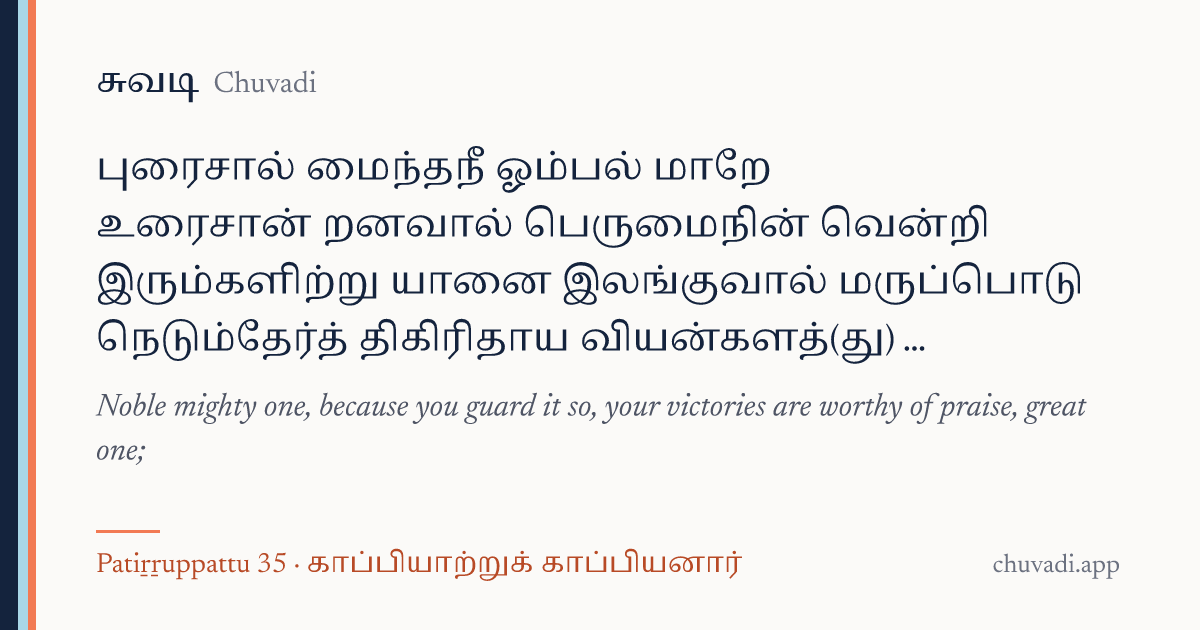
- Noble mighty one, because you guard it so,
- your victories are worthy of praise, great one;
- with the gleaming white tusks of great bull elephants
- and the wheels of tall chariots strewn over the wide field,
- where even the cock with its hen and its kin will not go,
- on the battleground where headless trunks dance, their heads cut off,
- like the sky seen at the dusk of evening,
- in the open ground of blood that holds a red glow,
- demons dance; your conquering war,
- with its unfailing gains, rests with you.
What the poem says
The poet takes up the last line of the previous poem and praises the king's victories. Its turai is vākait turaip pāṭāṇpāṭṭu, praise of victory. The poem paints the battlefield after the fight. Elephant tusks and chariot wheels lie scattered. The field is so grim that even a cock with its hen and brood will not enter it. Headless bodies still move and jerk, as if dancing. The ground is red with blood, like the evening sky at sunset, and demons (pēy) dance there.
This is a common image in puṟam poetry: the horror of the battlefield shows how complete the king's victory was. The poem's name, Meyyāṭu paṟantalai, 'the battleground where bodies dance', comes from line 6.
Line 5 (aḷakuṭaic cēval kiḷaipukā vāra) is read here as birds that will not enter; another reading is possible, so it is uncertain. The final words, 'unfailing gains', open the next poem.