



பதிற்றுப்பத்து 36 · நான்காம் பத்து
பாடல் · The poem
Tap a word to see where else it occurs.
பொருள் · Meaning in TamilAI
குறையாத புது வருவாய் உன்னிடமே உள்ளது. செழிப்புடைய உன் வலிமை என்றும் குன்றாது. வளமான உள்ளத்துடன் புதிய போரை வென்று, போரில் மிகுந்த ஆற்றலுடைய வீரர்களுடன் முன்னணியில் சென்றாய். பனைமரங்கள் வெட்டி வீழ்த்தப்பட்ட காடு போல, வாள்கள் கலந்த கடுமையான தூசிப்படையில் பல யானைகள் ஒருசேர வீழ்ந்தன. இறந்த குதிரைகளையும் மனிதர்களையும் உண்ண, ஓவியம் தீட்டியது போன்ற புள்ளிகளுடைய கழுத்தும் புல்லிய முதுகும் உடைய ஆண் கழுகு தன் பெடையுடன் சேர்ந்து, கொண்டையுடைய பருந்துடன் இரையைக் கொண்டு இறங்குகிறது. நிலத்திலிருந்து உயர்ந்து குவிந்த பிணங்களின் நீண்ட வரிசைகளைச் சுமந்து, அச்சம் தரும் வடிவுடைய கூளிகள் உண்டு மகிழ்ந்து ஆடுகின்றன. குருதி செந்நிற ஆறாக ஓடும்படி நீ பல போர்களைச் செய்கிறாய். உன் செல்வம் வாழ்க.
துறை: களவழி. காப்பியாற்றுக் காப்பியனார் நார்முடிச் சேரலின் போர்க்களத்தைப் பாடியது. பெயர் 'வாண்மயங்கு கடுந்தார்' (வரி 6): வாள்கள் கலந்து மோதும் கடுமையான முன்னணிப் படை. கழுகு, பருந்து, கூளி ஆகியவை களவழிப் பாடல்களின் வழக்கமான படிமங்கள்.
ஆங்கிலம் · English translationAI
Translation
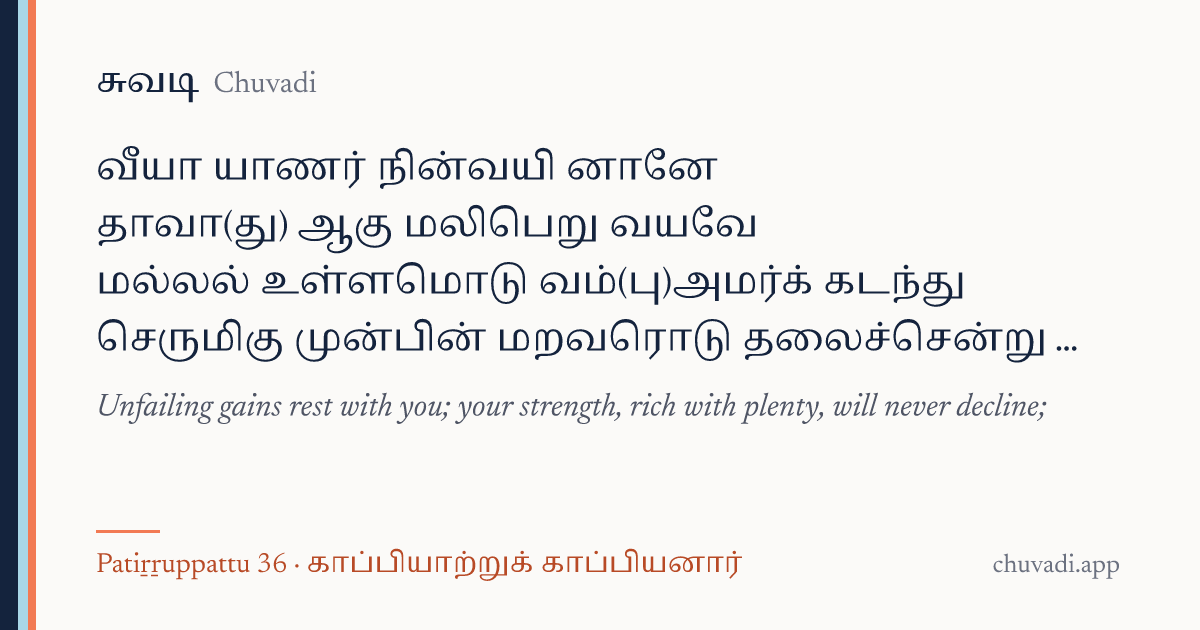
- Unfailing gains rest with you;
- your strength, rich with plenty, will never decline;
- with a rich heart you overcame fresh battle,
- and went at the head with warriors of strength abounding in war;
- like a grove where palmyras are felled, trunks cut down, many together,
- elephants fell in the fierce vanguard where swords mingle;
- to feed on the fallen corpses of horses and of men,
- with spotted necks as though engraved,
- the dull-backed male vulture joined with his mate
- takes flesh with the crested kite and drops down eastward;
- carrying many long rows of corpses heaped high from the ground,
- the fearsome Kūḷi demons eat, rejoice and dance,
- as the red stream of blood flows,
- you make many wars; may your wealth flourish.
What the poem says
This poem is a kaḷavaḻi, a description of the battlefield after the fight, praising the king. It begins with the closing phrase of the previous poem. The poet says the king's strength will never fail. With his warriors he led the charge, and enemy elephants fell in the vanguard like palmyra trees felled in a grove.
Then come the carrion creatures. Male vultures with their mates, spotted on the neck as if engraved, feed on dead horses and men together with crested kites. The Kūḷi demons, fearsome figures of battlefield lore, carry heaps of corpses, eat, rejoice and dance while blood flows like a red river. The poem ends with a blessing: 'may your wealth flourish', and that phrase opens the next poem.
The poem's name, Vāṇmayaṅku kaṭuntār, 'the fierce vanguard where swords mingle', comes from line 6. Line 2 is compressed and its exact sense is uncertain. Line 10 (kuṭumi eḻāloṭu koṇṭu kiḻakku iḻiya) is also unclear: eḻāl may be a kind of hawk or kite, and 'dropping eastward' may describe the birds' flight or the flow of something downward.