



பதிற்றுப்பத்து 37 · நான்காம் பத்து
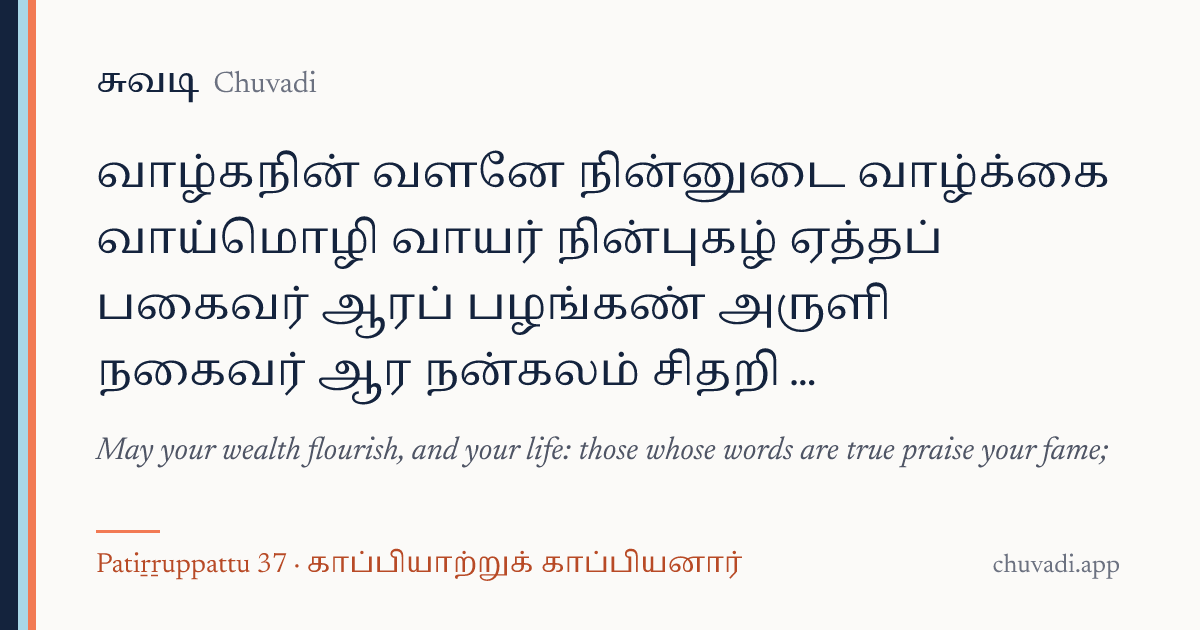
பாடல் · The poem
Tap a word to see where else it occurs.
பொருள் · Meaning in TamilAI
உன் செல்வமும் உன் வாழ்க்கையும் வாழ்க. உண்மை பேசுவோர் உன் புகழைப் போற்றுகின்றனர். பகைவர் நிறையத் துன்பத்தை அளித்தாய்; நண்பர் நிறைய நல்ல அணிகலன்களை வாரி வழங்கினாய். அமைந்து, அடங்கி, குற்றமற்ற பெருமையுடையவனே, வானைத் தொடும் உன் நல்ல புகழ் உலகத்துடன் சேர்ந்து நிலைத்து வாழ்கிறது. நிலைகுலைந்த குடிகளைச் சீர்திருத்திய வெற்றியும், கரிய பெரிய பனைமாலையும் பெருங்கழலும் அணிந்து, மன்னர்களின் கோட்டைகளை அழித்து, வீரர்களைக் கொண்டு வந்து, பழைய மரபுச் சிறப்புடன் உன் நிழலில் வாழ்வோருக்குக் கோணல் இல்லாமல் நீதி வழங்கும் வளையாத கொள்கையும், கொடிய ஆற்றலுடைய வேந்தே, இவ்வுலகத்தவர்க்காக நீ பெரிதும் நன்றாக உடையவனாக இருக்கிறாய்.
துறை: செந்துறைப் பாடாண்பாட்டு. காப்பியாற்றுக் காப்பியனார் நார்முடிச் சேரலின் கொடை, வெற்றி, நீதி ஆகியவற்றைப் பாடியது. பெயர் 'வலம்படு வென்றி' (வரி 7): வெற்றி தரும் போர்வெற்றி. பனைமாலை சேரரின் அடையாளம்.
ஆங்கிலம் · English translationAI
Translation
- May your wealth flourish, and your life:
- those whose words are true praise your fame;
- you grant sorrow to your enemies to their fill,
- and scatter fine treasures for friends to their fill;
- noble one, mature, calm, restrained, free of fault,
- your good fame that touches the sky lives and breathes with the world;
- your victory that brought success, setting right the shaken families;
- and, wearing the great dark palm garland and the great anklet,
- you struck down the fortresses of kings and brought back warriors,
- and for those who live in your shade with the honour of ancient standing
- you set things right without crookedness, your unbending principle;
- all these you have greatly and well,
- king of fierce strength, for the people of this world.
What the poem says
The poet begins with the blessing that closed the last poem, 'may your wealth flourish', and then lists the king's qualities. Truthful men praise him. He gives sorrow to enemies and rich gifts to friends. He is mature, calm and free of fault, and his fame reaches the sky and lives as long as the world. He restored shaken families, wore the palmyra garland (the Chera emblem) and the warrior's anklet, broke the forts of enemy kings, and ruled with unbending justice for those who live under his protection.
The poem's name, Valampaṭu veṉṟi, 'victory that brings success', comes from line 7. The same phrase appears in the second poem of this decade (patir.32, line 7), which shows the poet's habit of echoing his own words.
Line 9 (maṟavart tarīi) may mean that the king brought back captured warriors, or that he gathered warriors to his side; the rendering 'brought back warriors' keeps both possibilities open. The last phrase, 'for the people of this world', opens the next poem.