



பதிற்றுப்பத்து 38 · நான்காம் பத்து
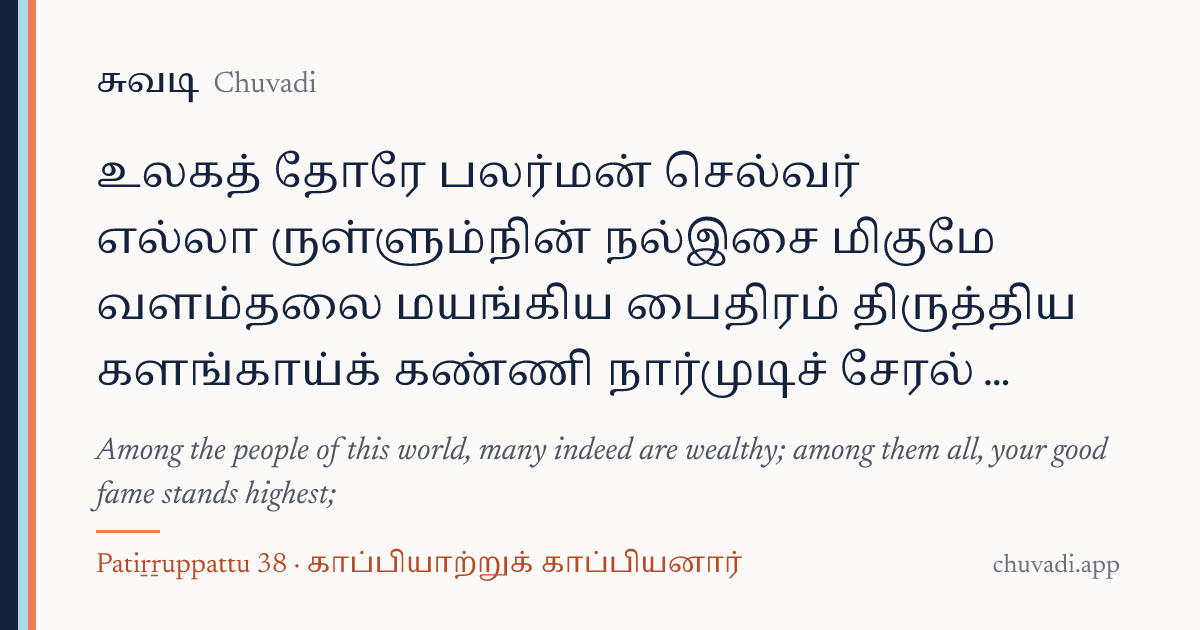
பாடல் · The poem
Tap a word to see where else it occurs.
பொருள் · Meaning in TamilAI
உலகத்தவருள் செல்வர் பலர் உண்டு; ஆனால் அவர்கள் எல்லாருள்ளும் உன் நல்ல புகழே மிகுந்தது. வளம் நிறைந்த நாட்டைச் சீர்திருத்திய களங்காய்க்கண்ணி நார்முடிச் சேரலே! அங்குசத்தால் ஏவியதும் கோட்டையின் முகப்பு சிதையும்படி தாக்கி, தோட்டி என்னும் ஊரை உனக்குப் பெற்றுத் தந்த, வளையணிந்த கொம்புடைய யானைகளும், சிவந்த பிடரியுடைய செருக்கான குதிரைகளும், ஒளிரும் கழலும், அழகாகத் தொடுத்த மாலையும் உடைய சேரர் வேந்தே! பரிசிலர்க்குச் செல்வமே! பாணர்களின் காலை அவையே! ஒளியுடைய நெற்றியுடையவளின் கணவனே! வீரர்களுள் காளை போன்றவனே! குற்றமின்றி விளங்கும் போர்த்தழும்புகள் தங்கிய மார்பையுடைய பழியற்ற செல்வனே! வானவரம்பனே! இனியவை கிடைத்தால் தனித்தனியே நுகர்வோம் என்று எண்ணாமல், 'தருக' என்று இரக்காமல், குற்றமற்ற நெஞ்சத்துடன், பகுத்து உண்பதற்காகவே பொருளைத் தொகுத்த ஆண்மையுடன் நீ பிறருக்காகவே வாழ்கிறாய்.
துறை: செந்துறைப் பாடாண்பாட்டு. காப்பியாற்றுக் காப்பியனார் களங்காய்க்கண்ணி நார்முடிச் சேரலைப் பல விளிகளால் போற்றிப் பாடியது. பெயர் 'பரிசிலர் வெறுக்கை' (வரி 9): பரிசில் பெறுவோர்க்குச் செல்வம் போன்றவன். 'தோட்டி' என்னும் சொல் அங்குசம், ஊர்ப்பெயர் என இருபொருள் தருகிறது.
ஆங்கிலம் · English translationAI
Translation
- Among the people of this world, many indeed are wealthy;
- among them all, your good fame stands highest;
- you set right the country where wealth abounds,
- Kaḷaṅkāykkaṇṇi Nārmuṭic Cēral;
- at the goad's urging, so that the face of the fortress was shattered,
- your elephants with banded tusks won Tōṭṭi for you;
- lord of red-maned prancing horses and bright, gleaming anklets,
- king of the Cēras, with a finely made garland;
- wealth of gift-seekers, morning assembly of the bards,
- husband of her with the bright forehead! bull among warriors!
- with a chest shining without stain, where scars dwell,
- blameless rich one! Vāṉavarampaṉ!
- 'If we get sweet things, we will enjoy them each alone',
- so you never wish, nor say 'give', with a heart without flaw;
- with the manliness that gathered food to share,
- because you live for others.
What the poem says
Here the poet addresses the king by name, Kaḷaṅkāykkaṇṇi Nārmuṭic Cēral, and with a row of titles. Kaḷaṅkāykkaṇṇi means 'he who wears a garland of kaḷaṅkāy (karanda berries)' and Nārmuṭi means 'crown of fibre'; these names are said to come from an episode of his rule. He is also called Vāṉavarampaṉ, a Chera title meaning 'he whose bound is the sky'. The poem begins by picking up 'the people of this world' from the end of the last poem: many people are wealthy, but his fame exceeds them all.
Lines 5 and 6 mention Tōṭṭi. The word means 'goad', and in line 6 it seems also to be the name of a place won by the king's elephants, so the poet may be playing on the double sense; this reading is not certain. The king is then hailed as the wealth of suppliants, the bards' assembly, the husband of a bright-browed queen and a bull among warriors, with a chest marked only by battle scars.
The last lines praise his generosity. He does not think 'if I get sweet things I will enjoy them alone'. He gathers food in order to share it, because he lives for others. That final phrase opens the next poem.
The poem's name, Paricilar veṟukkai, 'the wealth of gift-seekers', comes from line 9. Line 7 contains an obscure word (īṇakai) and its reading is uncertain; line 5 is also compressed.