



பதிற்றுப்பத்து 39 · நான்காம் பத்து
பாடல் · The poem
Tap a word to see where else it occurs.
பொருள் · Meaning in TamilAI
நீ பிறருக்காகவே வாழ்வதால், உன் வீரத்தைப் புகழ்ந்து கூறும் கூட்டத்தினர் 'எமக்கு இல்லை' என்று ஒருபோதும் சொல்லார். வலிமையின் வழிகளில் தேர்ந்த வீரர்களின் வெப்பமுடைய தும்பை மாலையுடன், சினம் கொண்ட பகைவரின் காவலுடைய போர்முனை அலறும்படி, உயர்த்தி அடிக்கப்படும் ஏவல் முரசு இடிபோல அதிர்ந்து முழங்கி, போரில் மிகுந்து, அடங்காத பகைவரின் அரிய அரண்கள் வாடும்படி செல்கிறது. காலனைப் போன்ற கொடிய சினமுடைய வலியவனே! நூலால் நெய்யாத நுண்ணிய மயிரால் நெய்தது போல, வாடிய உச்சியுடைய வேலமரத்தின் உலர்ந்த அழகிய கிளையில் சிலந்தி பின்னிய அசையும் வலை, ஓவியம் தீட்டியது போன்ற புள்ளிக் கழுத்துடைய புல்லிய முதுகுப் புறாக்களின் கூட்டம் அலறும் இடத்தில் தொங்குவது போல, ஒளிரும் மணிகள் நெருங்கப் பதித்த பசும்பொன் தகட்டில், ஒளிரும் இழைகளால் தைத்து, மின்னலை உமிழ்வது போல விளங்க, சிறந்த முத்துக்களும் தைக்கப்பட்ட மேற்கட்டியின் கீழ், நார்முடிச் சேரலே, உன் போர் தரும் நிழலை மக்கள் விரும்பி வாழ்கின்றனர்.
துறை: வாகை. காப்பியாற்றுக் காப்பியனார் நார்முடிச் சேரலின் போர் முரசையும் அவனது பாதுகாப்பையும் பாடியது. பெயர் 'ஏவல் வியன்பணை' (வரி 5): போருக்கு ஏவும் அகன்ற முரசு. சிலந்தி வலையைப் பொன்னாடைக்கு ஒப்பிடும் உவமை நுட்பமானது; அதன் அமைப்பு தெளிவற்றது.
ஆங்கிலம் · English translationAI
Translation
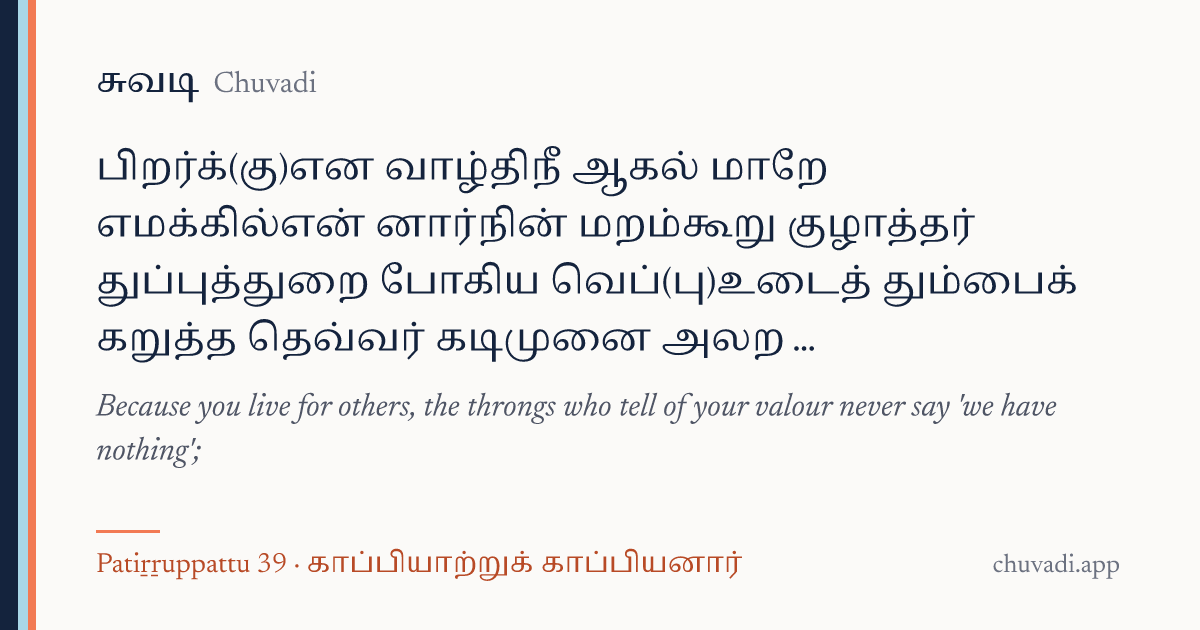
- Because you live for others,
- the throngs who tell of your valour never say 'we have nothing';
- with the fierce tumpai garland of those who have mastered the ways of strength,
- so that the guarded front of the angry enemy cries out,
- the wide drum of command, lifted and beaten, resounds,
- thundering like the thunderbolt, roaring, excelling in battle,
- it goes so that the strong forts of the unyielding wither;
- strong one of fierce wrath, like Kālaṉ, the god of death;
- finely, as if fine hairs were woven without thread,
- with spotted necks as though engraved,
- while a flock of dull-backed doves cries out,
- on the lovely dry branch of a vēl tree with a withered crown,
- like the swaying cover that the spider has spun,
- on a sheet of green gold set thick with gleaming gems,
- stitched with shining threads, glittering as if it spat lightning,
- sewn with excellent pearls,
- Nārmuṭic Cēral, they delight in the shade of your war.
What the poem says
The poem begins with the last words of the previous one, 'because you live for others'. Its turai is vākai, victory. The poet says that the crowds who sing of the king's valour never lack anything. He describes the king's war drum, which roars like thunder and makes the strong forts of enemies wither. The king's anger is compared to Kālaṉ, the god of death.
The second half (lines 9 to 16) is a long and delicate image. The poet describes something like a fine spider's web hanging on the dry branch of a vēl (acacia) tree, as doves cry nearby. This is compared with a cloth or canopy of green gold set with gems, stitched with shining thread and pearls, glittering like lightning. The image seems to describe the splendid royal canopy or cover under whose shade the king's followers live. The poem closes with the people delighting in 'the shade of your war', meaning the protection his battles give.
The poem's name, Ēval viyaṉpaṇai, 'the wide drum of command', comes from line 5. Lines 9 to 16 are hard to construe; how the web image, the doves and the gold cloth fit together is uncertain, and the rendering keeps the Tamil order. The final phrase, 'delighting in the shade of war', opens the next poem.