



பதிற்றுப்பத்து 40 · நான்காம் பத்து
பாடல் · The poem
Tap a word to see where else it occurs.
பொருள் · Meaning in TamilAI
போர் தரும் நிழலை விரும்பும் சுற்றத்துடன், பெருமானே, உன் படை பகைவரின் ஊர் முன்பு ஒருபோதும் தடைப்படாது இருப்பதாக. இனிய ஓசையுடைய முழங்கும் முரசு குறுந்தடியால் ஒலிக்க, புண்பட்ட தோளையுடைய வீரர்கள் போர்முனையில் தங்க, முற்றிய கரந்தைக் கொடி படர்ந்த விளைந்த வயல்களில் படை வந்து தங்கியது. 'இனி நம்மை நீக்க வல்லவர் யார்?' என்று இருந்த மன்னர்களின் கோட்டை வீரர்கள் ஆரவாரம் அடங்கி ஒடுங்கினர். பகைவர் தேயும்படி பூச்சூடி உலவி, வெண்போந்தை மாலை அணிந்த வேந்தர்களுடன் நடந்த அரிய போரில் கொன்று, அவர்கள் புறமுதுகு காட்ட, மக்களுக்கு வளம் நிறைத்து, தொடியணிந்த தோள்மேல் கை உயர்த்தி வெற்றிக் கூத்தாடினான். ஏழு முடிகள் சேர்ந்த மாலையணிந்த திருமகள் தங்கும் மார்பும், பொன்மாலையும், பொற்றேரும் உடைய நன்னனின் ஒளிரும் பூவுடைய காவல் வாகைமரத்தை வெட்டி வீழ்த்திய, மாலை நிறைந்த வலிமையுடைய நார்முடிச் சேரல், உன்னமரம் சாயும்படி, தெளிந்த கள்ளை இரவலர்க்கு வழங்கி அவர்களைத் தன்னிடம் தங்க வைத்து, தான் தந்து அவர்கள் உண்ட மணமுள்ள கள்ளால் மகிழ்ந்து, நீர் முழங்கும் நேரி மலையில் இருக்கிறான். சில வளையல்கள் அணிந்த விறலியே, நீ அவனிடம் செல்லமாட்டாயா? மலர்ந்த வேங்கைப்பூப் போன்ற ஒளிரும் அணிகளை அணிந்து, மென்மையான மகளிரின் அழகு சிறக்க, பாணர்கள் புதிய பூக்களைச் சூட, இளைஞர்கள் குறையாத இனிய களிப்புடன் மென்சொல் பேசி மகிழ்ந்து, மனம் நிறைந்த மகிழ்ச்சியுடன் அகன்ற போர்க்களத்தை வாழ்த்த, அங்குசத்தால் தடவாமலேயே கொம்பின் வளையருகே நின்று, பாகர்களின் ஏவலுக்கு ஒளிரும் தீப்பொறி சிதறுவது போலக் காட்டைப் பற்றி நாடெங்கும் காணப்படும் ஒளிரும் காட்டுத்தீயைப் போன்ற வலிமையும் போர்த்தொழிலில் விருப்பமும் உடைய யானைகள் பலவற்றை அவன் உனக்குத் தருவான்.
துறை: விறலியாற்றுப்படை. காப்பியாற்றுக் காப்பியனார் விறலியை நார்முடிச் சேரலிடம் பரிசில் பெறச் செல்லும்படி வழிப்படுத்திப் பாடியது. பெயர் 'நாடுகாண் அவிர்சுடர்' (வரி 29): நாடெங்கும் காணப்படும் ஒளிரும் காட்டுத்தீ, யானைகளுக்கு உவமை. நன்னனின் காவல்மரமான வாகையை வெட்டியது இப்பாடலின் முதன்மைச் செய்தி.
ஆங்கிலம் · English translationAI
Translation
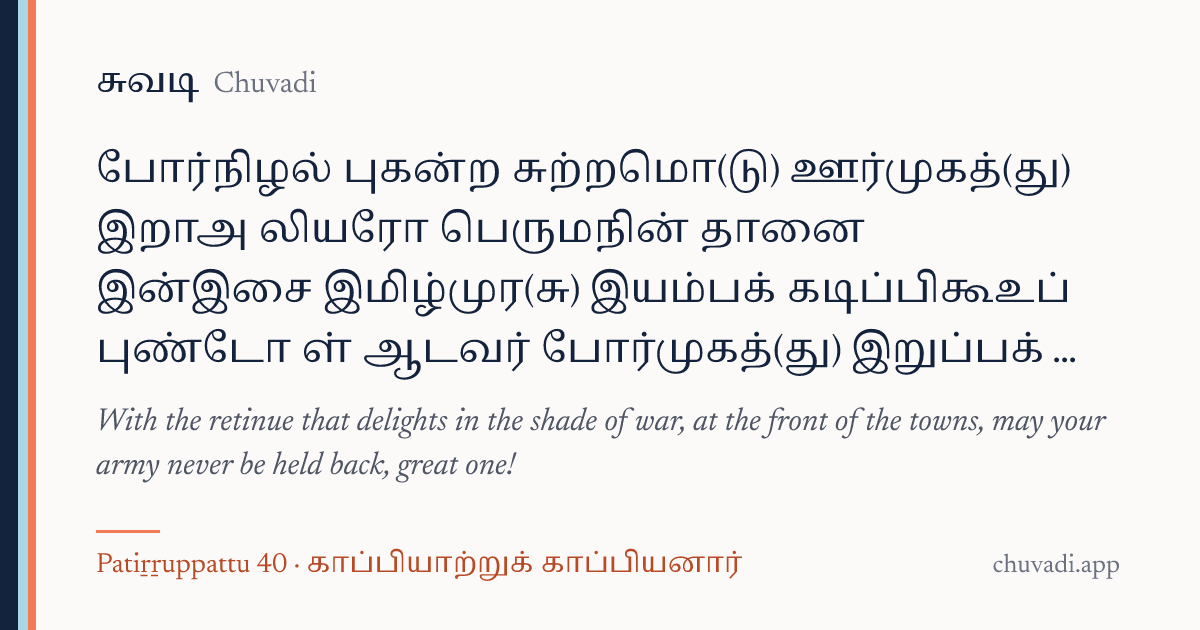
- With the retinue that delights in the shade of war, at the front of the towns,
- may your army never be held back, great one!
- As the sweet-sounding roaring drum resounds under the stick,
- as men with wounded shoulders halt at the front of battle,
- in the fields of ripe crops where the karantai creeper has matured,
- the army came and made its camp; and then,
- thinking, 'Who now are the others who could remove us?',
- so that the warriors of the kings' forts fell silent and subsided,
- so that foes wasted away, he wore flowers and moved about,
- in the hard battle of kings who wore rows of white palm leaf,
- he killed, saw their backs, and filled the people with plenty;
- his hand raised above his bangled shoulder as he danced the victory dance;
- on whose broad chest, where Tiru dwells, a garland of seven crowns is joined,
- Naṉṉaṉ of the golden garland and the golden chariot,
- who cut down the guarded trunk of the vākai with its bright flowers,
- Nārmuṭic Cēral of might with abundant garland;
- so that the thin-stemmed uṉṉam tree bends low, he, with liquor
- strained clear and lightly mixed, keeps the suppliants with him,
- rejoicing in the bud-scented toddy that he gave and they drank;
- he is on Nēri, the mountain where waters roar.
- Will you not go to him, viṟali of few bangles?
- Wearing bright jewels like the flowering vēṅkai,
- so that the beauty of soft-natured women shines the more,
- as bards put on fresh flowers, and young men
- take pleasure in sweet unfailing joy and soft words,
- and with hearts brimming with joy praise the wide battlefield,
- standing by the tusk-bands, without the goad's stroke,
- at the mahouts' command, so that bright sparks scatter,
- like the blazing flame that has seized the forest and is seen across the land,
- elephants of might, accustomed to the release of fire,
- eager for their work: these he will give you, many of them.
What the poem says
This last poem of the fourth decade is a viṟaliyāṟṟuppaṭai, a 'guiding poem' in which the poet sends a viṟali (a woman dancer and singer of the bardic troupe) to the king to receive gifts. It begins with the closing phrase of the previous poem and a blessing on the king's army.
The first part (lines 1 to 20) tells of a war. The army camps in the enemy's ripe fields, enemy warriors fall silent, and the king wins a hard battle against kings who wear white palm leaf. The enemy is Naṉṉaṉ, a chieftain of the golden chariot who wore a garland of seven crowns, perhaps a sign of seven kings he had beaten. Nārmuṭic Cēral cut down Naṉṉaṉ's guardian vākai tree, the tree that stood for his power, which was the deepest humiliation for a ruler. Now the Chera king lives on Nēri, a mountain of roaring waters, where he feasts the suppliants with clear liquor and toddy.
The second part (lines 21 to 31) turns to the viṟali: 'Will you not go to him?' The poet pictures her in jewels like the flowering vēṅkai, with bards and young men rejoicing. The king will give her many war elephants that obey the mahouts' command and are fierce as a forest fire.
The poem's name, Nāṭukāṇ avirccuṭar, 'the blazing flame seen across the land', comes from line 29, the forest fire to which the elephants are compared. Lines 17 and 18 are difficult: the uṉṉam was an omen tree, and the exact link between the bending uṉṉam, the strained liquor and the suppliants is uncertain. Lines 27 to 30 are also compressed.