



பதிற்றுப்பத்து 41 · ஐந்தாம் பத்து
பாடல் · The poem
Tap a word to see where else it occurs.
பொருள் · Meaning in TamilAI
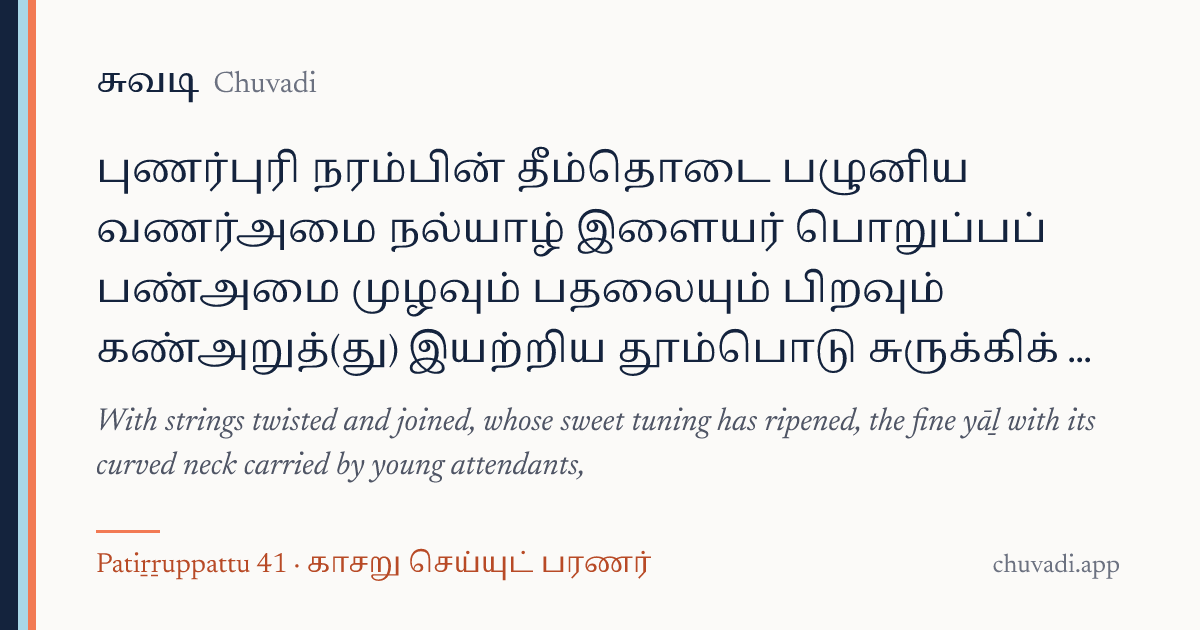
இனிய இசை முதிர்ந்த, முறுக்கிய நரம்புகள் கட்டிய, வளைந்த தண்டு உடைய நல்ல யாழை இளையர் சுமக்கின்றனர். பண்ணுக்கு ஏற்ற முழவு, பதலை, கணுக்களை நீக்கிச் செய்த தூம்பு முதலிய இசைக்கருவிகளைப் பைகளில் கட்டிக் காவடியில் தொங்கவிட்டுக்கொண்டு, கைவன்மை உடைய இளையர் கடவுளை வாழ்த்துகின்றனர். அந்த ஓசையை வலிய புலிக்கூட்டத்தின் முழக்கம் என்று எண்ணிய வலிய ஆண்யானை, மலையை ஒட்டி வளர்ந்த ஒளிரும் மலர்களை உடைய வேங்கையின் பெரிய பூங்கிளையை வளைத்து முறித்துத் தன் கரிய பெரிய தலையில் அழகுற அணிந்துகொள்கிறது. போருக்கு எழுந்த படைமறவர் போல, காடு எதிரொலிக்கப் பிளிறுகிறது. மழை பொய்த்து மூங்கில் வாடிய அத்தகைய பாலைவழிகள் ஒன்றிரண்டு அல்ல, பலவற்றைக் கடந்து, திண்ணிய தேரை உடைய, பழியற்ற பெருந்தகையாகிய உன்னைக் காண வந்தேன். சொன்ன சொல் தவறாத மறவர் வஞ்சினம் முடித்து, முரசு முழங்கும் பெரும்போரில் அரசரை அழித்து, பகைவரின் தலைகளை மிளகு இடிக்கும் உலக்கை போல இடித்தனர். ஆரவாரம் நிலைத்த போர்க்களத்தில் முரசும் வெற்றிப் புகழும் ஒன்றுசேர்ந்தன. வெண்பிடரிக் குதிரைகளை ஊர்ந்தும், அலைமோதும் குளிர்கடலில் போரிட்டும் வருந்திய உன் கால்கள் களைப்பிலிருந்து தப்புமோ?
துறை காட்சி வாழ்த்து. காசறு செய்யுட் பரணர் கடல் பிறக்கோட்டிய செங்குட்டுவனைக் கண்டு வாழ்த்துகிறார். பாலைவழியில் வேங்கைக் கிளையைத் தலையில் சூடும் யானை முக்கிய படிமம். எட்டாம் அடியில் உள்ள 'சுடர்வீ வேங்கை' என்பதால் பாட்டுக்கு இப்பெயர்.
ஆங்கிலம் · English translationAI
Translation
- With strings twisted and joined, whose sweet tuning has ripened,
- the fine yāḻ with its curved neck carried by young attendants,
- the drum set for melody, the patalai drum and others besides,
- and the tūmpu pipe made by cutting out its joints, all bundled together,
- with instrument bags slung on carrying poles, packed for every mode,
- the skilled young players praise the god;
- taking it for the massed roar of fierce tigers, a mighty bull elephant
- seizes the vēṅkai that has risen beside the hill with flame-bright flowers,
- pulls down its great flowering branch, splits it, and on his own
- dark great head wears it so that he is adorned;
- like warriors of a marching host who have taken on red,
- with staves in their right hands, as they meet in battle,
- he trumpets so that the wide forest thick with vaḻai trees echoes,
- in the wasteland where the rains have failed and the bamboo withers;
- crossing not one or two but many such tracts, I have come to see
- the great one without blame, the lord of the sturdy chariot.
- Will they escape weariness? Without faltering,
- warriors of a single word who fulfilled their vows
- overcame kings in the great battle of drums,
- so that the pride of the fierce ones grew; of the enemies
- they pounded the great heads as with a pestle that crushes pepper;
- in the dark expanse where the battle cry rose and stayed,
- the wide-faced drum with its stick, fitted to the raised charge,
- and glory that brings victory came together all at once;
- with spray of fierce foam broken by their windblown manes, the white-maned
- swift-paced horses you rode, and your
- feet that toiled on the cold sea of crashing waves.
What the poem says
The poet Paraṇar speaks to the Chera king Kaṭal Piṟakkōṭṭiya Ceṅkuṭṭuvaṉ, "Ceṅkuṭṭuvaṉ who drove back the sea". The turai is kāṭci vāḻttu, praise on first seeing the king. The poem opens with a troupe of bards on the road: young men carry the yāḻ, drums and pipes packed in bags on poles, and they praise the god before the journey (lines 1-6).
The middle section is a picture of the dry wasteland the poet crossed. The bards' noise sounds to a bull elephant like the roar of tigers; it tears down a flowering vēṅkai branch, puts it on its head, and trumpets like a warrior ready for battle (lines 7-14). The poet says he crossed many such tracts to see the blameless lord (lines 15-16). The poem's name, Cuṭarvī Vēṅkai, "the vēṅkai with flame-bright flowers", comes from line 8. Its orange-gold blossoms look like fire, and a vēṅkai spray is also worn by warriors.
The last section turns to the king's own labour. His warriors keep their vows and crush the enemy's heads like a pestle pounding pepper (line 21). The poet asks whether the king's feet can ever escape weariness, since they rode the white-maned horses and toiled on the sea (lines 17, 25-27). This recalls the king's title, "he who drove back the sea": he fought on and against the sea.
Line 11 (சேஎர் உற்ற) is obscure; "who have taken on red" is a tentative reading. Lines 22-24 are compressed and their syntax is uncertain.