



பதிற்றுப்பத்து 43 · ஐந்தாம் பத்து
பாடல் · The poem
Tap a word to see where else it occurs.
பொருள் · Meaning in TamilAI
கவரி போன்ற உச்சிமுடியும் கார்மேகம் போல் விரிந்த கூந்தலும் உடைய, ஊஞ்சலை விரும்பும், செம்பொன் அணிகலன் அணிந்த மகளிர் வாழும்; உரல் போன்ற பெருங்கால்களும் ஒளிரும் வாள் போன்ற கொம்புகளும் உடைய மதயானைகள் வந்தால், அவற்றை விரும்பி வீழும் பிடிகள் எண்ண முடியாதவை; அத்தகைய, கடவுள் உறையும், கல் ஓங்கிய நெடிய இமயமலை வடக்கு எல்லையாகவும், தெற்கே குமரி எல்லையாகவும், இவற்றின் இடையே இருந்த அரசர்களை முரசு முழங்கும் பெரும்போரில் சிதறடித்து, பல மொழி பேசும் நாடுகளின் பழைய அழகை அழித்த, பொன்மாலை அணிந்த குட்டுவனே! பனைமரங்கள் வாடி, மழை மறைந்து, குன்றுகள் வறண்டு, அருவிகள் நின்ற கடும் வறட்சிக் காலத்திலும், இடி முழங்கி மழை பொழிந்து, பெரிய ஆற்றின் கரையை உடைத்து, ஏர் பூட்டுவோர் கொன்றைப்பூச் சூடும்படி செய்யும் வானம் போன்றவன் நீ. பெரியோர் உண்ணும்படி தயங்காமல் உண்கிறாய்; மகிழ்வோர் பெறும்படி நல்ல அணிகலன்களைச் சிதறுகிறாய். யாழ் நரம்போடு இணைந்த இனிய குரலில் பாடும் விறலியர் பல பிடியானைகளைப் பெறுக! வாகையும் உழிஞையும் சூடி வெற்றியை விரும்பும் மறவர் கொல்களிறுகளைப் பெறுக! மன்றத்திலும் தெருக்களிலும் கண்டிக்கோல் ஏந்திப் போர்க்களத்தை வாழ்த்தும் அகவலன் குதிரைகளைப் பெறுக! நீ எப்போதும் போரை விரும்புவதால், பகைவரும் புகழ்கின்றனர். குறையாத சிறப்புடையவனே, உன் நிலையைக் கண்டோம்: ஊன் சுடும் புகையோடு நெருப்பு அணையாது; ஏறப்படாத ஏணி நிறைவும் குறைவும் அறியாது; வயிரியர் குடித்தும் குடங்களில் கள் தீராது. வள்ளல் வேந்தே, இதுவே உன் களிப்பு மிக்க விருந்து.
துறை இயன்மொழி வாழ்த்து. பரணர் செங்குட்டுவனின் நாட்டு எல்லையையும் வறட்சியில் பெய்யும் மழை போன்ற கொடையையும் போற்றுகிறார். முப்பத்து மூன்றாம் அடியில் உள்ள 'ஏறா ஏணி' என்பதால் பாட்டுக்கு இப்பெயர்.
ஆங்கிலம் · English translationAI
Translation
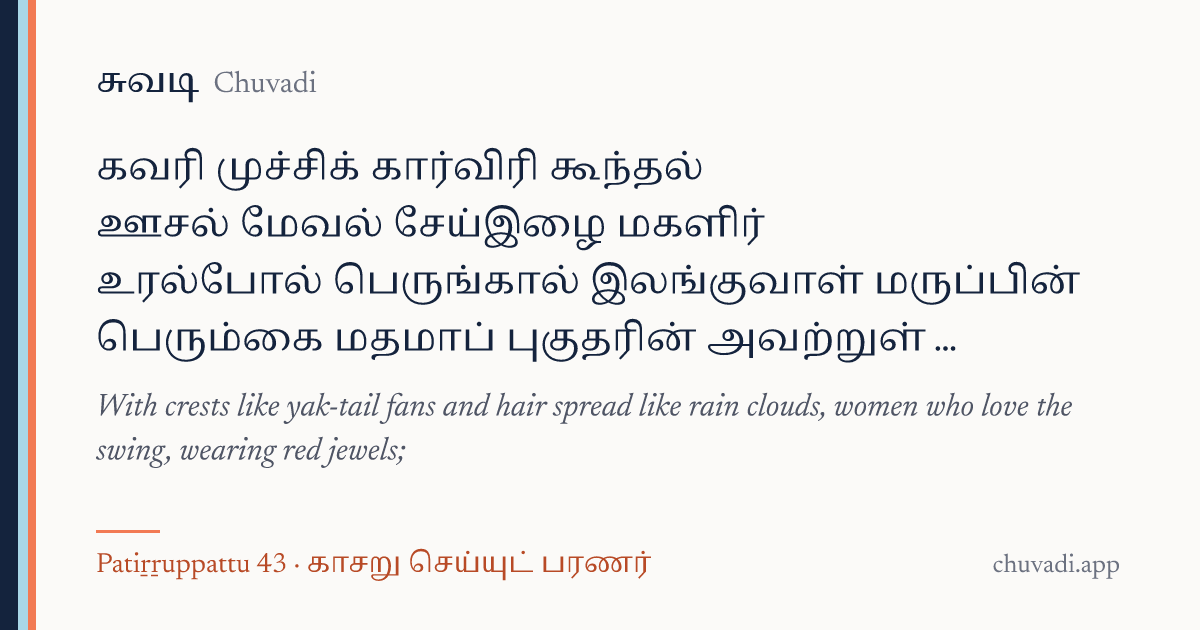
- With crests like yak-tail fans and hair spread like rain clouds,
- women who love the swing, wearing red jewels;
- when great-trunked rutting elephants with legs like mortars
- and gleaming sword-like tusks come in, among them
- the she-elephants who fall for the newcomers are past counting in order;
- the tall mountain of soaring rock where the god abides,
- Imayam, standing as the northern boundary,
- together with southern Kumari: the kings between them
- you routed in great battles with drums, as war cries rose,
- and destroyed the ancient beauty of lands of many tongues,
- Kuṭṭuvaṉ of the golden garland, with an army that slays in war!
- Even when the great palmyras wither, the great rain hides,
- the hills grow dry, the blazing heat glares fiercely,
- in the time of great drought when the waterfalls have ceased,
- breaking the dark banks of the great river hard to cross,
- so that those who yoke the festival plough wear koṉṟai flowers,
- thundering with unbounded roaring, abundant in rain,
- just as the full-sounding sky pours down its drops;
- so that the great ones are fed, you eat without holding back;
- so that the merry ones are fed, you scatter fine ornaments;
- with sweet voices joined to strings, surpassing the hum of swaying wings,
- may the singing viṟaliyar receive many she-elephants!
- With the soft-tufted vākai flower and the slender-creepered uḻiñai,
- loving victory, of fearsome distinction,
- may the plundering warriors receive killing elephants!
- Going into the common square and entering the street sides,
- holding the slender kaṇṭi staff and praising the battlefield,
- may the akavalaṉ bard receive horses! Always
- you love the deeds of strife, and so even your enemies
- praise you, unable to hold back, to drums of swaying song;
- O you of unfailing virtue, we have seen your state:
- with smoke of roasting fat, the embers blaze without dying down;
- the ladder never climbed, that knows neither filling nor emptying;
- jars that never stay full for long, from which the vayiriyar
- drink, and still the toddy does not run out,
- O king of the generous hand, in your joyous feasting!
What the poem says
Paraṇar praises Ceṅkuṭṭuvaṉ in an iyaṉmoḻi vāḻttu, a praise that names the king's natural virtues. The opening lines describe the sacred northern mountain: women with red jewels play on swings, and rutting elephants come in among the she-elephants (lines 1-6). This mountain, Imayam, is the northern limit of his rule, and Kumari in the south is the other limit (lines 7-8). Between them he defeated kings and ruined the old beauty of many lands with many languages (lines 9-11).
The second movement compares his giving to rain in a drought. When the palmyras wither and the waterfalls stop, the sky thunders and pours, and the river breaks its banks so that ploughmen begin the festival ploughing (lines 12-18). In the same way he feeds the great, scatters ornaments, and gives she-elephants to the viṟaliyar, killing elephants to the warriors, and horses to the akavalaṉ, the bard who praises the battlefield with a staff (lines 19-28).
The close describes his feasts. Fat roasts on fires that never go out, the jars of toddy never run dry, and the drinkers never exhaust them (lines 32-36). The poem's name, Ēṟā Ēṇi, "the ladder never climbed", comes from line 33. It seems to describe the ladder for the tall toddy jars, which is never needed because the jars are never empty, but this reading is uncertain. Line 5 and line 21 are also obscure.