



பதிற்றுப்பத்து 44 · ஐந்தாம் பத்து
பாடல் · The poem
Tap a word to see where else it occurs.
பொருள் · Meaning in TamilAI
நிலத்தை அடிப்பது போன்ற ஆரவாரத்தோடு, வானைத் துடைப்பது போல உயர்ந்த வெற்றிக்கொடி தேரின் மேல் அசைகிறது. போரில் வென்று பெற்ற பொருள்கள் பெரியனவாக இருந்தாலும், அவற்றை அரியவை என்று எண்ணாமல், சேர்த்து வைக்காமல் வீசி, அணிகலன்கள் செல்லும்படி வழங்குகிறாய். கனவிலும் 'திரும்பக் கொடு' என்று சொல்ல அறியாத குற்றமற்ற நெஞ்சம் உடையவனே, அசையும் நடை உடைய தலைவனே! உன்னைக் காண வரும் பாடுமகள் புகழ்பெற்ற உன் உடலுக்குத் துன்பம் காணாதிருப்பாளாக. முழுவலிமை தங்கிய, நோயைப் போக்கும் வலிய தொடியும், நுண்ணிய உழிஞைக் கொடியும், வெல்போரைக் குறிக்கும் அறுகும் உடையவன் நீ. தொலைவில் இருந்தவனையும் உறவினன் என்று அறிவித்து, நாட்டை விட்டு ஓடி ஒளிந்தவனின் தீராத பகைக்காக, அணங்கு தாக்கியது போலக் கோட்டையின் மேல் யானைகளைச் செலுத்தி, மோகூர் மன்னனின் முரசைக் கைப்பற்றி, அவன் பெருமொழியை அடக்கி, அவன் காவல் மரமாகிய வேம்பை அடியோடு வெட்டி, முரசு செய்வதற்காகப் பல யானைகளைப் பூட்டி இழுத்துச் சென்றாய். வண்டிகளில் கொண்டுசென்ற துண்டுகள், தங்குமிடம் மறந்த கூகை, துயரம் தரும் குராலம் போர்க்களம், முரசுடைய பல அரசரை ஓட்டி உலகை இனிதே ஆண்டு மறைந்த மன்னரைத் தாழியில் புதைத்த, வன்னிமரம் நிற்கும் மன்றத்தால் புகழ்பெற்ற நாடு என்று பாட்டு முடிகிறது.
துறை செந்துறைப் பாடாண்பாட்டு. பரணர் செங்குட்டுவனின் கொடையையும் மோகூர் வெற்றியையும் பாடுகிறார். ஒன்பதாம் அடியில் உள்ள 'நோய்தபு நோன்தொடை' என்பதால் பாட்டுக்கு இப்பெயர். இறுதி அடிகளின் பொருள் தெளிவாக இல்லை.
ஆங்கிலம் · English translationAI
Translation
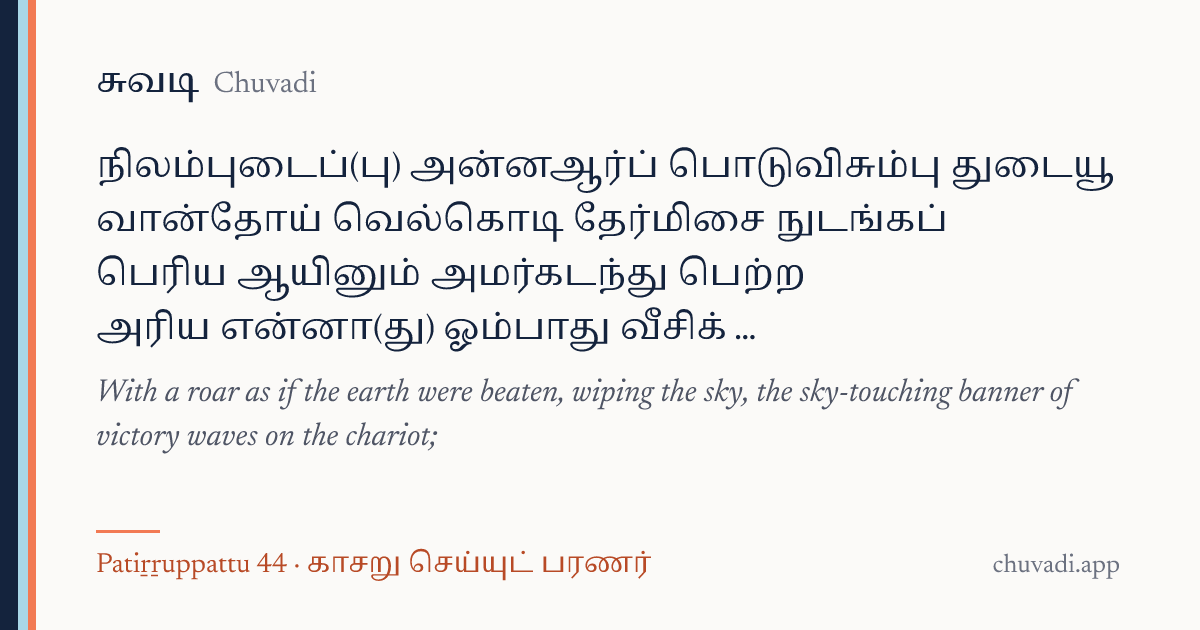
- With a roar as if the earth were beaten, wiping the sky,
- the sky-touching banner of victory waves on the chariot;
- though they are great, the things won by crossing battle
- you do not call rare, but fling them out without hoarding,
- pouring so that the ornaments go out; except this, even in dreams
- you know no word that says take it back, with a heart free of fault,
- lord of the swaying gait; so that your singing woman may see you,
- may she not see your body that is praised,
- the strong armlet that ends affliction, where full strength sleeps,
- the slender-creepered uḻiñai and the aṟukai of victorious war!
- Though he was far off, you declared him a kinsman;
- for the unending quarrel of the one who fled his land and hid,
- you drove your elephants against the fort, as if a demon had struck,
- took the drum of the king of Mōkūr,
- humbled his boasting words, cut down his margosa at the root,
- and to make drums, you yoked many elephants to drag it;
- the fresh sapless pieces driven along in carts,
- the downy-headed owl that forgets the place where it rested,
- the battlefield of Kurālam, where it hoots grief upon grief;
- driving away many kings of drum-bearing heritage,
- they ruled the wide world of rolling water and passed away sweetly,
- the kings whom urns have hidden;
- such is the land made famous by the vaṉṉi tree in its common square.
What the poem says
Paraṇar praises Ceṅkuṭṭuvaṉ in a cendturai pāṭāṇ pāṭṭu. The first part praises his giving. His banner touches the sky, and the booty won in war he gives away without counting it rare. Even in dreams he does not know how to say "take it back" (lines 1-7). The poet then speaks of the king's body with its strong armlet, which brings an end to affliction; this gives the poem its name, Nōytapu Nōṉṟoṭai, "the strong armlet that ends affliction" (line 9). He also wears uḻiñai and aṟukai, flowers of siege and war (line 10).
The second part tells a historical episode. The king took up the cause of a distant ally who had fled his land, attacked the fort of the king of Mōkūr, seized his drum, and cut down his guardian margosa tree. He had its wood dragged off by elephants to make drums (lines 11-17). Cutting down an enemy's tutelary tree was a sign of complete victory in Sangam war.
Lines 7-8 are hard. A literal reading is "so that your singing woman may see, may she not see your praised body"; the sense may be a wish that no harm should come to the king's body, but this is uncertain. Lines 17-23 are also obscure. They seem to describe the battlefield of Kurālam, where an owl has lost its nest, and a land where old kings lie buried in urns beside a vaṉṉi tree. How this ending joins the praise of the king is not clear.