



பதிற்றுப்பத்து 46 · ஐந்தாம் பத்து
பாடல் · The poem
Tap a word to see where else it occurs.
பொருள் · Meaning in TamilAI
அணிகலன்களும் குழைகளும் நறுமணமுள்ள குளிர்ந்த மாலைகளும் அணிந்த, ஒளிரும் வளையல்கள் நெருங்கிய முன்கையும், சிறந்த மணிகள் ஒளிரும் மார்பும், வண்டுகள் மொய்க்கும் கூந்தலை முடியாகக் கட்டிய மகளிர், நரம்புகள் கட்டிய பேரியாழில் பாலைப்பண் இசைத்து, பணியாத மரபின் உழிஞையைப் பாடுகின்றனர். அவர்களை இனிதே காத்து அவர்களுக்கு இன்ப மகிழ்ச்சியைப் பொழிவதால், பல பாலைவழிகளைக் கடந்து விளிம்பு தேய்ந்த தேர்ச்சக்கரமும், எண்ணற்ற ஊர்களின் பாடலும், பசிய தலைகள் துண்டாகப் பல போர்களை வென்ற கொல்யானைகளும் உடையவன்; சங்குகள் ஒலிக்கும் கடல் கலங்க வேலை எறிந்து, அலை உடையும் பரப்பில் ஒலிக்கும் கடலைப் பின்வாங்கச் செய்த வெற்றிப் புகழ் உடையவன் குட்டுவன். அவனைக் கண்டவர் 'போவோம்' என்று சொல்லாமல், பாடிக்கொண்டே அங்கே தங்குவர்.
துறை செந்துறைப் பாடாண்பாட்டு. பரணர் செங்குட்டுவனின் கொடையையும் போர்ச்சிறப்பையும் பாடுகிறார். எட்டாம் அடியில் உள்ள 'கரைவாய்ப் பருதி' என்பதால் பாட்டுக்கு இப்பெயர்.
ஆங்கிலம் · English translationAI
Translation
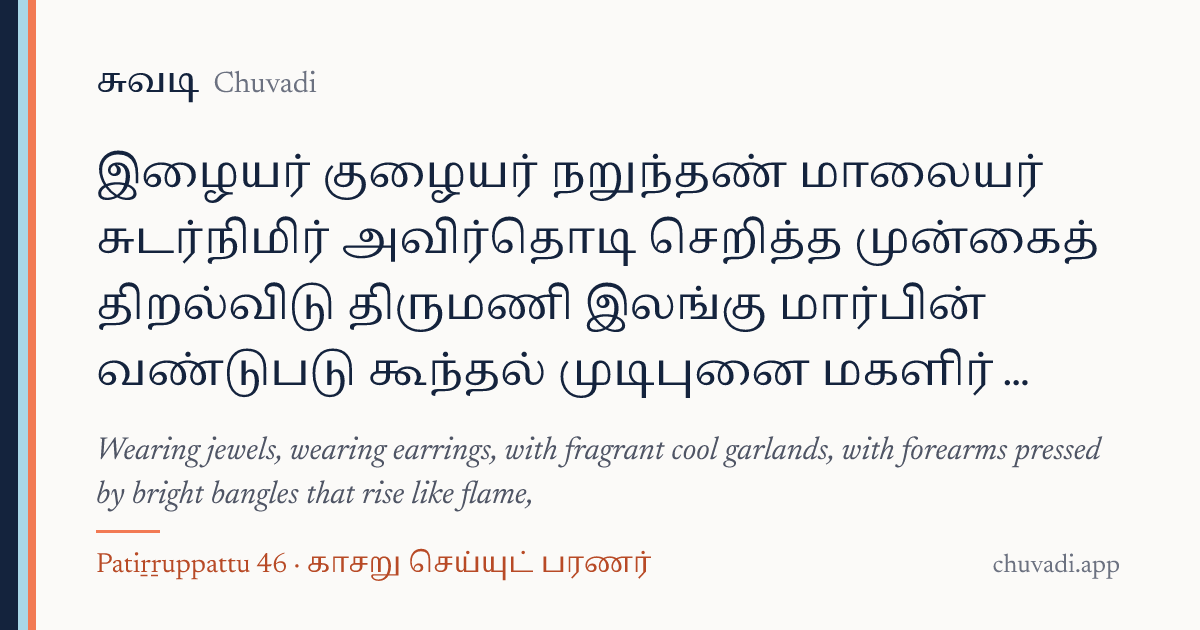
- Wearing jewels, wearing earrings, with fragrant cool garlands,
- with forearms pressed by bright bangles that rise like flame,
- with chests where sacred gems of radiant power gleam,
- women with hair tied in a crown where bees settle
- play the pālai mode on the great strung yāḻ
- and sing the uḻiñai of the line that never bows;
- since you protect them kindly and pour out sweet joy for them,
- your chariot wheel with worn rim that drives through many wastelands,
- the songs of the towns past counting, fresh heads cut off,
- your killing elephants that conquered in many battles,
- you who threw your spear so that the ocean where conches call was stirred
- and drove back the sounding sea on its expanse of breaking waves,
- Kuṭṭuvaṉ of conquering fame: those who have seen him
- do not say we will go, but stay on, singing.
What the poem says
Paraṇar praises Ceṅkuṭṭuvaṉ in a short cendturai pāṭāṇ pāṭṭu. It opens with women performers in jewels, earrings and garlands. They play the pālai mode on the great yāḻ and sing the uḻiñai, the song of siege warfare, of a line that never bows (lines 1-6). The king protects them and pours out joy for them.
The poem then lists his deeds in quick phrases: a chariot whose wheel rim is worn from crossing many wastelands, countless songs from the towns, enemy heads cut off, elephants that won many battles, and the spear he threw into the sea to drive it back (lines 8-12). The poem's name, Karaivāyp Paruti, "the wheel with the worn rim", comes from line 8. It shows how far and how often the king's chariot has travelled.
The ending is a quiet compliment. Those who see Kuṭṭuvaṉ do not say "we will go"; they stay and sing (lines 13-14). The exact sense of line 9 (ஊர்பாட்டு எண்ணில்) is uncertain; it may mean the towns he overran, past counting.