



பதிற்றுப்பத்து 47 · ஐந்தாம் பத்து
பாடல் · The poem
Tap a word to see where else it occurs.
பொருள் · Meaning in TamilAI
குட்டுவன் பகைவரைக் கொல்வதை நிறுத்துவதில்லை; அவன் கொல்லும் ஒவ்வொரு முறையும் பரிசிலர் யானைகளைப் பெறுவதை நிறுத்துவதில்லை. மலையின் மேலிருந்து இறங்கும் அருவி போல, மாடங்களின் மேல் காற்றை எதிர்த்து ஒளிரும் கொடிகள் அசையும் தெருவில், நெய் வார்த்த திரி எரியும் பாண்டில் விளக்குகளின் பெரிய சுடர் ஒளிர்கிறது. அங்கே நல்ல நெற்றி உடைய விறலியர் ஆடுகின்றனர். அந்தப் பழைய நகரின் எல்லைக்குள் அவனைப் பற்றிய பேச்சு ஓய்வதில்லை.
துறை செந்துறைப் பாடாண்பாட்டு. பரணர் செங்குட்டுவனின் போரையும் கொடையையும் அவன் நகரின் சிறப்பையும் பாடுகிறார். 'ஆனா' என்ற சொல் மீண்டும் மீண்டும் வருகிறது. ஏழாம் அடியில் உள்ள 'நன்னுதல் விறலியர்' என்பதால் பாட்டுக்கு இப்பெயர்.
ஆங்கிலம் · English translationAI
Translation
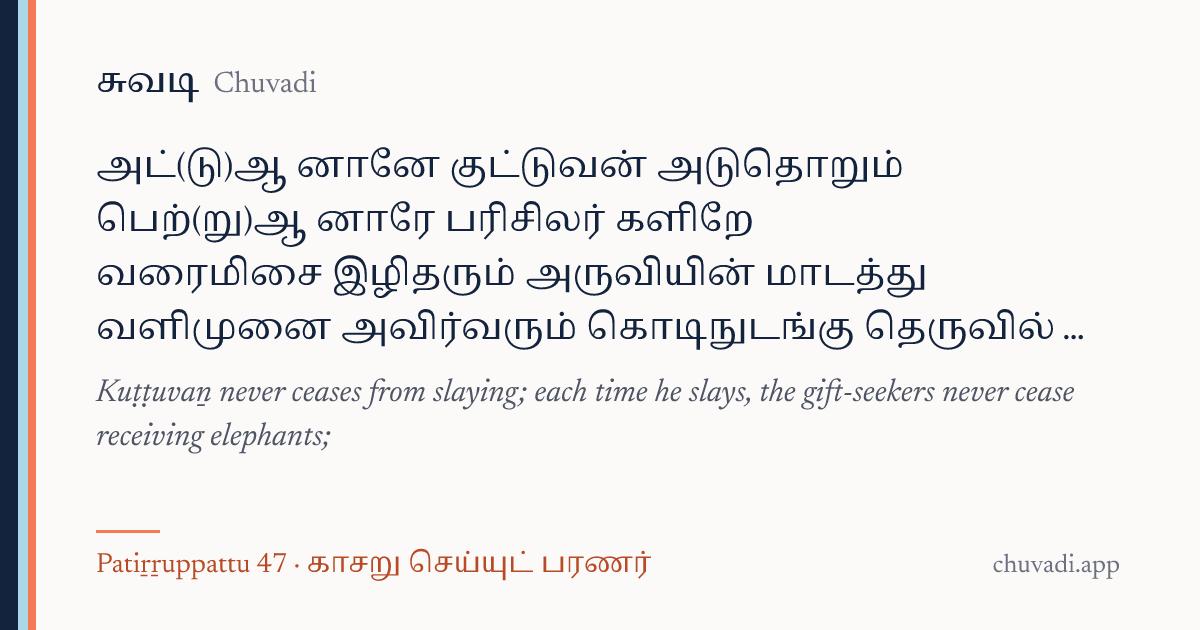
- Kuṭṭuvaṉ never ceases from slaying; each time he slays,
- the gift-seekers never cease receiving elephants;
- like a waterfall that comes down from the mountain top, from the mansions
- in the street where banners wave, gleaming against the wind,
- from the bowls of the pāṇṭil lamps, whose wicks draw the poured ghee,
- the thick flames blaze,
- where viṟaliyar with fine brows dance,
- within the bounds of the ancient city, the talk of him never ceases.
What the poem says
This short song by Paraṇar praises Ceṅkuṭṭuvaṉ with a neat balance in its first two lines. The king never stops killing in war, and each time he kills, the gift-seekers never stop receiving elephants from him. Booty from battle flows at once to the bards.
The rest of the poem moves to the king's old capital. Banners wave on the mansions like waterfalls coming down a mountain. Ghee-fed lamps in pāṇṭil bowls burn with thick flames. Viṟaliyar, the women performers, dance there. In that ancient city, talk of the king never ends (lines 3-8).
The poem's name, Naṉṉutal Viṟaliyar, "the viṟaliyar with fine brows", comes from line 7. The repeated word āṉā, "does not cease", in lines 1, 2 and 8 binds the poem together. The waterfall simile in line 3 most likely describes the banners on the tall houses.