



பதிற்றுப்பத்து 48 · ஐந்தாம் பத்து
பாடல் · The poem
Tap a word to see where else it occurs.
பொருள் · Meaning in TamilAI
பாணர்களுக்குப் பசும்பொன்னால் ஆன தாமரைப்பூவைச் சூட்டி, ஒளிரும் நெற்றி உடைய விறலியர்க்கு மாலை அணிவித்து, அழியாத பல புகழை நிலைநிறுத்தி, கடலில் புகுந்து அதனோடு போரிட்ட, குளிர்ந்த கரையின் பரதவர் தலைவனே! 'அங்கே கடலில் பெற்ற செல்வத்தை இங்கே இவர்களின் ஏற்கத் தகாத பாடலுக்கும் எளிதாகக் கொடுக்கும், கற்றுக்கொள்ளாமலே வாய்மை உடையவன் இவன்' என்று சொல்லிக்கொண்டு, கைவன்மையுள்ள இளையர் கைகூப்பி வரிசையாக நிற்கின்றனர். வணங்கும் மென்மையும் வணங்காத ஆண்மையும் உடையவனே! பகைவர் போர்முனையைச் சுட்ட பெருநெருப்பின் வெம்மையால் அழகு கெட்ட மாலையும், உலர்ந்த சந்தனமும், பல வடுக்களும் உடைய மார்பனே, உன் பெயர் வாழ்க! உன் மலையில் பிறந்து உன் கடலில் சென்று சேரும் பெருவெள்ளம் வரும் புனல் விழாவில், வேனிற்காலத்தில் சோலையில் தங்கி, அன்புள்ள சுற்றத்தோடு உண்டு இனிது மகிழ்ந்து, மகளிர் கூட்டம் நீராடும் காஞ்சிப் பெருந்துறையின் மணலைவிடப் பல ஆண்டு உன் பெயர் வாழ்க!
துறை இயன்மொழி வாழ்த்து. பரணர் செங்குட்டுவனின் கொடையையும் ஆண்மையையும் வாழ்த்துகிறார். 'வணங்கிய சாயல், வணங்கா ஆண்மை' என்ற முரண் முக்கியமானது. பதினைந்தாம் அடியில் உள்ள 'பேரெழில் வாழ்க்கை' என்பதால் பாட்டுக்கு இப்பெயர்.
ஆங்கிலம் · English translationAI
Translation
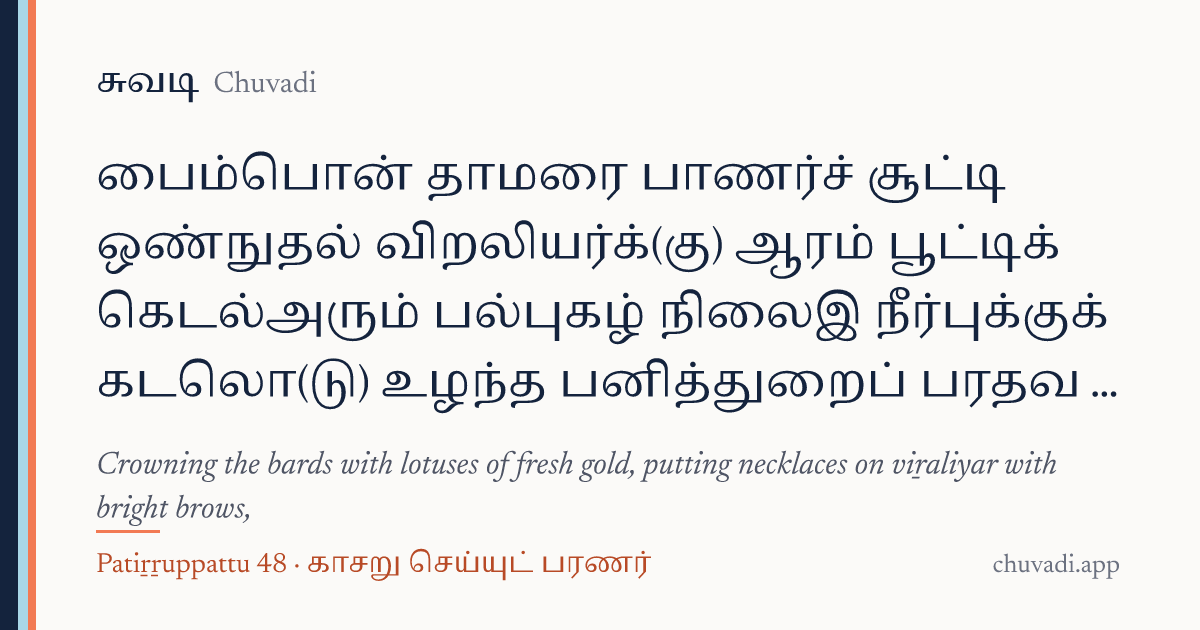
- Crowning the bards with lotuses of fresh gold,
- putting necklaces on viṟaliyar with bright brows,
- setting up many fames that are hard to destroy, you went into the water,
- O lord of the coast folk of the cold shore, who toiled against the sea!
- The treasure won there on the sea, here, to these men,
- he gives easily, even for songs not worth the taking;
- he is a man of untaught truth: so saying, each of them,
- their skilled young players stand in rows with joined hands;
- a grace that bends, a manliness that never bends;
- because the dense fire that burns the battle fronts has burned so much,
- with a garland whose beauty is spoiled and scorned, with sandal paste drying,
- O you of the chest with many marks, may your name live!
- Born in your mountains, rushing into your sea,
- the abundant flood comes for the festival of sweet water;
- in the great beauty of a life spent in summer groves,
- with loving kin, eating and enjoying sweetly,
- the companions play in the sweet stream:
- more than the sands of the great ford of Kāñci.
What the poem says
Paraṇar addresses Ceṅkuṭṭuvaṉ in an iyaṉmoḻi vāḻttu. The king crowns the bards with golden lotuses and gives necklaces to the viṟaliyar (lines 1-2). He went into the sea and fought it, and the poet calls him the lord of the coast folk (lines 3-4). The bards say that the treasure he won on the sea he gives freely even for poor songs, and they line up before him with joined hands (lines 5-8).
The poet then draws a contrast: the king has a gentle grace that bends, but a manliness that never bends (line 9). His garland is spoiled and his sandal paste dries in the heat of the fires he has set on enemy fronts. The poet wishes long life to his name (lines 10-12).
The close is a count. The river is born in his mountains and flows into his sea. In summer, at the festival of sweet water, his people play in the stream with their kin. May his name last longer than the sands of the great ford of Kāñci (lines 13-18). Kāñci here seems to be a river or a ford in the Chera land. The poem's name, Pēreḻil Vāḻkkai, "a life of great beauty", comes from line 15. Line 11 is compressed and its syntax is uncertain.