



பதிற்றுப்பத்து 49 · ஐந்தாம் பத்து
பாடல் · The poem
Tap a word to see where else it occurs.
பொருள் · Meaning in TamilAI
நாங்களும் செல்கிறோம்; நீங்களும் வாருங்கள். தொங்கும் மாலையும் அசையும் நடையும் உடைய விறலியரே, பாடலில் வல்ல வாழ்க்கை உடைய உங்கள் சுற்றம் இனிதே உண்ணும்படி வாருங்கள். யானைகள் பரந்து செல்ல, விரைந்த குதிரைகள் அடக்கப்பட, ஒளிரும் கொடிகள் அசைய, தேர்கள் சுழன்று திரிய, வேல்களை ஏந்தி எழும் கடிய தூசிப்படையோடு, வெற்றி பெற்ற வேந்தரும் வேளிரும் ஒரே சொல்லாக ஒன்றுகூடி, மிகுந்த செல்வத்தால் செருக்கி, மோகூரில் திரண்டு வந்தனர். அவர்களின் வெற்றிப் படைக்கூட்டம் அதிரும்படி தாக்கிய, குருதி தோய்ந்த சிவந்த கைகளை உடைய மறவரால், நிறமுள்ள குருதி நிலத்தில் பரந்து ஓடி, மழைநாள் வெள்ளம் போலப் பள்ளங்களில் பாய்ந்தது. பிணங்கள் குவிந்தன; பல இடங்கள் பாழாயின. ஒலிக்கும் முரசு நடுவே முழங்கியது. செல்வம் அழிய, பலர் மடிய, கரிய கிளைகளை உடைய வெற்றி வேம்பை வெட்டிய பெருஞ்சினம் உடைய குட்டுவனைக் கண்டு வருவோம்.
துறை விறலியாற்றுப்படை. ஒரு பாணன் விறலியரைக் குட்டுவனிடம் ஆற்றுப்படுத்துகிறான். மோகூர்ப் போரும் காவல் மரமாகிய வேம்பை வெட்டியதும் முக்கிய நிகழ்ச்சிகள். பத்தாம் அடியில் உள்ள 'செங்கை மறவர்' என்பதால் பாட்டுக்கு இப்பெயர்.
ஆங்கிலம் · English translationAI
Translation
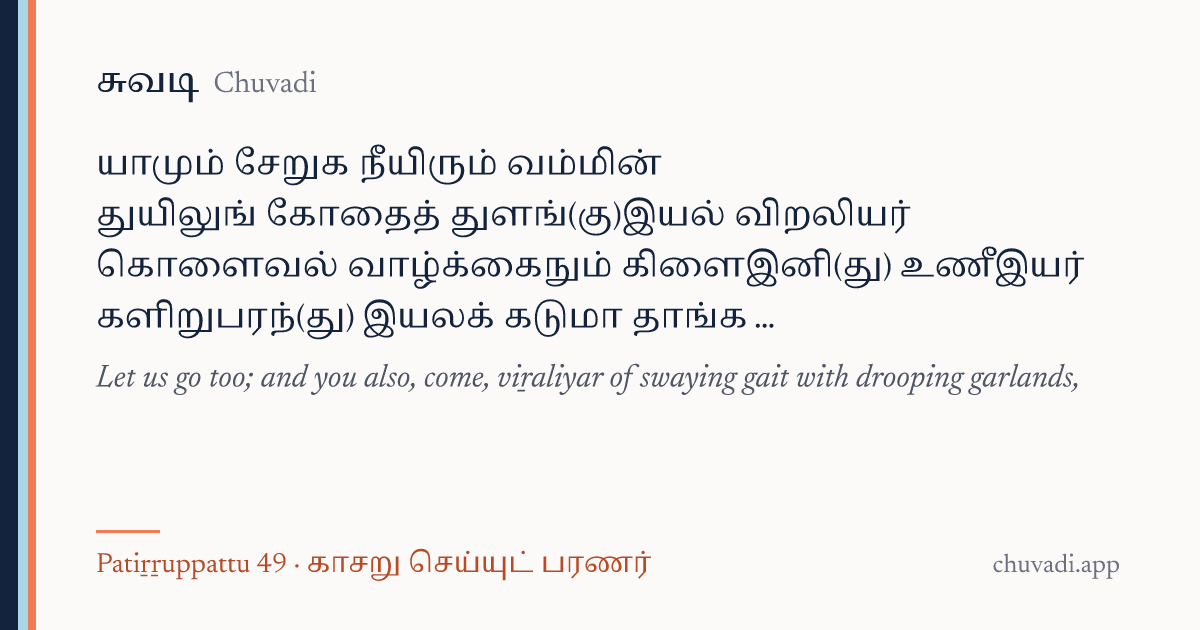
- Let us go too; and you also, come,
- viṟaliyar of swaying gait with drooping garlands,
- so that your kin, whose life is skilled in song, may eat well;
- where elephants moved spread out and swift horses were held back,
- bright banners waved and chariots wheeled about,
- with spears thrust forward rising, the fierce vanguard that seizes hands,
- victorious kings and Vēḷir spoke as one,
- swelling with proud wealth, and came massed at Mōkūr;
- charging so that their victorious massed ranks shook,
- the red-handed warriors who had touched blood,
- the coloured blood spreading over the ground and running,
- flowing over the hollows like floods on a rainy day,
- fallen corpses heaped up, making many places waste,
- the drum with the sounding face roaring in the middle,
- wealth destroyed and many who lived there killed,
- he cut down the victorious margosa with dark branches:
- Kuṭṭuvaṉ of great fury; let us go and see him and return.
What the poem says
This is a viṟaliyāṟṟuppaṭai, a guide poem. A bard speaks to the viṟaliyar, the women singers and dancers, and invites them to come with him to the king, so that their kin may eat well (lines 1-3). The rest of the poem describes the king they are going to see.
It recalls Ceṅkuṭṭuvaṉ's victory at Mōkūr, which poem 44 also mentions. Kings and Vēḷir chiefs joined together and came with elephants, horses, chariots and spears (lines 4-8). The king's warriors charged, and their hands were red with blood. The blood ran over the ground and filled the hollows like rain floods; corpses were piled up and the place was laid waste (lines 9-15). Then he cut down the enemy's guardian margosa tree (line 16). The poem's name, Ceṅkai Maṟavar, "the red-handed warriors", comes from line 10.
Line 2 (துயிலும் கோதை, literally "sleeping garland") is read here as drooping garlands; the sense is uncertain. In line 17, peruñciṉai may mean "great fury" or may echo "great branch" from line 16; the first reading is taken here.