



பதிற்றுப்பத்து 50 · ஐந்தாம் பத்து
பாடல் · The poem
Tap a word to see where else it occurs.
பொருள் · Meaning in TamilAI
பெருமலையில் இடி முழங்க, மான் கூட்டங்கள் நடுங்க, காற்றால் கலந்த விரைந்த மழைத்துளிகள் ஆலங்கட்டியோடு சிதற, கரும்பு நிறைந்த வயல்களை உடைய நாடு வளம் பொழிய, உலகைக் காத்து, நேரே கிழக்கே ஓடும் கலங்கிய வெள்ளம் நிறைந்த காவிரியும், அதைத் தவிரப் பூக்கள் மிதக்கும் மற்ற ஆறுகளும் என மூன்று நீர் ஒன்றுகூடும் கூடலைப் போன்றவன் நீ. கொல்லும் யானைகளும், வலிய அலை போலத் தாவும் படையும், அழகிய விற்களும், கேடயங்களுக்கு நடுவே ஒளிரும் வேல்களும், கலந்து முழங்கும் முரசுகளும் கொண்ட, அஞ்சத்தக்க வெள்ளம் போன்ற தூசிப்படை வேந்தர்க்கு அரணாக அமைந்தது. மலைமேல் உள்ளவையும் கடலில் உள்ளவையும் பிறவுமான அரண்களை உடைய பகைவரைப் போரில் வென்று, மக்கள் நிறைந்த அவர் நாடுகளை உன் ஆட்சிக்குள் கொண்டுவந்து, அவர் புகழ் அழிய, அவர் செருக்கு அற நிரப்பினாய். ஆதலால், சந்தனம் உலர்ந்து நிறம் அழிய, வண்டுகள் மொய்க்கும் உன் மார்பைத் தழுவும் அழகிய மகளிரின் மென்மையான விரிந்த கூந்தலாகிய அணையில் தங்கி, அவர்களின் இறுகிய தழுவல் நெகிழும்படி, தலைவனே, பல நாள்கள் ஏன் வீணாகக் கழிகின்றன? பகைமேல் உள்ள விருப்பத்தால் பாசறையில் தங்கி, அரிதாக வரும் சிறுதூக்கமும் இல்லாமல், கொம்புகள் முழங்கும் ஒலி எழுப்ப, பெருமித செல்வத்துக்குப் பழகிய உன் கண்கள் விழித்திருக்கின்றனவே.
துறை வஞ்சித்துறைப் பாடாண்பாட்டு. பரணர் செங்குட்டுவனை முக்கூடலுக்கு ஒப்பிட்டு, அவன் படையை அஞ்சத்தக்க வெள்ளமாகக் காட்டி, இறுதியில் பாசறையை விட்டு இல்லம் திரும்ப வேண்டுகிறார். பதினோராம் அடியில் உள்ள 'வெருவரு புனல்தார்' என்பதால் பாட்டுக்கு இப்பெயர்.
ஆங்கிலம் · English translationAI
Translation
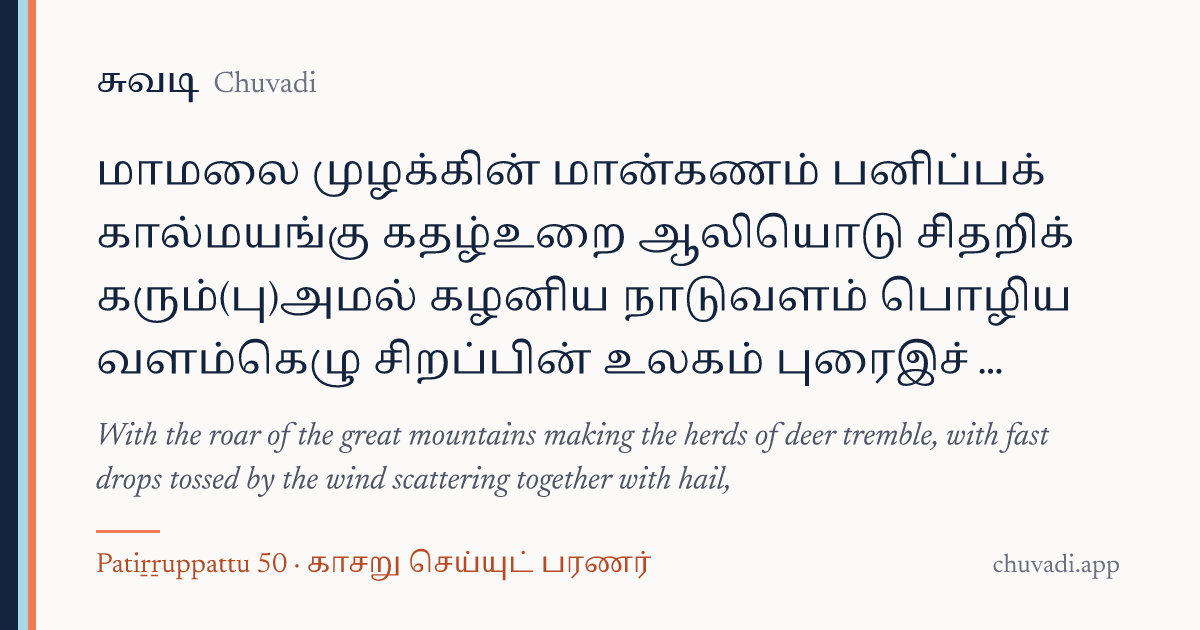
- With the roar of the great mountains making the herds of deer tremble,
- with fast drops tossed by the wind scattering together with hail,
- so that the land of fields thick with sugarcane pours out plenty,
- caring for the world of rich distinction,
- the Kāviri, flowing straight east, full with its muddy flood,
- and besides it, the flower-strewn streams, one
- joining with the three together: you are like that confluence.
- With killing elephants, so that the strong waves leap, with fine bows scattering spray,
- inside the bounds of fitting shields, the spears shine, newly polished,
- the sound of the mingled drums roaring, gathering together; to the kings
- it became a fortress, the terrible flood-like vanguard;
- the forts on hilltops, those on the sea, and others,
- strongholds that were well set up, you conquered in war in your fury,
- brought within your rule the lands full of people on every side,
- so that their good fame fled from the wide world; your enemies
- you filled until their pride was gone; and so, with sandal drying,
- its colour rubbed away, the women of varied beauty
- who bind your chest where striped bees hum,
- resting on the soft pillow of their spread soft hair,
- in the embrace that seizes the chest, twisted in a fatal bond,
- the soft bond that keeps to its time is loosened;
- why should so many pass, lord, so many days,
- dwelling in the war camp from love of enmity,
- unable to keep even the short sleep that rarely comes,
- waking to the deep sound of roaring horns,
- your eyes that have grown used to proud wealth?
What the poem says
This last poem of the fifth decad is a vañcittuṟaip pāṭāṇ pāṭṭu, a praise song on the theme of the king's campaign. Paraṇar first compares Ceṅkuṭṭuvaṉ to a confluence. Rain falls on the mountains with hail, the fields of sugarcane grow rich, and the Kāviri flows east full of flood water. It meets other flower-strewn streams so that three waters join; the king is like that meeting of rivers (lines 1-7). This may refer to a known confluence of three rivers, but the poem does not name it.
The second part describes his army. Its elephants, bows, shields, spears and drums form a vanguard like a terrible flood, and this vanguard is itself a fortress (lines 8-11). The poem's name, Veruvaru Puṉaṟṟār, "the fearsome flood-like vanguard", comes from line 11. With it he took forts on hills and on the sea and brought many lands under his rule (lines 12-16).
The ending turns to love, which is unusual in a war poem. The poet asks why the king spends so many days in the war camp, away from the women who embrace him, and why he cannot sleep for the sound of the war horns (lines 16-26). It is a gentle plea that he should return home.
Line 10 is damaged in the text (ஒலி வொணஇய) and its reading is uncertain. Lines 8-9 are also hard to construe; "so that the strong waves leap" seems to compare the moving army to the sea.