



பதிற்றுப்பத்து 51 · ஆறாம் பத்து
பாடல் · The poem
Tap a word to see where else it occurs.
பொருள் · Meaning in TamilAI
காற்று மோதுவதால் அலைகடல் கலங்கி இடிபோல முழங்குகிறது. மேற்குக் கடற்கரைச் சோலையில் கிணறுகளைக் கிளறிய நாரை ஞாழல் மரக்கிளையில் தங்குகிறது. அடும்புக் கொடி படர்ந்த கரையில் நண்டுகள் ஆடிய தடங்களை ஊதைக்காற்று கொண்டுவரும் நுண்மணல் அழிக்கிறது. பனைச்சோலையை அழகுபடுத்தும் அந்த மணல், வெறியாடும் இளம்பெண்ணின் அசைவுபோலத் தோன்றுகிறது. மலைகளில் அருமணிகள் கிடக்கின்றன. கிழக்குக் கடலுக்கும் மேற்குக் கடலுக்கும் இடைப்பட்ட நிலம் வானத்தையே பந்தலாகக் கொண்டுள்ளது. நெய்தல் மலர்கள் கண்போல் மலர்ந்து நாடு முழுதும் மணக்கிறது. அழகிய விறலியர் பாடும் பாடலில் மகிழ்ந்து நீ நெடுநாள் இங்கே தங்கியதால், உன்னை அறியாதவர் 'வெள்வேல் அண்ணல் மென்மையானவன் போலும்' என்று நினைக்கக்கூடும். ஆனால் நீ மலைமேல் பாம்பை எறிந்து அழிக்கும் பெருஞ்சினமுடைய இடியேற்றைப் போன்றவன். யானையின் தந்தத்தை வெட்டும் வேலேந்திய உன் வீரர்கள் போந்தை வெண்தோட்டைச் சூடி, புண்களைப் பருந்து அளக்கப் போரிடுகின்றனர்; இளையர் தண்ணுமை முழக்குகின்றனர். பெருந்தகையே, போர்க்களத்தில் உன் பார்வை கூற்றம் வலைவிரித்ததைப் போன்றது; நீ மிகக் கடுமையானவன்.
துறை: வஞ்சித்துறைப் பாடாண்பாட்டு. காக்கைபாடினியார் நச்செள்ளையார் ஆடுகோட் பாட்டுச் சேரலாதனைப் பாடுகிறார். நண்டின் தடத்தை அழிக்கும் நுண்மணலைக் குறிக்கும் 'வடு அடு நுண்ணயிர்' (8ஆம் அடி) என்பதே பாடலின் பெயர். கடற்கரை வருணனை, மென்மையும் வீரமும் என்ற முரண் ஆகியவை முக்கியக் கூறுகள்.
ஆங்கிலம் · English translationAI
Translation
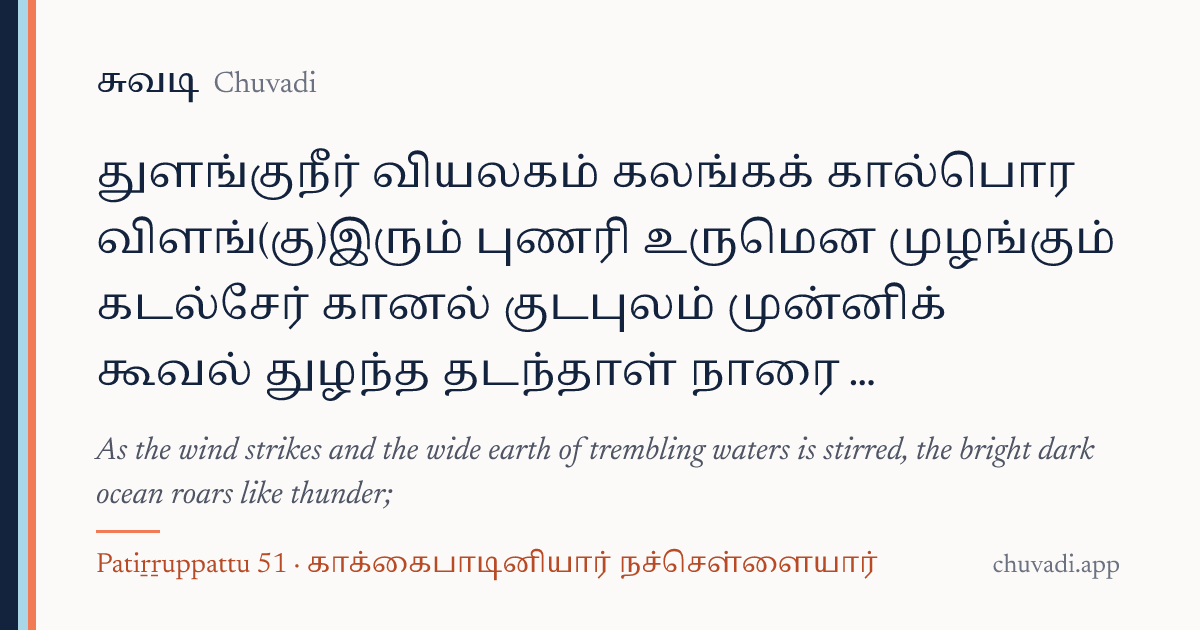
- As the wind strikes and the wide earth of trembling waters is stirred,
- the bright dark ocean roars like thunder;
- toward the western land, on the grove-shore that meets the sea,
- the large-footed heron that has stirred the shallow wells
- roosts on the dark branch of the ñāḻal with clustered blossoms;
- on the expanse of the cool sea where bees have settled,
- on the packed shore thick with aṭumpu creeper, where crabs have played,
- the fine sand that rubs out their marks is heaped up by the cold wind;
- it shines, adorning the grove of pure dark palmyras,
- and like a young girl who sways with grace and dances
- in the trembling of possession, so it appears;
- across the great mountains, here and there, lie rare gems;
- with the great gods where serpents move,
- with the cold ocean where conches cry,
- the eastern and western seas and the land joined between them
- are roofed as a pandal by the sky;
- the neytal, like eyes, has opened from its firm bud,
- and with the honey that fills its buds the whole land is fragrant;
- with bright foreheads and gentle glances,
- with shining smiles and gleaming teeth,
- red mouths holding nectar and swaying gait, the viṟaliyar
- sing, and content with their songs you have stayed long; therefore
- 'the lord of the white spear seems a soft man,'
- so perhaps think those who do not know you.
- On the great hill where rain-clouds crawl,
- striking down the harmful serpent,
- destroying the strength of the fiercely angry,
- you are like the thunder-bull of the storm of great wrath.
- Holding the line, cutting the ringed tusks of large-trunked elephants,
- with spears in their right hands, those who live by your army
- wear the white leaf of the battle-loving palmyra,
- their garlands changed in colour, while kites probe their wounds;
- the large-eyed taṇṇumai drum whose hanging straps are torn
- sounds under the beating hands of skilled youths;
- like dark great Death, of anger none can turn aside,
- spreading out its net, is your look;
- you are fierce, great one, in battle.
What the poem says
The poet Kākkaipāṭiṉiyār Nacceḷḷaiyār addresses the Chera king Āṭukōṭ Pāṭṭuc Cēralātaṉ. This is the first poem of the Sixth Ten. The turai is vañcittuṟaip pāṭāṇ pāṭṭu, praise of the king framed by the theme of war.
Lines 1 to 22 paint the king's western coast: the roaring sea, the heron roosting on the ñāḻal tree, crabs on the shore and the fine sand that the wind heaps up and that wipes away their tracks. The swaying sand dunes and palmyras are compared to a girl dancing in possession. The land stretches from the eastern to the western sea under the sky like a pandal roof. In this fragrant land the king stays long, listening to the songs of the viṟaliyar, the dancing women of the bards. So, the poet says, people who do not know him may think he is soft (lines 23 to 24).
The second half answers that thought. He is like the thunder that strikes the serpent on the hill. His soldiers cut the tusks of elephants, wear the palmyra leaf of the Chera, and let kites probe their wounds while drums beat. His look in battle is like Death spreading a net.
The poem's name, vaṭu aṭu nuṇ ayir, 'the fine sand that wipes out the marks' (line 8), comes from the image of wind-blown sand erasing the crabs' tracks. Lines 12 to 16 are hard to construe; the sense that the whole land between the two seas is roofed by the sky is a likely reading, not a certain one. In line 29 'holding the line' renders tāṅkunar, which may instead mean the enemy warriors who resist.