



பதிற்றுப்பத்து 52 · ஆறாம் பத்து
பாடல் · The poem
Tap a word to see where else it occurs.
பொருள் · Meaning in TamilAI
கொடிகள் அசையும் கொல்யானைகளும் மணிகட்டிய நெடுந்தேர்களும் பகைநாட்டில் பரவுகின்றன; அவை அருங்கலம் கொண்டுவர நீரில் உயர்ந்து திசைதிரியும் கப்பல்களைப் போலத் தோன்றுகின்றன. கருமை பூசிய ஆயிரக்கணக்கான கேடயங்கள் எழுகின்றன. உடற்கவசத்தைப் பொருட்படுத்தாமல் வேலேந்திய வீரர்கள் போர்முனையில் தும்பை சூடிப் போரிடுகின்றனர்; பலர் இறந்து வீரசுவர்க்கம் அடைந்தனர். இப்படிப் போரை வென்ற உன் மேகம் போன்ற கை, இரப்பவர்க்குக் கொடுக்கக் கவிவதன்றி, பெறுவதற்கு விரிவதை அறியாது என்று கேட்டிருக்கிறோம். இப்போது, விளக்கொளியில் முழவு ஒலிக்கும் துணங்கைக் கூத்தில் நீ ஒருத்திக்கு முதற்கை கொடுத்து நெருங்கி வந்தாய். அதனால் உன் காதலி சினந்தாள். அவள் உன்மேல் எறிய ஓங்கிய சிறிய செங்குவளை மலரை 'தா' என்று நீ இரந்தும் தரவில்லை; 'நீ எமக்கு யார்?' என்று சினந்த பார்வையோடு விலகிச் சென்றாள். அந்தச் சிறிய காரியத்திலேயே நீ வல்லமை இல்லாதவன் ஆனாய்; அப்படியானால் கதிரவன் போல ஒளிரும், வெண்குடை வேந்தர்களின் கோட்டைகளை வெல்லும் காரியத்தில் எப்படி வல்லவன் ஆவாய்? உன் கண்ணி வாழ்க.
துறை: குரவைநிலை. காக்கைபாடினியார் நச்செள்ளையார் சேரலாதனை நகைச்சுவையோடு புகழ்கிறார். தலைவி எறிய ஓங்கிய 'சிறுசெங்குவளை' (22ஆம் அடி) பாடலின் பெயர். 32ஆம் அடி பாடலின் பகுதி அல்ல; 'பஃறோல் = பல்தோல்' என்ற பதிப்பாசிரியர் குறிப்பு.
ஆங்கிலம் · English translationAI
Translation
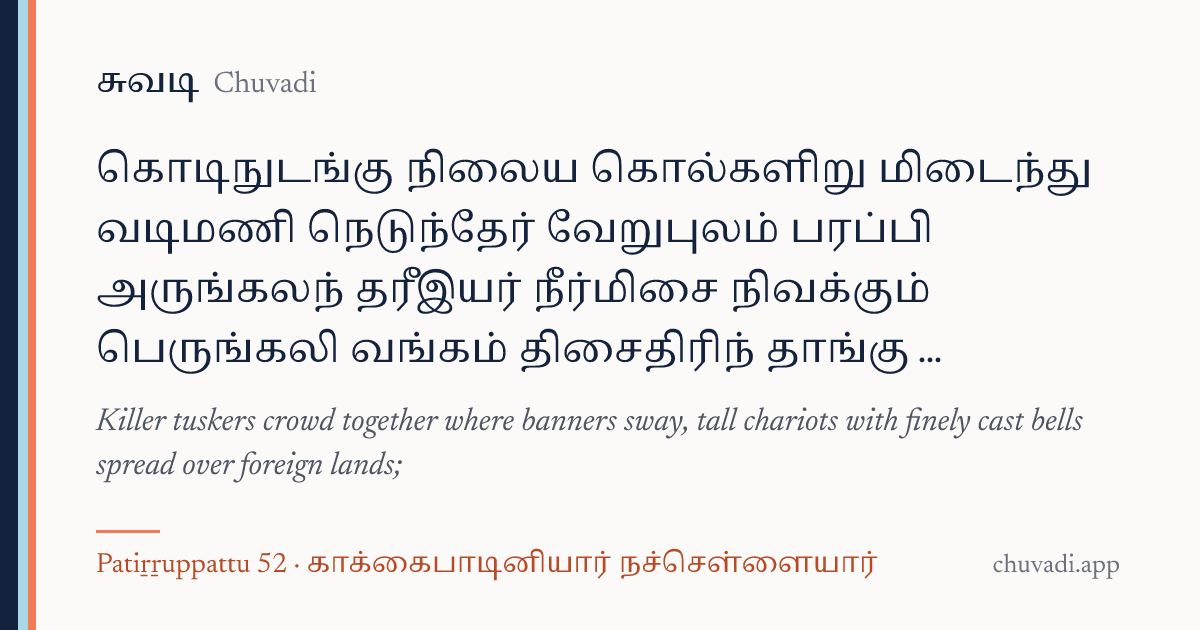
- Killer tuskers crowd together where banners sway,
- tall chariots with finely cast bells spread over foreign lands;
- like the great roaring ships that rise upon the water
- to bring rare goods, and turn their course to every quarter,
- the thousand many shields, smeared with black, rise up;
- not counting the armour that covers the body, bearing spears,
- the hard-eyed men who rise in the front of the battle
- make the unfailing tumpai shine along the ways of the foe;
- many fell and reached the world of high station;
- your large hand, like a cloud, that won the good war
- only bends to cover those who beg; to grasp and take
- it does not know how to open, so we have heard. Now,
- in the glow of fragrant lamps in shining bowls,
- for the tuṇaṅkai where drums resound, as a raft for the embrace,
- you gave the leading hand, like a bellowing strong bull,
- and came pressing close; at this she grew angry,
- the woman with a fading garland and spreading beauty spots,
- moist-lidded, rain-cool eyes, of great nature;
- her small feet, like the inside of a bright opened petal,
- where a few small anklet bells strike her small ankles;
- trembling like a sprout in a killing flood, she stood, and the
- small red kuvaḷai she had raised to throw at you,
- though you begged 'give it', she would not give; 'You, to us,
- who are you?' she said and turned away; that in her hand,
- with a sudden angry look; in that matter you
- proved unable; in the other matter, then,
- how will you prove able? Long live your garland!
- To bring the daylight into the wide dark sky,
- the sun of burning rays shines in its strength;
- they have taken on the splendour of its form,
- the forts of the kings with white umbrellas touching the sky.
- Gloss: paḵṟōl means pal tōl, many shields.
What the poem says
The poet addresses Āṭukōṭ Pāṭṭuc Cēralātaṉ in a light, teasing tone. The turai is kuravainilai, a poem set at a group dance. The name of the poem, ciṟu ceṅkuvaḷai, 'the small red water-lily' (line 22), is the flower the queen refuses to give the king.
Lines 1 to 12 recall his war: elephants and chariots spread over foreign lands like ships at sea, shields beyond counting, fearless soldiers who wear the tumpai flower of battle, and many who died and went to heaven. Yet his great hand, the poet has heard, bends only to give to those who beg and never opens to take.
Lines 13 to 27 tell a small scene. At the tuṇaṅkai dance, by lamplight and drumbeat, the king took the leading hand of another woman like a bull. His beloved, the beautiful woman with anklets on small feet, grew angry. She had lifted a small red kuvaḷai to throw at him. When he begged for it she refused, said 'Who are you to us?', and turned away with an angry look. The poet then jokes: you could not win even this; how will you win the forts of rival kings, which shine like the sun under their white umbrellas (lines 28 to 31)? The joke praises him by contrast, since he does in fact take such forts.
The reading of lines 25 to 27 (pāal, 'side' or 'matter', and vallāy, 'not able') is the most natural one but is not certain; lines 28 to 31 may also be the object of the king's skill rather than a separate image. Line 32 is not part of the poem. It is an editor's gloss that explains the word paḵṟōl in line 5 as pal tōl, 'many shields'.