



பதிற்றுப்பத்து 53 · ஆறாம் பத்து
பாடல் · The poem
Tap a word to see where else it occurs.
பொருள் · Meaning in TamilAI
நீ வெற்றிகொண்டு செல்வம் கொணர விரும்பிய நாடுகளில் தங்கியிருந்தவர்கள், வளம் குன்றாத தம் நாடுகளைத் திறையாகக் கொடுத்து 'எமக்கு அருள்செய்' என்று வேண்டினர்; நீயும் அருளினாய். மலைகள் உயர்ந்த, காடு சூழ்ந்த உன் பழம்புகழ் மூதூருக்கு நீ செல்வாயானால், அங்கே சிலம்பும் தழையும் தொங்கும் இயந்திரக் காவல் உடைய அம்புகொண்ட வாயிலும், முதலைகள் நிறைந்த ஆழமான அகழியும், வானளாவ உயர்ந்த வளைந்த மதிலும் உள்ளன. பகைவரின் முனையை அழித்து நீ கைப்பற்றிய கோட்டைகளைத் தவிர, உன் முன்னோர் காத்துவந்த கோட்டையைத் தாக்க முனைவது ஏன்? சுற்றிச் செல்ல நேர்ந்தாலும், சினம் மிக்க தலைவனே, வேறு வழியில் செல். ஏனெனில், பொன் பிணித்த பலகைக் கதவுகளைக் கண்டால், மதம் பொழியும், புலியை வென்ற, புள்ளிகளுடைய நெற்றியுடைய உன் களிறு, துதிக்கையைச் சுருட்டி, அங்குசத்தையும் கோல்களையும் தள்ளி, வெற்றிக்கொடி அசைய முன்னேறும்; அதைத் தடுக்க இயலாது.
துறை: செந்துறைப் பாடாண்பாட்டு. காக்கைபாடினியார் நச்செள்ளையார் சேரலாதனுக்கு நகைச்சுவை கலந்த அறிவுரை கூறுகிறார். மூதூரின் 'குண்டுகண் அகழி' (8ஆம் அடி) பாடலின் பெயர். யானையின் சீற்றத்தின் மூலம் மன்னனின் வலிமை புகழப்படுகிறது.
ஆங்கிலம் · English translationAI
Translation
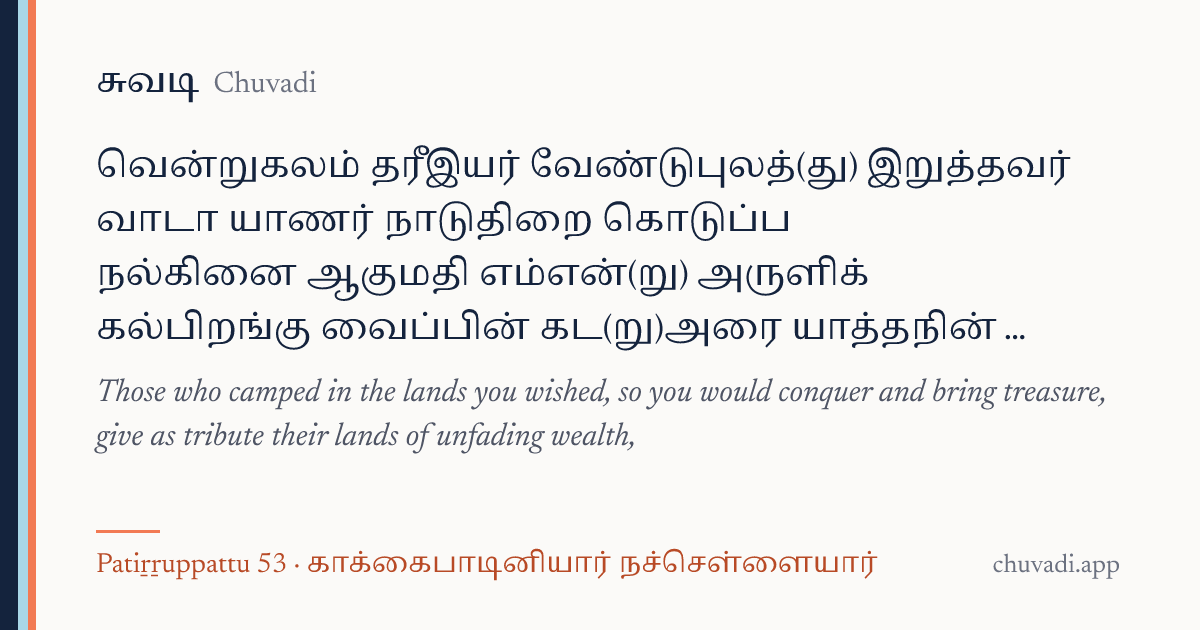
- Those who camped in the lands you wished, so you would conquer and bring treasure,
- give as tribute their lands of unfading wealth,
- saying 'show us your favour'; and you grant them grace.
- In your settlements where rocks rise high, girdled by the forest,
- if you go to your ancient city of old renown,
- where with red-spotted anklets, beautiful leaf-garments hang,
- the gate with arrows, guarded by machines,
- the deep-hollowed moat with crocodiles strong to seize,
- the curving rampart raised high to touch the sky;
- blocking the hostile foes so that their front is ruined,
- other than the mighty forts you yourself have taken,
- the forts your forefathers guarded before and after,
- why should you make them the face of your attack? Even if you must go round,
- go by another road, wrathful lord!
- For if, pushing out the bar, it sees the gold-bound planks
- of the doors in the crowded gateway face to face,
- with honey-flowing must, brushing aside the goading sticks,
- with its spotted forehead flashing, the one that has beaten tigers,
- curling its raised trunk, shaking off the hook,
- while the victorious banner waves on high,
- then it cannot be held back, that tusker of yours.
What the poem says
The poet speaks to Āṭukōṭ Pāṭṭuc Cēralātaṉ as he is about to return to his own old capital. The turai is centuṟaip pāṭāṇ pāṭṭu, direct praise. Defeated kings have given him their rich lands as tribute and begged for his favour, and he has been gracious.
The poet then gives friendly advice. His ancestral city has its own strong defences: a gate with mechanical traps and arrows, a deep moat full of crocodiles (the poem's name, kuṇṭu kaṇ akaḻi, 'the deep-hollowed moat', line 8), and a rampart high as the sky. Other than the forts he has taken from enemies, he should not attack the forts his forefathers guarded. He should go another way.
The reason is a joke and a compliment at once. If his war elephant sees the gold-bound doors of a gate, it will throw off the goad and the hook, curl its trunk and charge, and no one can stop it, not even at his own city. So the poem praises the elephant's fury and, through it, the king's power.
Line 4 (kaṭaṟu araiyātta, 'girdled by forest') and line 6 (anklets and leaf-garments hanging at the gate) are obscure. The hanging things may be trophies or offerings; the reading is uncertain.