



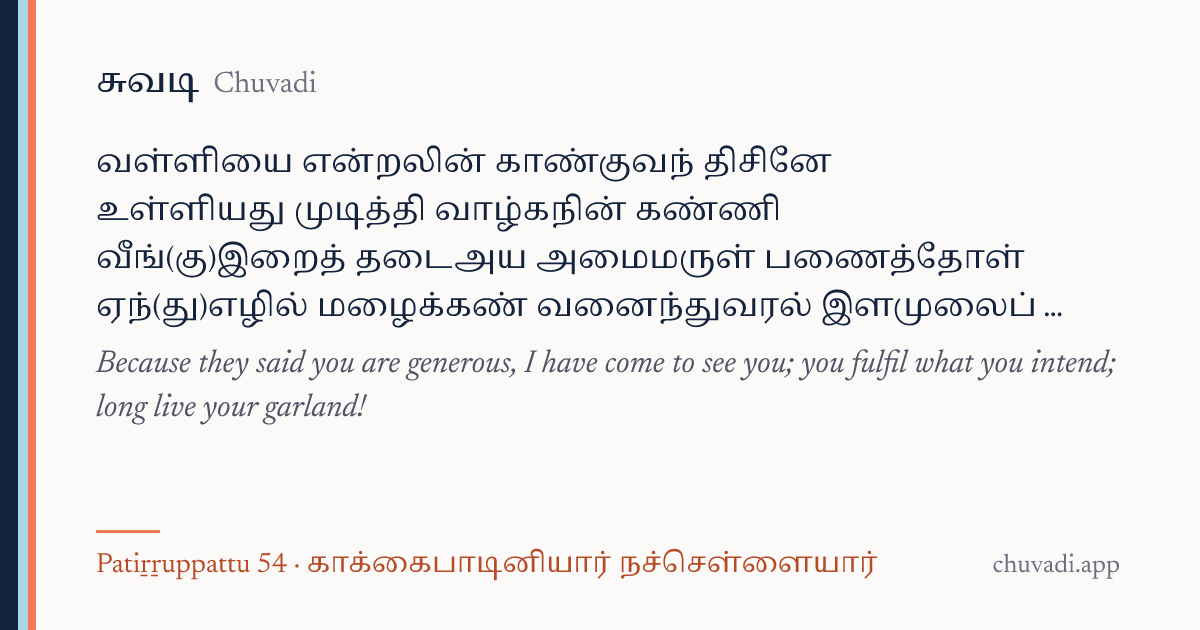
பதிற்றுப்பத்து 54 · ஆறாம் பத்து
பாடல் · The poem
Tap a word to see where else it occurs.
பொருள் · Meaning in TamilAI
நீ வள்ளல் என்று கேட்டதால் உன்னைக் காண வந்தேன். நீ நினைத்ததை முடிப்பவன்; உன் கண்ணி வாழ்க. மூங்கில் போன்ற தோளும், மழைக்கண்ணும், மின்னும் அணிகளும் உடைய விறலியர் உன் வீரத்தைப் பாடுகின்றனர். இரவலரின் வறுமைத் துயர் தீர நாள்தோறும் புகழ்பெற்ற நல்ல அணிகலன்களை அளவின்றி வழங்குகிறாய். நீ அத்தகையவன் ஆதலால், எப்போதும் மேலுலகம் செல்லாமல் இந்தப் பெரிய நிலவுலகிலேயே நெடுங்காலம் நிலைத்து வாழ்வாயாக. பகைநாட்டு எல்லையைக் கடந்து சென்று, நடுவே முரசு முழங்க, வேலேந்திய வீரர்கள் அச்சம் உண்டாக்க ஆணைப்படி இளையரோடு எழுகின்றனர். பகைவரின் யானையைக் கண்டால் உன் படை நிற்காமல் பாய்கிறது, அரசே.
துறை: காட்சிவாழ்த்து. காக்கைபாடினியார் நச்செள்ளையார் சேரலாதனைக் கண்டு வாழ்த்துகிறார். 'நில்லாத் தானை' (17ஆம் அடி) பாடலின் பெயர். கொடையும் வீரமும் இணைந்து புகழப்படுகின்றன; 12ஆம் அடியின் பொருள் தெளிவற்றது.
ஆங்கிலம் · English translationAI
Translation
- Because they said you are generous, I have come to see you;
- you fulfil what you intend; long live your garland!
- With full forearms and broad shoulders like bending bamboo,
- raised beauty, rain-cool eyes, young breasts that rise as if shaped,
- loins in flowered cloth, hair where honey flows,
- the viṟaliyar with lightning-bright jewels sing your valour;
- so that the sorrow of suppliants ends, day after day
- you scatter famous fine treasures without limit;
- since you are such a one, at no time at all
- may you not go to the world of high station; staying here,
- may you abide long upon the wide earth!
- Crossing the bounds that make the land give way, marching into enemy country,
- while the drum with resounding eye roars in the midst,
- men with lances in their right hands, to spread terror,
- rise up with the young warriors at the call of command;
- when it sees the elephants of the foes,
- your army does not stand still, O lord of rule!
What the poem says
The poet comes to Āṭukōṭ Pāṭṭuc Cēralātaṉ because she has heard of his generosity. The turai is kāṭcivāḻttu, a blessing spoken on first seeing the king.
She describes the beautiful viṟaliyar, the dancing women of the bards, who sing his valour, and says he gives fine treasures every day without limit to end the poverty of those who come to him. Because he is such a giver, she blesses him: may he never go to heaven, but stay long on this earth.
The last lines turn to war. When his troops march into enemy land, with drums roaring and lancers rising at the word of command, they rush forward as soon as they see the enemy's elephants. The poem's name, nillāt tāṉai, 'the army that does not stand still' (line 17), names this eagerness.
Line 12 (nilam tapa viṭūum ēṇi) is obscure. Ēṇi can mean a boundary or a ladder; the line may refer to scaling ladders or to frontiers. The translation gives one possible sense.